


















By Karim Were
What looked like a medical emergency on a quiet November evening in 2022 soon unraveled into something far more sinister—a slow, deliberate act of poisoning rooted in jealousy and control.
Judy Church, a 67-year-old former teacher, had spent years financially supporting and emotionally investing in her partner, Leroy Fowler. Their decade-long relationship began when Fowler moved into her home after his marriage ended. But despite her loyalty—and generosity, which included buying him gifts like a motorcycle—Fowler never fully committed.

For eight years, he had been involved with another woman, Barbara Randall, rekindling a romance through Facebook. The situation created a tense and bitter love triangle. Church knew about Randall and even reached out to her, urging her to leave Fowler, calling him manipulative and dishonest. Still, Church remained, convinced she would eventually “win.”
Instead, resentment festered.
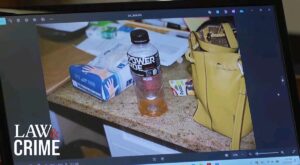
On November 11, 2022—Fowler’s 55th birthday—Church prepared him a drink: fruit punch-flavored Powerade. Hours later, she called emergency services, claiming he had ingested something and was behaving erratically. Paramedics found Fowler in severe distress—confused, bleeding, and unable to stand.
At the hospital, doctors quickly suspected poisoning. Tests later confirmed he had ingested antifreeze, which contains the highly toxic chemical ethylene glycol. His organs began to fail rapidly, and within two days, he was dead.
What followed painted a chilling picture.
Investigators discovered that Church had waited at least 30 minutes before calling 911—time during which she filmed Fowler as he writhed in agony. In those videos, she can be heard mocking him rather than helping. A search of her home revealed a Powerade bottle containing traces of antifreeze, along with an empty de-icing container. Her DNA was found on the bottle.
Authorities also uncovered disturbing personal writings expressing anger and hatred toward Fowler, as well as a crude voodoo doll labeled with Randall’s name. The evidence suggested not a moment of panic, but a buildup of obsession and intent.
Even more damning, Fowler had previously told family members he suspected Church might be poisoning him, noting he often felt ill around her but improved when away.
At trial, prosecutors described the relationship as “toxic and dysfunctional,” arguing that Church used antifreeze as a weapon—taking advantage of its sweet taste to mask it in a flavored drink. The defense claimed the death could have been accidental, possibly linked to medication. But the jury was unconvinced.
In March, Church was found guilty of first-degree murder, with the court citing premeditation and extreme cruelty. The following month, she was sentenced to life in prison without parole.
What began as a complicated love triangle ended in a calculated killing—one where the warning signs had been there all along, but the final act came disguised as a birthday gesture.