
























By Karim Were
The High Court in Kampala has dismissed a legal challenge against the National Resistance Movement (NRM)’s ongoing process to nominate candidates for the East African Legislative Assembly (EALA), ruling that the applicant should have first pursued the party’s internal dispute resolution mechanisms.
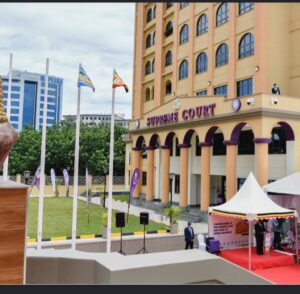
In a decision delivered on May 29, 2026, Justice Bernard Namanya held that the matter was not suitable for judicial review and upheld a preliminary objection raised by the NRM and the Chairman of the NRM Electoral Commission, Dr. Tanga Odoi. The respondents were represented by Sebuufu Usaama of K&K Advocates.
The application was filed by Nsubuga Jack, also known as Mandela, who challenged the NRM Electoral Commission’s move to begin nominating replacements for former EALA representatives Denis Namara and James Kakooza after the two were elected Members of Parliament in January 2026.
Nsubuga argued that the two automatically ceased to be EALA members upon their election to Parliament and that the nomination process for their replacements was initiated prematurely. He sought court orders to nullify the nominations and compel the commission to restart the process after the new Parliament had officially commenced its term.
However, evidence presented by the respondents showed that the nomination process had been suspended pending the swearing-in of the newly elected Members of Parliament.
In his ruling, Justice Namanya noted that judicial review is intended to examine the legality and fairness of decisions made by public bodies rather than determine the merits of political or administrative processes. He found that the nomination exercise had not been completed and that any challenge to it was therefore premature.
The court further emphasized that the NRM Election Regulations, 2025, provide an internal mechanism for resolving disputes through the NRM Election Disputes Tribunal. According to the judge, the applicant failed to utilize these avenues before seeking court intervention.
Justice Namanya relied on provisions establishing the tribunal and previous judicial decisions that encourage political party members to first exhaust internal remedies before turning to the courts.
As a result, the court concluded that the application was improperly before it, dismissed the case in its entirety, and ordered Nsubuga to pay the respondents’ legal costs.
The ruling reinforces the principle that disputes arising from political party processes should first be handled through internal party structures before judicial intervention is sought.