

























By Karim Were
The official opening of the Nakivubo arcades by Ugandan businessman Hamis Kiggundu is shifting attention from architectural expectations to something more immediate: economic survival and opportunity for traders in downtown Kampala.
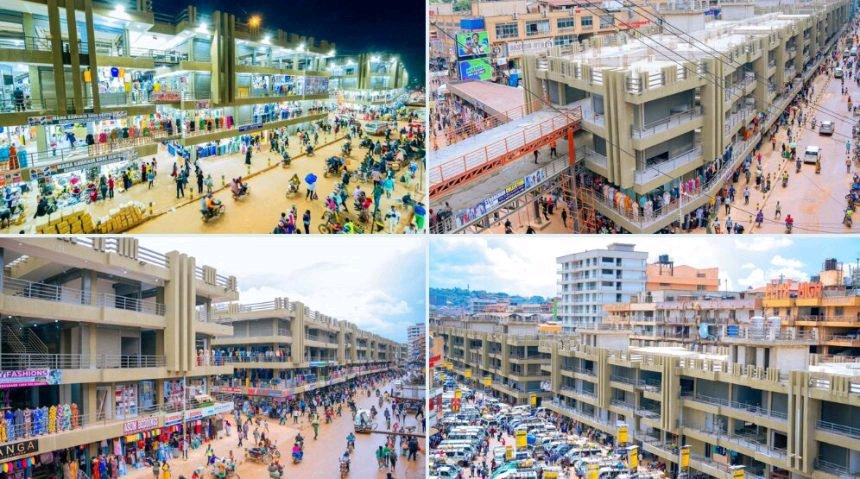
Built over the former Nakivubo Channel and valued at roughly $48 million, the project—greenlit by Yoweri Museveni in 2025—was initially framed as a dual-purpose solution: easing persistent flooding while modernizing one of the city’s busiest commercial zones. Now completed and operational, its real-world impact is beginning to take shape on the ground.
Traders have already moved in, filling the arcades with stalls stocked with clothing and everyday goods. For many, the development represents a rare chance to operate in a more structured environment within the congested central business district. The early buzz is less about design and more about foot traffic, accessibility, and income potential.
Supporters argue that this is where the project’s true success lies—not in futuristic aesthetics, but in practical urban function. By combining drainage infrastructure with retail space, the arcades could redefine how Kampala approaches land use in high-pressure areas.
Yet the shift from concept to reality has not gone unnoticed. Critics point out that the finished structure lacks the visual ambition seen in earlier digital renderings, which had raised expectations of green spaces and modern pedestrian-friendly design. Instead, the arcades lean heavily toward functionality, prioritizing commercial density over visual appeal.
There are also lingering concerns tied to the project’s development phase. Legal disputes with traders and tensions with city authorities have left questions about inclusivity, planning transparency, and long-term sustainability.
Even so, for the thousands who rely on daily trade, those debates feel secondary. What matters now is whether the new space delivers steady customers and safer working conditions.
As activity builds, the Nakivubo arcades may ultimately be judged less by how they look and more by how well they work—both as a flood-control measure and as a commercial lifeline in the heart of Kampala.