

























By Karim Were
For centuries, East Africa’s early history was preserved not in books, but in memory—stories passed down through generations, rich in symbolism but difficult to date with precision. That changed with a single celestial event in 1520.
The Biharwe Eclipse of 1520 has become a rare bridge between storytelling and science, giving historians something they long lacked: a fixed date in a largely oral past.
A Timeline Hidden in the Sky
Before this discovery, reconstructing the chronology of pre-colonial kingdoms like Bunyoro-Kitara, Buganda, and Nkore relied heavily on approximations. Events were remembered vividly, but without exact dates, aligning them in a historical sequence remained a challenge.
The eclipse changed that.
Astronomers, working backwards using precise calculations of celestial motion, identified April 17, 1520, as the exact date when a total solar eclipse passed over the region. What made this discovery powerful was not just the science—but the match with long-standing oral accounts.
Generations had described a terrifying moment when the sun suddenly vanished. These stories, once seen as purely symbolic, turned out to be grounded in a real, observable event.
In Biharwe, where the eclipse reached totality in the late afternoon, the descriptions align strikingly with modern projections of its timing and path. What elders recalled as a supernatural occurrence is now understood as a predictable astronomical phenomenon.
This convergence transformed oral tradition into usable historical evidence.
The impact goes beyond astronomy. By anchoring this event in time, historians have been able to better understand the reigns of key leaders, including Olimi I Rwitamahanga and Kabaka Nakibinge.
Accounts linking the eclipse to Olimi’s military campaign—interrupted by sudden darkness—can now be placed within a precise historical framework. This allows researchers to align political events across different kingdoms, creating a more coherent regional timeline.
What makes the Biharwe eclipse remarkable is not just that it happened, but how it is used. It demonstrates that oral histories, often dismissed as unreliable, can hold accurate records when interpreted carefully and supported by scientific tools.
Rather than replacing traditional narratives, science has helped validate them.
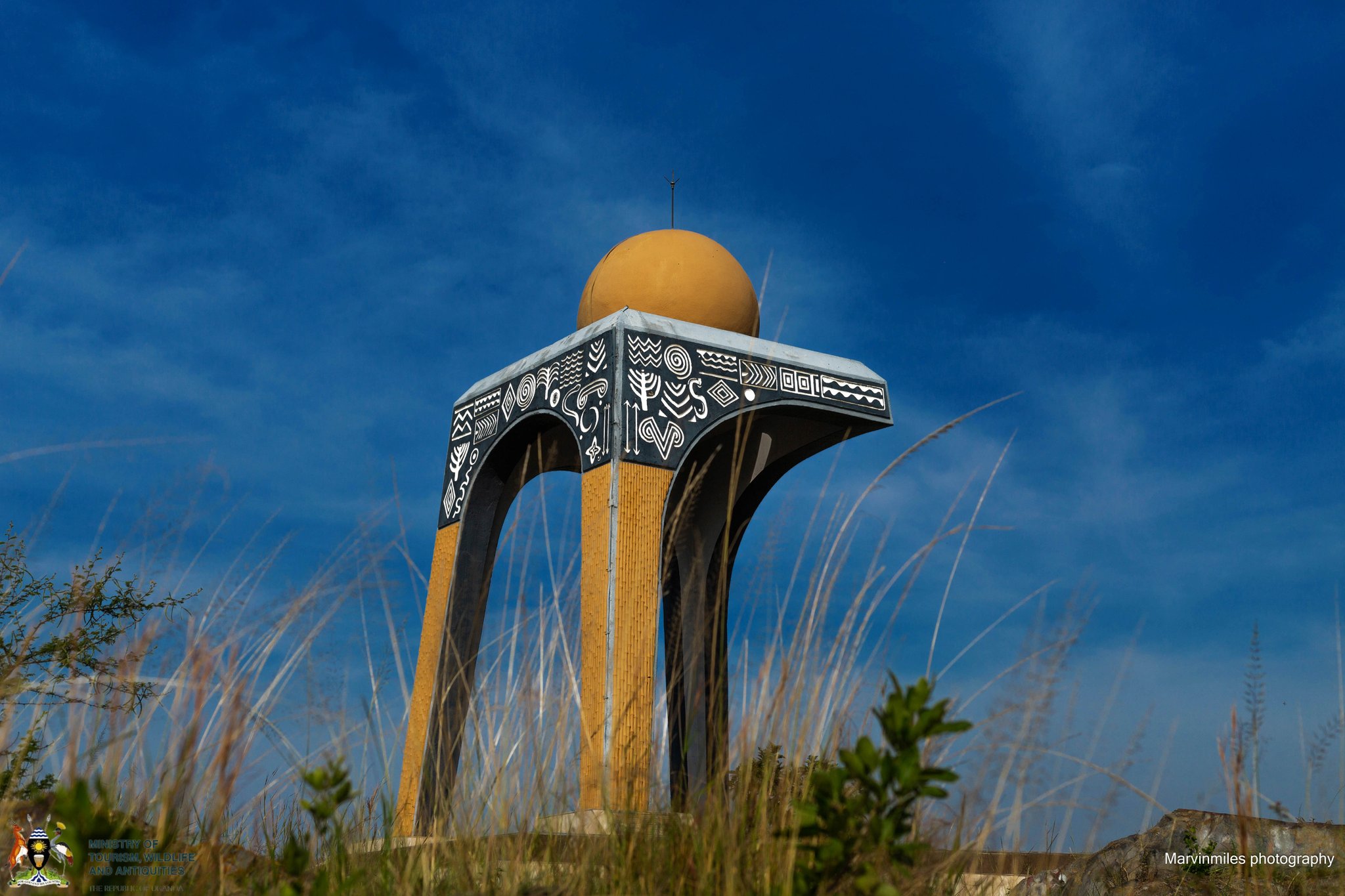
Today, the Biharwe Eclipse Monument stands as a symbol of this intersection. Its three pillars reflect the shared memory of Bunyoro, Nkore, and Buganda—kingdoms once separated by politics, but united by a moment in the sky.
The story of the Biharwe eclipse is no longer just about fear or wonder. It is about how knowledge is preserved, rediscovered, and reinterpreted.
A brief darkness in 1520 did more t
han startle a region—it illuminated its past.