




















By Karim Were
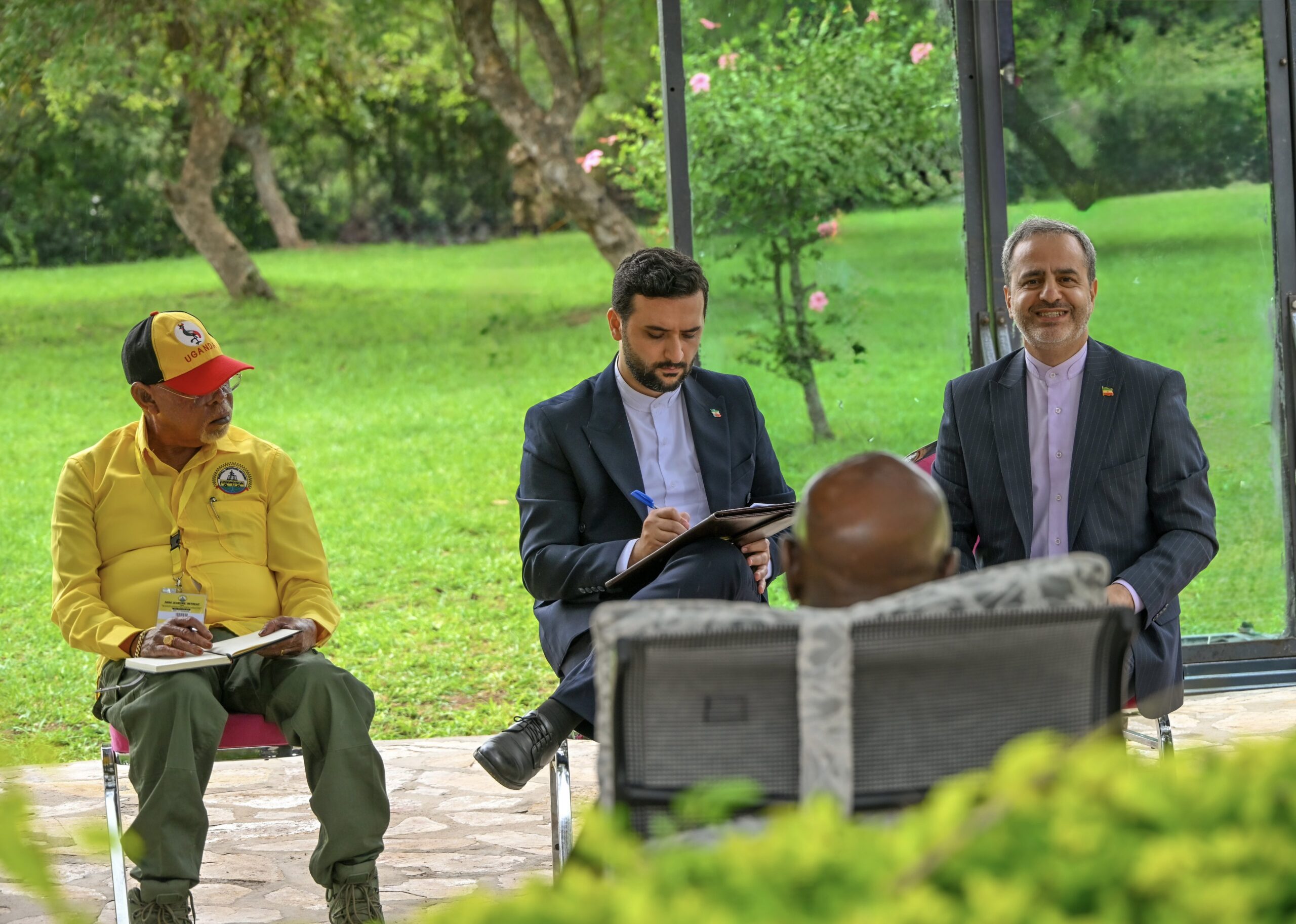
President Yoweri Museveni has taken a quiet but significant step to reinforce Uganda’s long-standing non-aligned foreign policy, holding a meeting with Iran’s ambassador amid growing international attention over recent military rhetoric.
The meeting, which took place during the ruling party’s retreat in Kyankwanzi, brought together Museveni and Majid Saffar at a time when Kampala is facing increased scrutiny over statements made by the Chief of Defence Forces, Muhoozi Kainerugaba.
While official communication framed the engagement as a routine discussion on bilateral cooperation, diplomatic sources suggest it carried a deeper objective: reassuring Tehran that Uganda’s foreign policy remains balanced despite recent public pronouncements that appeared to favor Israel and criticize countries like Iran and Turkey.
The presence of Foreign Affairs Minister Jeje Odongo highlighted the seriousness with which the government is handling the situation, signaling an effort to prevent any lasting strain in relations with key partners in the Middle East.
In recent months, Iran has been actively strengthening ties with African nations, including Uganda, positioning itself as a cooperative partner in trade and development. However, Gen Muhoozi’s outspoken support for Israel—along with suggestions of possible Ugandan military involvement abroad—has complicated that outreach, raising concerns among Iran and its allies.
Ugandan officials now appear to be working behind the scenes to contain any diplomatic fallout. Earlier tensions involving Turkey also required intervention from senior diplomats, reinforcing the delicate balance Kampala must maintain as global rivalries intensify.
Museveni’s engagement with the Iranian envoy underscores a broader strategy: maintaining Uganda’s flexibility on the world stage while preventing individual statements from redefining the country’s official stance.
As geopolitical pressures grow, Uganda’s leadership is increasingly being tested on its ability to navigate competing alliances without compromising its long-held principle of strategic neutrality.