

























By Karim Were
East Africa is entering a new phase of economic coordination, as William Ruto, Yoweri Museveni, and regional finance leaders align behind an ambitious plan to transform trade through rail infrastructure.
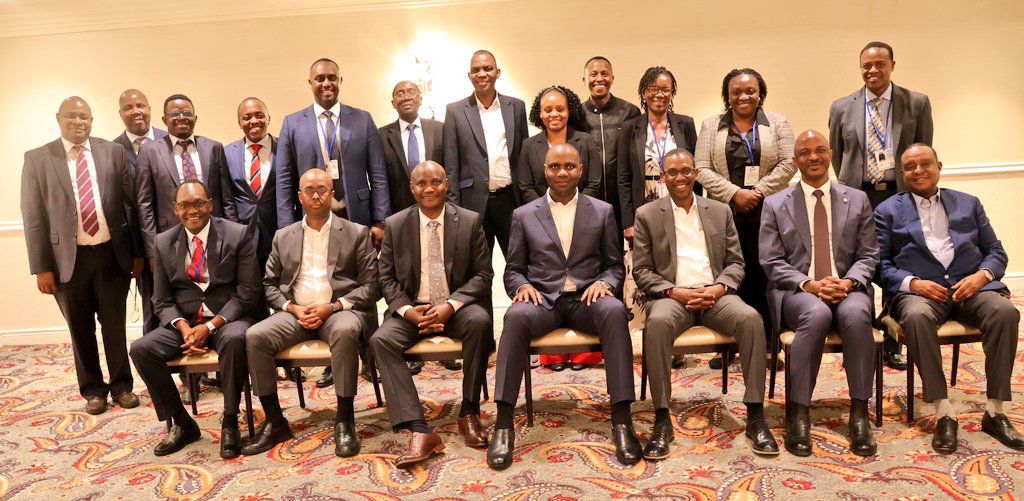
On the sidelines of the 2026 IMF and World Bank Spring Meetings, finance ministers from Kenya, Uganda, and Rwanda moved beyond discussion to consensus—placing the Standard Gauge Railway (SGR) at the center of a broader strategy to reshape regional commerce and reduce dependency on costly road transport.
Rather than treating the railway as a standalone infrastructure project, the three governments are framing it as a long-term economic lever. By closing the remaining gaps along the Northern Corridor, they aim to fundamentally shift how goods move across East Africa—faster, cheaper, and with greater reliability.
Kenya, already ahead in SGR development, is positioning itself as the logistical anchor of the region. Recent groundbreaking activities led by Ruto and Museveni signal that construction is no longer theoretical but actively underway, particularly on the Naivasha–Kisumu–Malaba stretch.
Uganda, under the stewardship of Finance Minister Henry Musasizi, is accelerating its own section, working with international contractors and financial institutions to secure both execution and funding. The Kampala–Malaba segment is being treated as a priority link, essential for connecting inland markets to the Kenyan coast.
For Rwanda, the stakes are even higher. As a landlocked country, its economic future is tightly tied to access routes. Finance Minister Yusuf Murangwa has framed the SGR not just as infrastructure, but as a generational pivot—one that could redefine Rwanda’s trade competitiveness by dramatically improving access to the Port of Mombasa.
Behind the scenes, technical teams are tackling the complex legal and fiscal architecture required for such a cross-border megaproject. Figures like Ramathan Ggoobi are working to align policies, financing models, and regulatory frameworks across jurisdictions—an often overlooked but critical component of regional integration.
International partners are also watching closely. The World Bank has signaled openness to financing support, suggesting that global institutions increasingly view the SGR as a viable and impactful investment rather than a risky undertaking.
If completed as envisioned, the railway could dramatically alter the economics of trade in East Africa. Transport costs are expected to fall sharply, while transit times could shrink from days to under 24 hours—unlocking efficiency gains that ripple across industries.
More than just steel and tracks, the SGR is emerging as a test of East Africa’s ability to act collectively. Its success—or failure—will likely shape the region’s economic
trajectory for decades.