

























By Karim Were
Uganda’s political calendar has once again turned attention to May 12, a date that has become closely associated with President Yoweri Museveni’s leadership and the historical events that shaped modern Uganda.
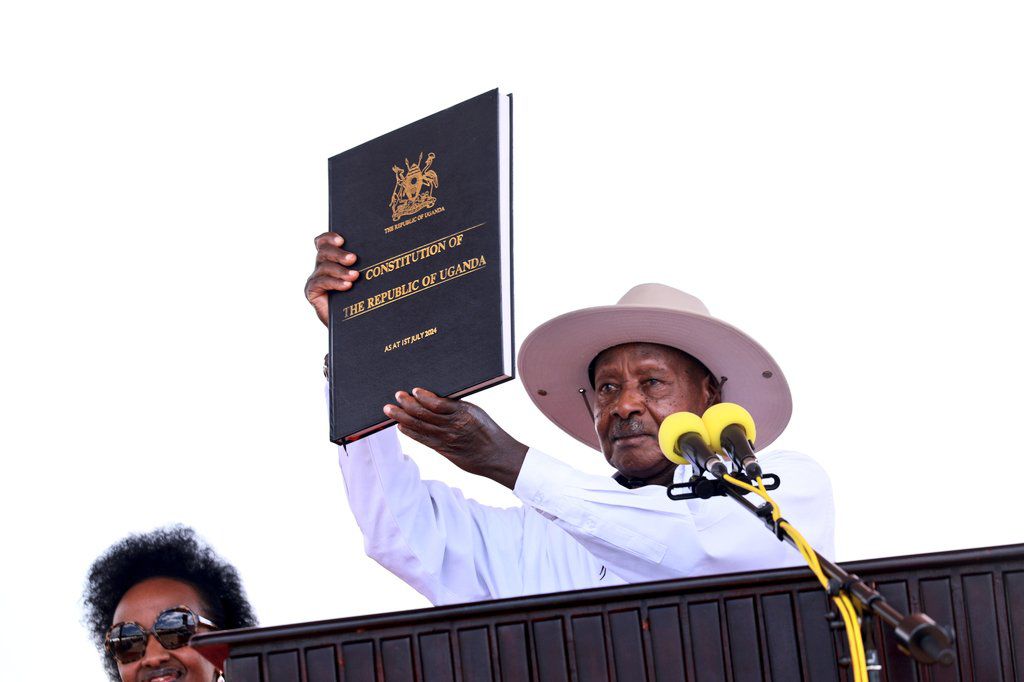
While many Ugandans now recognize May 12 as Museveni’s preferred inauguration day, the date carries a far deeper political meaning rooted in one of the country’s most controversial power transitions.
The significance traces back to May 12, 1980, when President Godfrey Binaisa was removed from office by the Military Commission of the Uganda National Liberation Front (UNLF). The crisis erupted after Binaisa attempted to dismiss Army Chief of Staff Brig. David Oyite-Ojok, a move that triggered a swift military-backed response.
The Military Commission, chaired by Paulo Muwanga with Museveni serving as deputy, assumed control of government and placed Binaisa under house arrest, abruptly ending his presidency after only 11 months in office.
That moment marked a critical shift in Uganda’s post-Amin politics. It exposed the growing power of the military in national governance and paved the way for the highly disputed December 1980 elections, which Museveni later rejected before launching the Bush War rebellion that eventually brought the National Resistance Movement (NRM) to power in 1986.
Political observers say Museveni’s repeated use of May 12 for presidential swearing-in ceremonies is unlikely to be accidental. Instead, they see it as part of a broader effort to reinforce the NRM’s historical narrative and revolutionary identity.
Museveni has consistently demonstrated a strong attachment to symbolic dates tied to Uganda’s liberation struggle. Historians often point to January 1986, when the National Resistance Army captured Kampala on January 25 but delayed the official victory announcement until January 26 to avoid sharing a date with Idi Amin’s 1971 coup.
Analysts argue that such decisions reveal a leader deeply conscious of political symbolism and historical messaging.
For Museveni and the NRM establishment, May 12 may represent the beginning of the chain of events that ultimately led to the current government’s rise to power. It symbolizes both the instability of Uganda’s earlier political systems and the justification for the NRM’s revolutionary struggle.
However, critics interpret the date differently. To them, May 12 serves as a reminder of how military influence became deeply embedded in Uganda’s politics, shaping decades of governance and power transitions.
Some political psychologists suggest that leaders often use symbolic dates to reinforce legitimacy, continuity, and historical destiny. In Museveni’s case, May 12 may function as both a personal and political reminder of Uganda’s turbulent transition period and the origins of his movement.
Although speculation occasionally emerges around superstition or spiritual influence surrounding the date, there is no public evidence linking Museveni’s preference for May 12 to astrology or mystical beliefs. Most historians instead describe it as a calculated political choice grounded in historical memory.
Museveni has long cultivated the image of a leader shaped by history, regularly referencing liberation struggles, African revolutions, and ideological movements in speeches and writings.
As Uganda approaches another May 12 swearing-in ceremony, the date continues to carry competing meanings depending on political perspective.
For supporters, it symbolizes continuity, liberation, and the endurance of the NRM project. For critics, it highlights Uganda’s unresolved questions about military power, democratic transition, and long-term political dominance.
Either way, May 12 remains one of the most politically loaded
dates in Uganda’s modern history.