






















By Karim Were
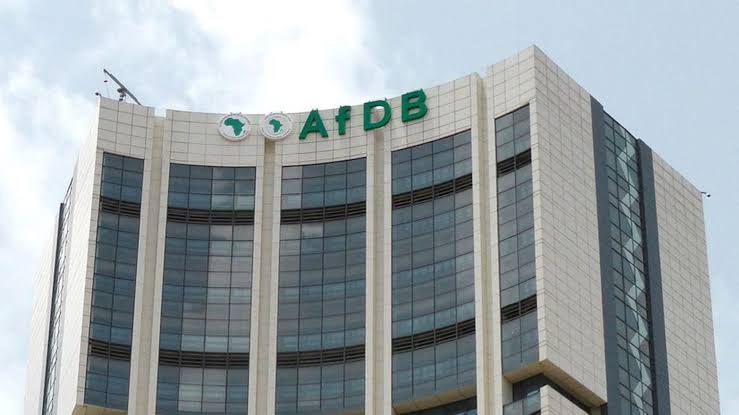
KIGALI — The African Development Bank (AfDB) has urged Rwanda to improve the mobilisation and use of its financial, human, natural and business capital as the country seeks to sustain economic growth and finance its development ambitions.
The call was made in Kigali on Friday, September 4, 2026, during the launch of the AfDB’s 2025 Rwanda Country Focus Report, Making Rwanda’s Capital Work Better for its Development. The report examines Rwanda’s economic performance and outlook while identifying ways the country can generate greater value from the resources already available to it.
The bank said Rwanda has made significant socio-economic progress, supported by macroeconomic management, institutional reforms and sustained public and private investment. However, it argued that the next stage of development will require the country to mobilise more capital domestically and deploy it more efficiently.
Among the measures recommended by the bank are broadening the tax base, improving tax compliance, deepening financial markets and increasing access to financial services.
The AfDB also called for greater use of innovative financing mechanisms and public-private partnerships, while encouraging Rwanda to attract more long-term investment through the Kigali International Financial Centre.
Aissa Touré Sarr, the AfDB Country Manager for Rwanda, said the report was intended to provide evidence for policy discussions as well as investment decisions.
“Rwanda has demonstrated its capacity to translate sound policies, strong institutions and strategic investment into meaningful development progress,” she said.
“The next phase will require us to mobilize more capital and ensure that it works harder and more effectively for Rwanda’s transformation.”
Mobilising domestic resources
The recommendations come at a time when Rwanda is balancing the need to finance infrastructure and social development with the wider objective of strengthening domestic sources of capital.
The AfDB report places particular emphasis on domestic resource mobilisation. This includes improving the capacity of the tax system to generate revenue, widening the number of taxpayers and strengthening compliance.
A stronger domestic revenue base can reduce pressure on public finances and provide government with more room to finance priority programmes. It can also make development planning less vulnerable to fluctuations in external financing.
The report further points to financial-market development as an important part of the equation. A deeper financial system can provide businesses and investors with more opportunities to access long-term capital, while enabling savings to be channelled into productive investments.
For companies, particularly growing businesses, access to appropriate financing can determine whether an enterprise remains small or expands into a larger employer and exporter.
The AfDB therefore recommends greater attention to innovative financing, including mechanisms that can attract institutional and private investors into projects that traditionally depend heavily on public resources.
Private sector remains central
The bank’s recommendations also underline the importance of the private sector in Rwanda’s transformation agenda.
Public investment remains important for infrastructure and essential services, but the scale of Rwanda’s development ambitions means private capital will also be required to complement government resources.
Public-private partnerships are among the mechanisms identified by the AfDB as having the potential to mobilise additional financing for development projects.
Such arrangements can allow governments and private companies to share investment, technical expertise and, where appropriate, project risks.
Hortense Mudenge, Chief Executive Officer of the Kigali International Financial Centre, said Rwanda would need new approaches to mobilising and deploying capital as it advances its development plans.
“Strengthening financial markets, attracting long-term investment and deepening public-private partnerships will be critical to financing the next phase of Rwanda’s transformation,” she said.
The emphasis on long-term financing is significant because many large infrastructure and productive-sector projects require capital that can remain invested for several years before returns are realised.
Financial centre seeks bigger role
The AfDB has also identified the Kigali International Financial Centre as a platform that can help Rwanda attract long-term investment.
The financial centre was established to strengthen Rwanda’s position as an international financial services hub and to connect investors with opportunities in Rwanda and the wider African market.
Attracting patient capital is particularly important for sectors such as infrastructure, manufacturing, agriculture, energy and technology, where investors may require longer periods to recover their investments.
The bank’s recommendation suggests that Rwanda could further strengthen its financial ecosystem by improving the conditions under which domestic and international investors can provide capital for productive economic activity.
For local businesses, a stronger financial market could mean a wider range of financing options beyond traditional bank lending.
More support needed for SMEs
The report also highlights the importance of small and medium-sized enterprises to Rwanda’s development.
SMEs play a major role in employment creation, household incomes and the supply of goods and services. Yet many smaller businesses face difficulties obtaining affordable finance, developing their operations and accessing larger domestic, regional and international markets.
The AfDB recommends stronger support for SMEs alongside increased value addition across productive sectors.
Value addition is particularly important for an economy seeking to increase export earnings. Instead of exporting raw commodities with limited processing, businesses can increase their revenues by turning agricultural and other raw materials into higher-value finished or semi-finished products.
The approach can support industrial development while creating jobs along the production, processing, logistics and distribution chains.
Rwanda has increasingly promoted domestic production and export growth as part of efforts to strengthen the productive base of the economy.
The Ministry of Trade and Industry recently reported that eight Rwandan micro, small and medium-sized enterprises were participating in the 2026 Maputo International Trade Fair in Mozambique, where they were showcasing Made in Rwanda products and pursuing business partnerships and export opportunities.
The participation, particularly by businesses in leather, beauty and cosmetics, and food processing, illustrates the broader push to connect domestic producers with regional markets.
Human capital and natural resources
The AfDB report does not limit the definition of capital to money.
It also calls for greater investment in human capital, including education and health, arguing that people are a central component of long-term economic development.
A more productive workforce can improve business competitiveness, raise household incomes and strengthen the economy’s ability to absorb new technology and investment.
The report similarly draws attention to natural capital, urging better management of Rwanda’s natural resources so that they contribute more effectively to sustainable economic development.
The issue is increasingly relevant as governments across Africa seek to balance economic expansion with environmental sustainability.
For Rwanda, stronger management of land, water and other natural resources can support agriculture, energy, tourism and infrastructure while reducing pressures that could undermine future growth.
Investment momentum
The AfDB recommendations come against a backdrop of continued investment activity in Rwanda.
Prime Minister Justin Nsengiyumva told Parliament in July that the country had registered nearly $8 billion in private investment commitments since 2024, with the projects expected to create about 118,000 jobs.
The government said the investments are intended to increase domestic production and strengthen exports.
The figures point to continued interest in Rwanda’s investment environment, but the AfDB report makes clear that attracting capital is only part of the challenge.
The efficiency with which capital is mobilised and deployed will also determine how much economic and social value it generates.
This puts pressure on policymakers and institutions to ensure that financing reaches productive sectors, that projects deliver measurable results and that investment supports wider participation in the economy.
President Paul Kagame has similarly stressed delivery, accountability and continued improvement of the business environment.
At a Rwanda Development Board meeting on September 2, Mr Kagame emphasised the need to maintain a strong focus on delivery and accountability while improving conditions for businesses and investors. The meeting reviewed efforts to accelerate private-sector-led growth, attract investment, promote exports and tourism, and improve Rwanda’s competitiveness.
Regional and international significance
The question of how to finance development is not unique to Rwanda.
African countries face substantial financing needs for infrastructure, jobs, human development and climate resilience, at a time when governments are also dealing with fiscal pressures and global economic uncertainty.
For Rwanda, strengthening domestic capital markets and making better use of domestic resources could help the country reduce some of its exposure to external financing conditions while building a stronger foundation for private-sector growth.
The approach could also reinforce Rwanda’s role as a regional investment and financial services centre.
The East African Business Council has separately warned that businesses operating across the region continue to face border delays, non-tariff barriers, multiple charges and differences in regulatory requirements, despite regional commitments to a common market.
Reducing such barriers would be important for Rwanda’s businesses as they seek to expand beyond the domestic market.
Greater regional integration would also allow domestic enterprises to benefit from larger consumer markets and cross-border investment opportunities.
Balancing growth with inclusion
While investment and economic growth are important, the AfDB’s recommendations also point to the need for that growth to generate broad-based benefits.
Improving financial inclusion, supporting smaller businesses and investing in education and health can help ensure that economic expansion is not concentrated among a limited group of companies or investors.
This is especially important as Rwanda seeks to create more jobs and increase household incomes.
The ability of ordinary businesses to access finance, adopt technology, grow their operations and participate in supply chains will be an important measure of whether new capital is translating into wider economic opportunity.
The report therefore presents capital mobilisation not simply as a question of raising more money, but of improving how the entire economy converts available resources into productive activity.
Looking ahead
The launch of the AfDB report gives Rwanda another policy framework for examining how it can finance its development priorities while strengthening economic resilience.
Its recommendations place domestic revenue, financial markets, private investment, human capital, natural resources and public-private partnerships within the same broader development equation.
For Rwanda, the immediate challenge will be turning those recommendations into practical reforms that make capital more available, affordable and productive.
The country has already attracted significant investment commitments and continues to strengthen its institutions and business environment. The next phase, as the AfDB argues, will depend increasingly on how effectively those resources are channelled into businesses, infrastructure and productive sectors that can generate sustainable growth.
Ultimately, the success of Rwanda’s capital strategy will be measured not only by the amount of money mobilised, but by the jobs created, businesses expanded, exports increased and improvements in living standards that the investment delivers.
Sources: