
























By Karim Were
Hadija Namyalo Uzeiye, widely known as Chief Muzukulu, Hajjat Hadija Namyalo, is increasingly becoming a defining figure in Uganda’s intersection of poverty alleviation and political mobilization. Working through the Office of the National Chairman (ONC), her approach raises important questions about whether her initiatives represent a new model of empowerment—or a strategic extension of ruling party influence at the grassroots.
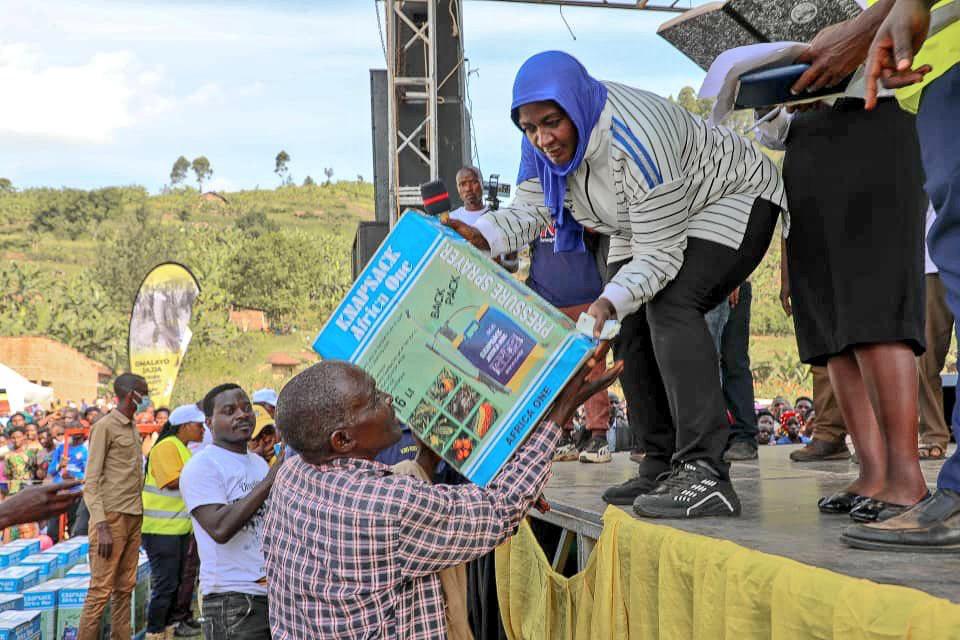
Rather than relying on conventional government systems, Namyalo has adopted a highly personalized method of delivering support. Her initiatives often involve distributing tools such as sewing machines, salon equipment, and livestock directly to individuals. While this creates immediate economic opportunities, critics argue that such targeted assistance can also reinforce personal loyalty and dependence, especially in vulnerable communities.
Her criticism of traditional poverty reduction programs centers on inefficiency and leakage of funds. She portrays bureaucratic systems as barriers that prevent aid from reaching ordinary citizens. In contrast, her hands-on approach is framed as more transparent and impactful. However, this model also bypasses institutional oversight, raising concerns about accountability and sustainability.
Beyond economic support, Namyalo’s activities are deeply embedded in political organization. Through ONC structures, she mobilizes communities in support of Yoweri Museveni and the National Resistance Movement. Public events, donation campaigns, and youth-focused outreach programs serve not only as platforms for empowerment but also as avenues for political engagement.
Her focus on the youth—often referred to as “Bazzukulu”—has been particularly significant. By combining material assistance with messaging around patriotism, self-reliance, and political participation, she effectively links economic survival with civic alignment. This dual messaging has helped consolidate support in key urban and peri-urban populations.
Ultimately, Namyalo’s rise reflects a broader shift in how influence is built at the grassroots level in Uganda. By merging direct economic intervention with political mobilization, she embodies a model where social support and electoral strategy operate hand in hand—blurring the line between public service and political campaigning.