












BY Karim Were
The Patriotic League of Uganda has assigned officer numbers to 118 new members, including prominent businessmen Sudhir Ruparelia and Godfrey Kirumira and former Vice President Prof Gilbert Bukenya.
KAMPALA — September 12, 2026: The Patriotic League of Uganda (PLU), chaired by Gen Muhoozi Kainerugaba, has assigned Patriotic Officer numbers to 118 new members, bringing prominent figures from Uganda’s political, business and professional circles into the organisation’s expanding structure.
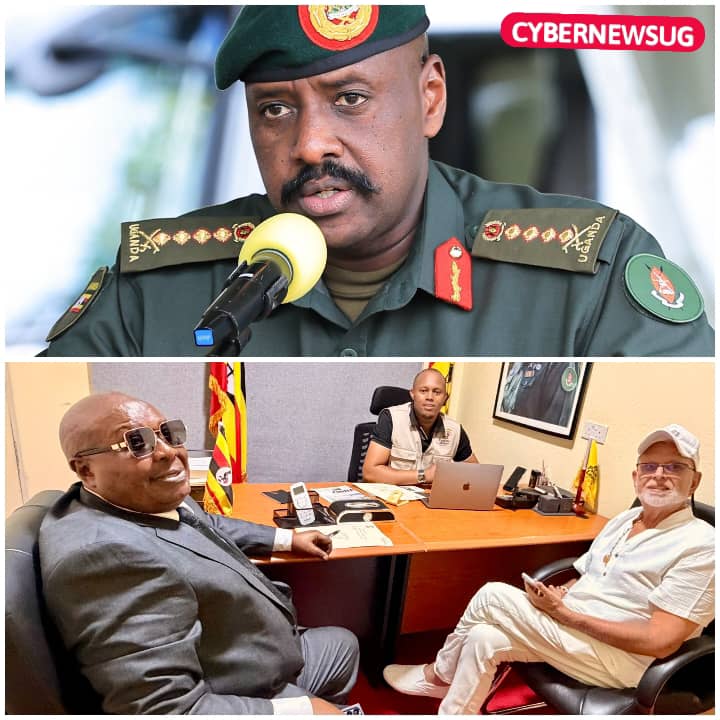
Among the latest appointees are businessman Dr Sudhir Ruparelia, businessman Godfrey Kirumira and former Vice President Prof Gilbert Bukenya. Ruparelia was assigned PO/198, Kirumira PO/199, while Bukenya received PO/300
The appointments were announced on Friday, September 11, by PLU General Secretary Fadil Twalla. The new numbers run from PO/183 to PO/300, representing the latest phase in the organisation’s effort to build a wider network of Patriotic Officers across Uganda.
The development comes days after Ruparelia and Kirumira publicly endorsed Gen Muhoozi Kainerugaba’s anticipated bid for Uganda’s presidency in the 2031 elections, giving the PLU mobilisation campaign prominent backing from sections of the business community.
Sudhir, Kirumira receive prominent numbers
Ruparelia and Kirumira were among the high-profile business figures who appeared at the PLU headquarters in Naguru, Kampala, on September 7 during the launch of the organisation’s digital platform and mobilisation activities around Muhoozi’s 2031 presidential ambitions.
According to reports from the event, the two businessmen signed endorsement registers supporting Kainerugaba.
The endorsements were significant because of the businessmen’s visibility within Kampala’s business community. Their participation also came alongside political leaders, legislators, religious figures and other public personalities.
Advertisment

The Daily Monitor reported that the PLU had begun distributing physical endorsement books through its administrative structures nationwide as part of its mobilisation campaign for Kainerugaba.
Following the endorsements, Kainerugaba publicly thanked the two businessmen.
“I thank my big brothers Kirumira and Sudhir. Thank you for the love you have always shown me. I will not forget it,” he said in a message reported on September 9.
Their subsequent inclusion among the Patriotic Officers places the two businessmen within the formal membership structure being developed by PLU.
Bukenya given PO/300
Prof Gilbert Bukenya, who served as Uganda’s Vice President from 2003 to 2011, was assigned PO/300, the highest number in the latest batch.
Bukenya was also present at the September 7 PLU gathering, where he spoke about the organisation and its political direction.
Reports from the event said the former vice president expressed support for Muhoozi and compared PLU’s rapid growth with the earlier development of the National Resistance Movement (NRM).
His involvement gives the organisation another prominent figure with experience in Uganda’s national political establishment.
Bukenya previously served as Member of Parliament for Busiro County and held the vice-presidential position under President Yoweri Museveni for several years.
His appointment as a Patriotic Officer therefore adds a former senior government official to a structure that already includes ministers, legislators, professionals, businesspeople and community leaders.
118 new Patriotic Officers
The latest list contains 118 names, according to PLU communications reported by Ugandan media.
Besides Ruparelia, Kirumira and Bukenya, the list includes government ministers, Members of Parliament, businesspeople, professionals and other public figures.
Among those listed are ministers Amos Lugoloobi, Sarah Nakawuki, Musa Ecweru and Faith Mercy Lakisa. Other names include Keefa Kiwanuka, Molly Kamukama, Yorke Odria Alioni, John Bosco Kariisa, Peninah Busingye and Ruth Rujoki Mushabe.
The appointments take the organisation’s publicly listed Patriotic Officer numbers up to 300.
Twalla congratulated the new officers and called on them to serve with diligence, loyalty and commitment to PLU and Uganda.
The use of numbered Patriotic Officer positions is part of PLU’s effort to establish an identifiable organisational network rather than relying only on informal supporters.
PLU expands its organisational structure
The latest appointments come as PLU seeks to expand its presence beyond its central leadership and establish stronger mobilisation structures across the country.
The organisation has recently increased its public activities, including the launch of a digital platform, engagement with different social groups and mobilisation around Muhoozi’s political ambitions.
At its Naguru headquarters, the September 7 gathering brought together political leaders, MPs, PLU officials, religious figures and members of the business community. PLU described the occasion as part of its broader effort to encourage dialogue, mobilisation and participation around Uganda’s future leadership.
The organisation has also said it intends to remain a civic organisation and pressure group within the NRM rather than becoming a political party. Public comments circulated by PLU supporters indicated that its activities are intended to be pursued within the NRM framework.
That distinction could become increasingly important as the 2031 political cycle approaches.
Business community and Muhoozi’s 2031 ambitions
The latest appointments are closely connected to a broader political development: the emergence of public endorsements for Muhoozi Kainerugaba ahead of the 2031 presidential election.
Kainerugaba, who is also Uganda’s Chief of Defence Forces, has become the focus of a growing political mobilisation effort led by PLU.
On September 7, Ruparelia and Kirumira joined other political and business figures in publicly supporting his presidential ambitions. The Daily Monitor described the development as part of a growing PLU campaign involving prominent business leaders and former opposition figures.
The participation of business leaders is politically significant because Uganda’s private sector plays a major role in employment, investment and urban economic activity.
However, endorsement of a political candidate by individual businesspeople should not automatically be interpreted as representing every member of Uganda’s business community. The available reports establish the public positions of the named individuals, but do not demonstrate a unanimous position across the wider private sector.
What the Patriotic Officer numbers mean
The designation of Patriotic Officer appears to be an organisational position within PLU rather than a constitutional or state appointment.
The latest list was announced by PLU General Secretary Twalla on behalf of the organisation, with the statement describing the recipients as people awarded Patriotic Officer numbers by PLU chairman Gen Muhoozi Kainerugaba.
The title should therefore not be confused with a military rank, government position or formal public-service appointment.
This distinction is particularly important because some recipients are prominent public figures whose other positions may carry official responsibilities, while the Patriotic Officer designation relates to their association with PLU.
A growing network of influential figures
PLU’s latest appointments demonstrate an effort to bring together people from different sectors of Ugandan society.
The list includes politicians, government officials, business leaders, professionals and community figures. Such diversity gives the organisation a potentially broad network for mobilisation and communication.
For PLU, the appointments also provide a visible way of recognising individuals associated with its activities.
Twalla has previously indicated that the number of recognised Patriotic Officers has grown from an initial group to 300, suggesting that the system is being used as the organisation expands.
The latest appointments consequently represent more than the recognition of three prominent individuals. They are part of a wider organisational expansion.
Political significance
The development comes at a politically important moment for Uganda.
With the 2026 electoral cycle underway and attention increasingly turning toward the political landscape that could shape the 2031 elections, public endorsements of potential presidential candidates are attracting greater attention.
Muhoozi’s position is particularly notable because he combines a senior military role with an increasingly visible political profile.
The participation of civilians such as Ruparelia, Kirumira and Bukenya allows PLU to demonstrate that support for Muhoozi extends beyond political activists and includes prominent figures from business and public life.
At the same time, the endorsements represent the individual political positions of those who have made them and should not be treated as evidence of a nationwide consensus.
Military and political questions
Muhoozi’s political mobilisation has also generated questions about the relationship between military service and political activity.
Uganda’s Constitution provides that the Uganda Peoples’ Defence Forces should be non-partisan and subordinate to civilian authority. The Uganda Peoples’ Defence Forces Act also contains provisions concerning serving military personnel seeking political office.
These provisions make the legal and institutional circumstances surrounding any future transition from military service to electoral politics an important issue.
However, the appointment of civilians such as Ruparelia, Kirumira and Bukenya as PLU Patriotic Officers does not itself constitute a military appointment or change their civilian status.
Any future decision by Muhoozi to formally seek elected office would have to be considered in light of the applicable constitutional and legal requirements.
From endorsement to mobilisation
The sequence of events illustrates the way PLU is attempting to convert public endorsements into a broader organisational campaign.
First came the launch of the digital platform and public mobilisation drive. This was followed by endorsements from prominent figures, including Ruparelia and Kirumira. The latest development is the formal identification of a new group of Patriotic Officers.
The approach provides PLU with a structured network through which it can coordinate activities and communicate with supporters.
It also gives supporters a formal identity within the organisation, with each officer receiving an individual number.
Whether the structure can translate its growing visibility into sustained grassroots political support remains a question for the coming years.
Broader implications for Uganda’s politics
The expansion of PLU and the public endorsements of Muhoozi illustrate the early positioning of political actors ahead of the next major presidential contest.
For the business community, the involvement of figures such as Ruparelia and Kirumira highlights the intersection between Uganda’s economic elite and emerging political movements.
For established political figures such as Bukenya, participation demonstrates that Muhoozi’s mobilisation is attracting support from people with experience in different phases of Uganda’s political history.
But the political significance of these developments will ultimately depend on whether the growing organisational structure can establish durable support across Uganda’s regions and social groups.
Conclusion
The assignment of Patriotic Officer numbers to Sudhir Ruparelia, Godfrey Kirumira and former Vice President Prof Gilbert Bukenya marks another step in the expansion of the Patriotic League of Uganda.
With Ruparelia receiving PO/198, Kirumira PO/199 and Bukenya PO/300, the three prominent figures now form part of a PLU network that has reached 300 numbered Patriotic Officers.
Their recognition follows the public endorsement of Gen Muhoozi Kainerugaba by Ruparelia and Kirumira and comes as PLU intensifies its organisational and political mobilisation activities.
The developments are likely to keep PLU and Muhoozi at the centre of Uganda’s emerging political conversation. For now, however, the latest appointments primarily demonstrate the organisation’s expanding membership structure and its effort to bring influential figures from politics, business and wider society into its ranks.
**Source: