
























By Our Entertainment Reporter
Celebrity relationships have once again become a major talking point online, with social media users closely following developments involving some of Uganda’s well-known personalities.
From photographs and public appearances to cryptic social-media posts and comments, seemingly small details can quickly trigger speculation about whether celebrities are dating, separating or reconnecting.
But while online discussions can generate thousands of comments within hours, not every claim circulating on social media has been confirmed by the people involved.
That distinction has become increasingly important in Uganda’s entertainment industry, where celebrities often find themselves at the centre of relationship rumours based largely on public observations rather than official statements.
When social media becomes the source of speculation
Celebrity relationship rumours often begin with ordinary events.
A photograph showing two public figures together, a comment on Instagram, a birthday message or even a decision to follow or unfollow someone can become the basis for widespread speculation.
In some cases, celebrities later confirm the relationship themselves. In others, they deny the claims or explain that the people involved are simply friends, colleagues or business associates.
Recent entertainment reports have illustrated how difficult it can be to separate confirmed information from online speculation.
Former Miss Uganda and actress Stella Nantumbwe, for example, was the subject of reports alleging that she had separated from her husband, Saidi Bukenya.
Nantumbwe addressed the reports in May 2026 but did not publicly confirm or deny the alleged separation. Instead, she said her private life was not for public consumption and questioned the level of interest in her marriage. (Pulse Uganda)
Her response highlights a recurring issue in celebrity reporting: silence or reluctance to discuss a private relationship should not automatically be interpreted as confirmation of rumours.
What is actually confirmed?
For entertainment audiences, the most reliable information usually comes from direct statements by the people involved, documented public events or reputable reporting that clearly identifies its sources.
A celebrity appearing alongside another person does not necessarily establish that the two are romantically involved.
Likewise, a social-media post may provide context but may not be enough to establish the nature of a relationship.
This is particularly relevant when celebrities maintain friendships with people of the opposite sex or collaborate professionally.
Ugandan singer and television personality Crysto Panda, for instance, previously rejected speculation that he and singer Sheebah Karungi were romantically involved.
The rumours gained attention partly because of their professional relationship and perceived chemistry, but Crysto Panda said their relationship was based on friendship, mutual respect and business rather than romance. (Sqoop)
The episode demonstrates why direct clarification from the individuals concerned can be important when public speculation begins to grow.
The role of photographs and public appearances
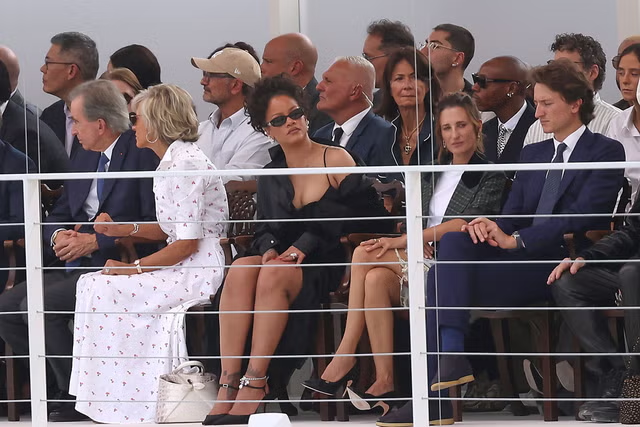
Images are among the most common triggers of celebrity relationship speculation.
A photograph of two celebrities attending the same event can quickly be interpreted as evidence of a romantic connection, particularly when the image appears intimate or is accompanied by suggestive commentary.
However, photographs provide only a snapshot of an event.
They do not necessarily establish what happened before or after the image was taken, nor do they automatically reveal the nature of the relationship between the people pictured.
This is why responsible entertainment reporting requires additional context before presenting speculation as fact.
Social media can amplify unverified claims
The speed at which information travels online has changed celebrity journalism.
A rumour can begin with a single post and be repeated across Facebook, TikTok, Instagram, X and WhatsApp before the celebrity involved has an opportunity to respond.
By the time a clarification is issued, the original claim may already have reached a much larger audience.
Entertainment websites and social-media pages can also contribute to the cycle by publishing headlines based on speculation, sometimes without clearly distinguishing between what has been confirmed and what is merely being discussed by fans.
For readers, this makes source-checking particularly important.
A viral post is not necessarily evidence that a claim is true.
Why fans remain interested
Celebrity relationships attract attention partly because public figures build strong connections with their audiences.
Fans follow their favourite musicians, actors, television personalities and influencers not only because of their professional work but also because of their lifestyles.
As a result, changes in a celebrity’s public behaviour can attract considerable attention.
A new friendship, a public appearance with someone, a birthday message or a change in social-media activity can all generate discussion.
For celebrities, however, the same visibility can make it difficult to maintain a boundary between professional life and personal relationships.
The importance of allowing celebrities to clarify
Relationship rumours can have real consequences for the people involved.
A claim about a breakup, marriage or alleged affair can affect reputations and family relationships even when the original information is inaccurate.
That is why claims involving private relationships should be presented carefully, particularly when there is no direct confirmation from the individuals concerned.
Where a celebrity has responded publicly, their statement provides an important part of the story.
Where no response has been issued, that absence should also be acknowledged rather than replaced with assumptions.
What remains unclear
In many celebrity relationship stories, the biggest unanswered question is whether the people at the centre of the speculation have actually confirmed the relationship being discussed.
Until they do, social-media comments, photographs and fan theories remain speculation rather than established fact.
The distinction is especially important when reports involve alleged breakups or new relationships.
A celebrity may choose to keep their personal life private, and that decision does not necessarily provide evidence for either side of a rumour.
A changing entertainment news environment
Uganda’s entertainment industry continues to evolve alongside the growth of social media.
Celebrities now communicate directly with fans, while audiences can react instantly to developments in their personal and professional lives.
That direct connection can make entertainment news more immediate, but it can also blur the line between verified information and online speculation.
For journalists and entertainment platforms, the challenge is therefore not simply to report what is trending but to establish what can actually be confirmed.
For audiences, the lesson is similar: popularity online does not automatically make a claim factual.
As relationship rumours continue to generate buzz, the most important question remains straightforward what has actually been confirmed by the people involved, and what is still only speculation?
That distinction can help readers follow celebrity stories without confusing online discussion with established fact.
Source: