

























By Karim Were
Luweero school visit highlights progress among more than 700 learners while identifying infrastructure needs requiring follow-up
The Office of the National Chairman (ONC) has stepped up monitoring of government-aided schools as part of efforts to assess service delivery, strengthen accountability and identify challenges affecting learners and school management.
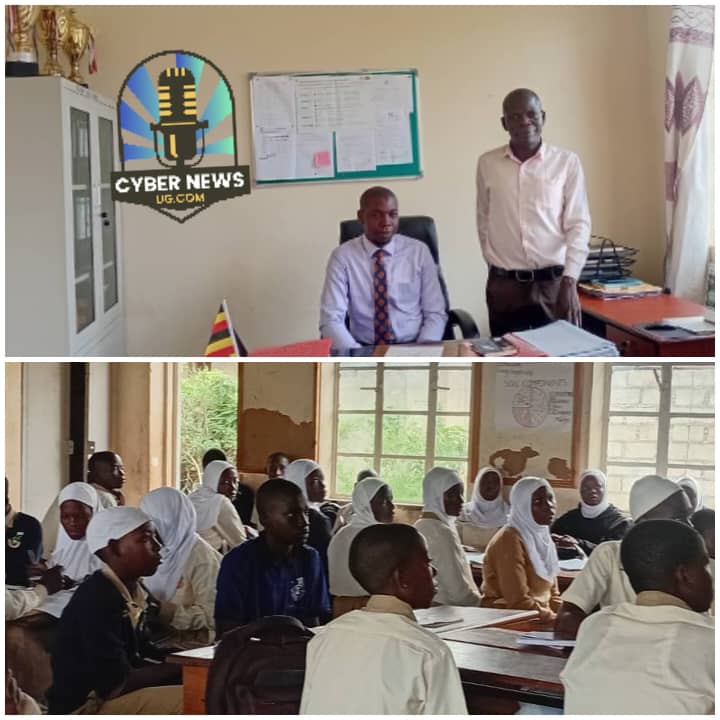
As part of the initiative, ONC Coordinator Mawejje Nsonzi Peter visited Luwube Seed Secondary School in Luweero District, where he reviewed the institution’s operations and engaged with school management on the progress of teaching and learning.
The monitoring exercise found that learning at the school was progressing smoothly for more than 700 students, while also highlighting infrastructure needs that require attention. Among the issues identified was the need to renovate the school’s main hall.
The visit forms part of broader efforts by the ONC to monitor the implementation of government programmes and assess whether public institutions are delivering services as intended.
Assessing service delivery at school level
Government-aided schools are an important part of Uganda’s public education system, providing access to secondary education to thousands of learners across the country.
Regular monitoring of such institutions can help identify challenges that may not be immediately visible from administrative reports. School visits also provide an opportunity for officials to interact directly with administrators, teachers and other stakeholders responsible for delivering education services.
During the visit to Luwube Seed Secondary School, Mawejje reviewed the school’s operations and held discussions with management regarding the institution’s performance and existing needs.
The assessment indicated that the school was continuing with its academic activities and serving a student population of more than 700 learners.
The smooth continuation of learning provides an indication of the school’s operational progress. However, the identification of infrastructure gaps underscores the importance of combining service-delivery monitoring with follow-up on physical facilities.
Infrastructure remains part of education quality
While teaching and learning are central to education, the condition of school infrastructure also influences the environment in which students and teachers operate.
At Luwube Seed Secondary School, the need to renovate the main hall emerged as one of the issues requiring immediate follow-up.
A main hall can serve multiple functions within a school, including assemblies, meetings, examinations-related activities, co-curricular programmes and other institutional events. Its condition can therefore affect the school’s ability to conduct activities effectively.
The identification of the renovation requirement during the monitoring exercise gives the relevant authorities and stakeholders an opportunity to assess the scope of the work and determine the appropriate response.
However, the information available does not specify the estimated cost of the renovation, the extent of the structural damage or the funding source that would be used to address the need.
Those details would need to be established through a technical assessment and the appropriate administrative processes.
ONC monitoring and accountability
The ONC has increasingly used field monitoring as a way of assessing how government programmes and public services are being implemented at grassroots level.
The approach is intended to connect policy and government programmes with their actual implementation in communities.
Education is among the sectors where such monitoring can provide useful information because service delivery involves multiple levels of government administration, school management, teachers, learners and communities.
Monitoring schools can also help identify differences between planned services and conditions on the ground.
For example, an institution may have adequate enrolment and functioning academic programmes but still face challenges involving classrooms, sanitation, laboratories, libraries, teachers’ accommodation or other facilities.
Identifying such challenges early allows them to be documented and referred to the relevant authorities for consideration.
In the case of Luwube Seed Secondary School, the ONC visit highlighted both aspects: the continuation of learning for a sizeable student population and the need to address an infrastructure requirement.
More than 700 students affected by school conditions
The school’s population of more than 700 students means that improvements to its facilities could potentially benefit a significant number of learners.
A functional school environment is particularly important as Uganda continues to pursue efforts to expand access to education while improving the quality of learning.
For students, the quality of the physical environment can affect participation in school activities and the overall experience of education.
For school administrators, adequate facilities make it easier to organise assemblies, meetings, examinations and other activities that support institutional management.
The main hall renovation therefore represents more than a physical infrastructure issue. It is part of the wider question of whether schools have the facilities required to support their educational responsibilities.
At the same time, the available information does not indicate that the school’s academic programme has been disrupted by the condition of the hall. The monitoring exercise instead found that learning was progressing smoothly.
Importance of follow-up
One of the key measures of any monitoring exercise is whether identified challenges receive appropriate follow-up.
A school visit can document a problem, but resolving it requires coordination between the institution, local authorities, education officials and, where applicable, other government agencies or development partners.
For Luwube Seed Secondary School, the next step would be to establish the specific requirements for renovating the main hall and determine how the issue can be addressed within the relevant planning and budgeting frameworks.
Such follow-up can also help ensure that monitoring reports translate into practical improvements rather than remaining observations.
Effective monitoring therefore involves several stages: identifying the condition of a service, documenting challenges, communicating findings to responsible authorities and tracking progress towards resolution.
Broader significance for government schools
The monitoring of Luwube Seed Secondary School comes against the broader need for accountability in the delivery of public services.
Government invests significant resources in education through infrastructure development, staffing, learning materials and other programmes. Monitoring helps establish whether those investments are producing the intended outcomes.
At the school level, accountability can involve ensuring that available resources are properly managed, that learning continues as scheduled and that infrastructure and other operational needs are identified.
It can also provide policymakers with information that can inform future planning.
Field-based monitoring is particularly relevant in districts where schools may face different challenges depending on their location, enrolment levels, infrastructure and available resources.
What may be an urgent need at one school may not necessarily be the same at another. Direct engagement with school management can therefore provide more specific information for decision-making.
Need for sustained education monitoring
The situation at Luwube Seed Secondary School also illustrates why education monitoring needs to be continuous rather than limited to occasional inspections.
Schools are dynamic institutions. Enrolment can change, infrastructure can deteriorate, staffing requirements can evolve and new operational challenges can emerge over time.
Regular engagement allows authorities to identify these changes and respond accordingly.
It also gives school managers an avenue through which they can communicate challenges affecting service delivery.
For learners, the ultimate objective is to ensure that administrative processes and government programmes translate into an effective learning environment.
The ONC’s monitoring role can contribute to that objective by documenting conditions at grassroots level and drawing attention to issues requiring intervention.
Balancing progress with remaining challenges
The findings from the Luweero visit present a mixed but generally constructive picture.
On one hand, more than 700 students are continuing with their education and learning is reported to be progressing smoothly. On the other, the school has infrastructure needs that require attention, particularly the renovation of its main hall.
This combination demonstrates why service-delivery assessments should look beyond headline indicators such as enrolment.
A school may be operational and conducting lessons while still requiring investment in infrastructure and other facilities.
Documenting both achievements and shortcomings provides a more complete picture of service delivery and can help authorities prioritise interventions.
Conclusion
The ONC monitoring visit to Luwube Seed Secondary School in Luweero has highlighted the value of direct assessment of government-aided institutions and engagement with those responsible for delivering public services.
The school is continuing to provide education to more than 700 students, with learning reported to be progressing smoothly. At the same time, the identified need to renovate the main hall provides a clear area for further attention.
As monitoring of government schools continues, the effectiveness of the initiative will depend not only on identifying challenges but also on ensuring that documented needs are followed up through the appropriate government and administrative channels.
For schools such as Luwube Seed Secondary School, sustained monitoring can help bridge the gap between government education programmes and the realities experienced by learners and school communities.
Source: