
























By Karim Were
UCFR hosts researchers from the Institute for African Studies as Uganda and Russia explore opportunities for deeper academic, diplomatic and Africa-focused cooperation
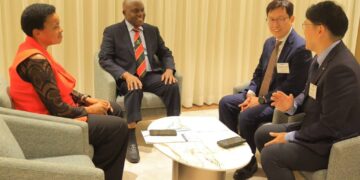
The Uganda Council on Foreign Relations (UCFR) hosted a delegation from the Institute for African Studies of the Russian Academy of Sciences (IAS RAS) during the researchers’ visit to Uganda, providing an opportunity for discussions on Africa, international relations and potential areas of cooperation.
The engagement brought together Uganda’s foreign-relations community and Russian scholars specialising in African affairs. It forms part of broader efforts to strengthen dialogue and knowledge exchange between Ugandan institutions and international research organisations.
Although details of the specific discussions and agreements reached during the meeting were not provided, the engagement highlights the role of research institutions and foreign-policy organisations in shaping a better understanding of Africa’s changing political, economic and diplomatic environment.
UCFR hosts Russian Africa specialists
The Institute for African Studies of the Russian Academy of Sciences is a research institution focused on African affairs, including the continent’s political, economic, social and historical developments.
Its engagement with the UCFR provides a platform for exchanging perspectives on issues affecting Africa and the wider international system.
For Uganda, such engagements can provide an avenue for presenting the country’s perspectives on regional and continental affairs while allowing researchers and foreign-policy practitioners to examine developments from different international viewpoints.
The UCFR, meanwhile, provides a forum through which foreign-policy issues can be discussed beyond formal government-to-government channels.
The meeting with the Russian delegation therefore carries significance not only as an academic engagement but also as part of wider people-to-people and institution-to-institution diplomacy.
Growing importance of Africa-focused research
Africa has become an increasingly important subject in global policy, economics and international relations discussions.
Issues such as regional integration, trade, investment, security, energy, infrastructure, food security, technology and the changing structure of global diplomacy have increased demand for research on African countries and their relationships with external partners.
Uganda occupies a strategic position in East Africa and participates in several regional and continental institutions, including the East African Community and the African Union.
The country’s location and its involvement in regional political and economic affairs make it a relevant case for researchers examining developments in East Africa.
Engagements between Ugandan institutions and international research organisations can consequently contribute to a broader understanding of the opportunities and challenges facing the region.
Academic diplomacy and foreign relations
Research institutions can play an important role in international relations by generating knowledge that informs policymakers, diplomats, businesses and civil society.
Academic exchanges also provide opportunities for researchers to examine issues from perspectives that may differ from official government positions.
Such exchanges are sometimes described as a form of soft diplomacy because they build relationships through research, education, professional networks and cultural understanding rather than formal diplomatic negotiations alone.
The UCFR engagement with the IAS RAS delegation fits within this wider tradition of international dialogue.
For Uganda, maintaining relationships with researchers and institutions from different parts of the world can help broaden access to international perspectives on the country’s foreign-policy priorities.
For Russian researchers, engagement with Ugandan institutions can provide an opportunity to gain first-hand perspectives on developments in East Africa and to strengthen academic networks on the continent.
Uganda-Russia relations provide wider context
The meeting also takes place against the background of Uganda’s longstanding diplomatic relationship with Russia.
Uganda and Russia have maintained diplomatic relations for decades, with cooperation extending into areas including education, trade, investment, defence, science and technology.
Ugandan students have historically benefited from educational opportunities in Russia, while the two countries have maintained political and diplomatic contacts on regional and international issues.
Russia has also sought to deepen its engagement with African countries through political, economic and diplomatic initiatives.
For African countries, relations with external partners are increasingly shaped by efforts to diversify international partnerships and expand economic and diplomatic options.
That broader environment makes research-based exchanges particularly relevant, as institutions seek to understand changing global relationships and their implications for African countries.
Importance of independent research
While diplomatic relations are normally conducted through governments, independent research institutions can contribute valuable analysis of international developments.
Institutes such as the IAS RAS examine historical and contemporary developments across Africa, potentially providing policymakers and researchers with comparative perspectives on political and economic trends.
For Ugandan researchers and foreign-policy specialists, interaction with such institutions can support discussions on regional developments, international partnerships and Africa’s position in the global system.
At the same time, international academic engagement can help ensure that African perspectives remain central to research about the continent.
This is particularly important because African countries are often studied through external perspectives, while local scholars and institutions possess contextual knowledge that can significantly improve the quality of analysis.
Potential areas for future cooperation
Although the available information does not identify specific agreements reached during the UCFR meeting, engagements of this nature can create opportunities for future cooperation.
Potential areas could include joint research, academic exchanges, conferences, publications, policy discussions and comparative studies on African and international affairs.
Any such cooperation would depend on subsequent decisions by the institutions involved, and there is no information confirming that specific programmes were agreed during this particular visit.
Research collaboration could nevertheless contribute to stronger professional networks between Ugandan and Russian scholars.
It could also encourage greater exchange of research on subjects relevant to Uganda and the wider East African region.
Uganda’s position in East African affairs
Uganda’s role in East Africa gives foreign researchers a broad range of issues to examine.
The country is an important participant in regional trade and integration initiatives and plays a role in discussions concerning peace and security in the Great Lakes and wider East African regions.
Uganda also has significant agricultural, energy and natural-resource potential, while Kampala remains an important centre for regional diplomacy and international organisations.
These factors make the country an important location for discussions about Africa’s economic transformation and its evolving international partnerships.
For researchers from outside Africa, direct engagement with Ugandan institutions can supplement academic research by providing access to local perspectives and institutional experience.
The role of foreign-policy councils
Foreign-policy councils and similar organisations provide spaces where diplomats, academics, policymakers and other experts can engage on international affairs.
Their work can complement formal diplomacy by facilitating discussions that bring together different professional and intellectual perspectives.
The UCFR’s hosting of the Russian delegation demonstrates how such institutions can contribute to international dialogue.
Rather than focusing exclusively on formal diplomatic negotiations, these engagements can examine broader questions about international cooperation, Africa’s place in the global system and the changing relationships between African states and global powers.
Broader significance
The meeting between the UCFR and the Institute for African Studies comes at a time when African countries are seeking stronger and more diversified international partnerships.
Uganda, like other African states, engages with a wide range of international partners across different sectors.
Maintaining these relationships requires an understanding of the interests, priorities and perspectives of different countries and institutions.
Academic and research exchanges can contribute to that understanding by creating channels for dialogue that extend beyond official diplomatic meetings.
For Russia, sustained engagement with African research institutions can improve understanding of political, economic and social developments on the continent.
For Uganda, international academic relationships can provide access to comparative research and alternative perspectives on global affairs.
Conclusion
The Uganda Council on Foreign Relations’ engagement with the delegation from the Institute for African Studies of the Russian Academy of Sciences represents an important research and dialogue opportunity between Ugandan and Russian institutions.
While the available information does not indicate that specific agreements or commitments were reached during the visit, the meeting highlights the growing importance of academic and research diplomacy in international relations.
As Africa’s role in global political and economic affairs continues to evolve, sustained engagement between African institutions and international research organisations can help deepen understanding, strengthen professional networks and encourage more informed discussions about the continent’s future.
For Uganda, maintaining such channels of engagement can complement formal diplomatic relations while giving researchers and policy experts additional opportunities to exchange ideas on issues affecting East Africa, Africa and the wider international community.
Editorial note: The supplied information confirms the UCFR’s hosting of the IAS RAS delegation but does not provide the meeting date, names of individual delegates, specific discussion points, quotations or details of agreements. Those details have therefore not been invented or presented as confirmed facts.
Source: