


















By Karim Were
Parliament has given the government until October 21 to explain the charcoal restrictions and demonstrate how affordable alternative cooking fuels will be made available to households.
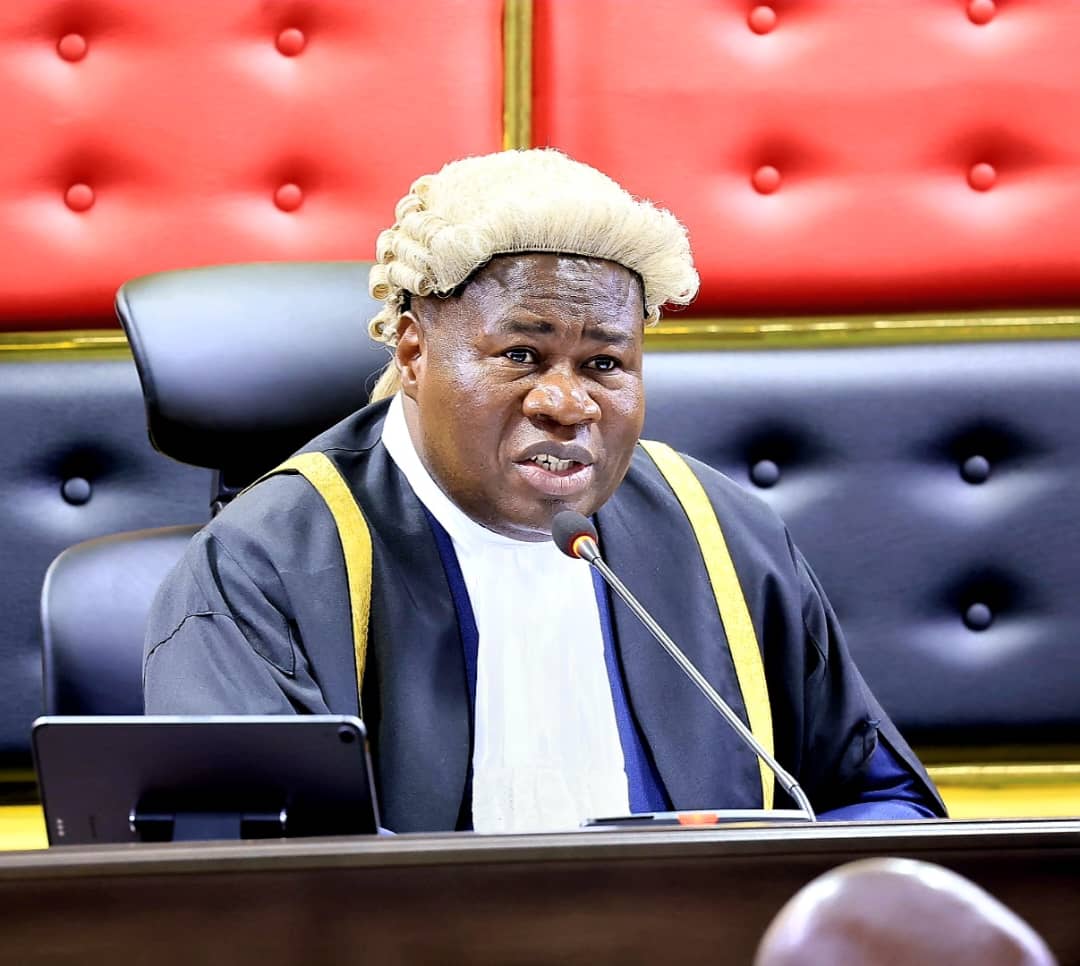
KAMPALA — Speaker of Parliament Jacob Marksons Oboth has suspended enforcement of Uganda’s charcoal ban until the government presents a comprehensive report on the restrictions and the availability of alternative cooking fuels, following concerns that many households cannot easily afford to switch to other energy sources.
Oboth issued the directive during a parliamentary sitting on Wednesday, October 14, 2026, giving the Ministry of Energy and Mineral Development until the following Wednesday, October 21, to update lawmakers on the implementation of the ban and progress in promoting alternative energy.
The decision followed concerns from legislators about the practical difficulties of enforcing the restrictions against a background of widespread reliance on charcoal and firewood for cooking.
“I do that not because I support charcoal, but because I am aware of how difficult it is going to be for the enforcers,” Oboth said, according to Parliament’s official account of the proceedings.
The suspension places the government’s enforcement approach under parliamentary scrutiny, with lawmakers seeking clarification on whether households have access to affordable and practical alternatives before restrictions are applied.
The directive does not, by itself, establish that the underlying executive order has been repealed. Instead, Parliament is awaiting further information from the responsible ministry before determining the way forward.
#Government ordered to explain alternative energy plans
Oboth directed the government to report on the charcoal restrictions and explain the extent to which the ministry had promoted alternative energy sources.
“Government should come next Wednesday and update us on this ban, and tell us the extent of the performance by the ministry in promoting alternative energy sources,” he said.
The report is expected to help lawmakers assess the government’s preparedness to reduce dependence on charcoal without creating additional hardship for households that rely on it for daily cooking.
The debate reflects a broader policy challenge: balancing environmental protection with the immediate energy needs of households, traders and businesses.
Although the government has promoted alternatives such as liquefied petroleum gas (LPG), electric cooking, ethanol and biogas, legislators have questioned whether those options are sufficiently affordable and accessible to support a rapid transition.
The government’s report will therefore be important in determining what progress has been made and what further measures may be required.
Parliament’s official statement did not announce a new permanent policy or specify whether the suspension would be extended beyond the period leading to the government’s presentation.
#Opposition questions affordability of alternatives
Leader of the Opposition Joel Ssenyonyi raised concerns about the public reaction to the enforcement announcement, saying it had caused alarm among people who depend on charcoal and firewood.
He questioned what the government had done since the restrictions were introduced to ensure that ordinary Ugandans could access affordable alternatives.
“How aggressively are we making it possible for ordinary persons to access alternative sources of energy?” Ssenyonyi asked, according to Parliament’s account.
He argued that the government should have used the intervening period to make alternative fuels more accessible before intensifying enforcement.
Ssenyonyi referred to figures from a 2024 Uganda Bureau of Statistics survey, cited during the debate, indicating that between 87 per cent and 94 per cent of Ugandans use charcoal and firewood.
The figures were presented in Parliament to underline the potential scale of the challenge facing policymakers. They should not be interpreted as a precise estimate of the proportion of Ugandans who use charcoal alone, because the figures cited cover charcoal and firewood.
Ssenyonyi also questioned the uptake of LPG, putting it at about two per cent and arguing that some households could not afford refills even where they had received starter kits.
His concerns highlight the difference between distributing cooking equipment and ensuring that households can afford to use it consistently.
A household may receive a gas cylinder and accessories, for example, but still struggle to purchase refills. Similarly, electric cooking may not be practical for households without reliable electricity connections or the resources to buy suitable appliances.
The opposition’s position, as presented during the debate, was that the government needed to demonstrate the availability and affordability of alternatives before expecting widespread compliance.
Source: