


























By Our Reporter
A payment receipt attached to a whistleblower petition has intensified scrutiny of the government’s controversial land acquisition in Mpigi District, with petitioners calling for a comprehensive investigation into the transaction.
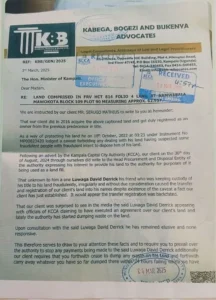

The petition, addressed to the Chief of Defence Forces, Gen. Muhoozi Kainerugaba, alleges that government funds were paid for land earmarked for Kampala’s new landfill project despite unresolved ownership disputes surrounding the property. The allegations have not been independently verified.
The land became central to government plans following the 2024 Kiteezi landfill disaster, which prompted the search for a new waste disposal site. Kampala Capital City Authority (KCCA) subsequently initiated the process of acquiring land in Mpigi District for the proposed facility.
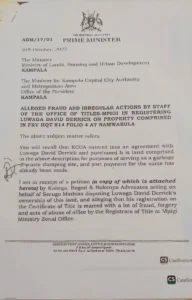
According to the petition, the payment receipt raises questions about whether due diligence was completed before public funds were released. Petitioners argue that investigators should establish whether ownership of the land had been conclusively verified, identify the recipient of the payment, and determine whether all legal requirements were met before the transaction was approved.
The controversy has been compounded by competing ownership claims. Multiple individuals have laid claim to portions of the land, while documents referenced in the petition reportedly indicate that sections of the property may fall within the Buto-Buvuma Central Forest Reserve. These claims remain the subject of investigations and have not been conclusively determined.
Whistleblowers have also questioned changes made during the acquisition process, alleging that one of the land blocks initially cleared during legal review was later replaced with another parcel. They argue that the alteration warrants further examination to establish whether proper procedures were followed.


The petition has reportedly been shared with several senior government offices and anti-corruption agencies, with calls for a transparent review of the procurement process and the management of public funds.
As inquiries continue, investigators are expected to determine whether the payment complied with procurement and land administration laws, whether the land was lawfully acquired, and whether any public officials or private individuals bear responsibility for any irregularities that may be established.
The outcome of the investigation is likely to have significant implications for public accountability, land governance, and future government land acquisitions, particularly for strategic inf
rastructure projects.