

























By Karim Were
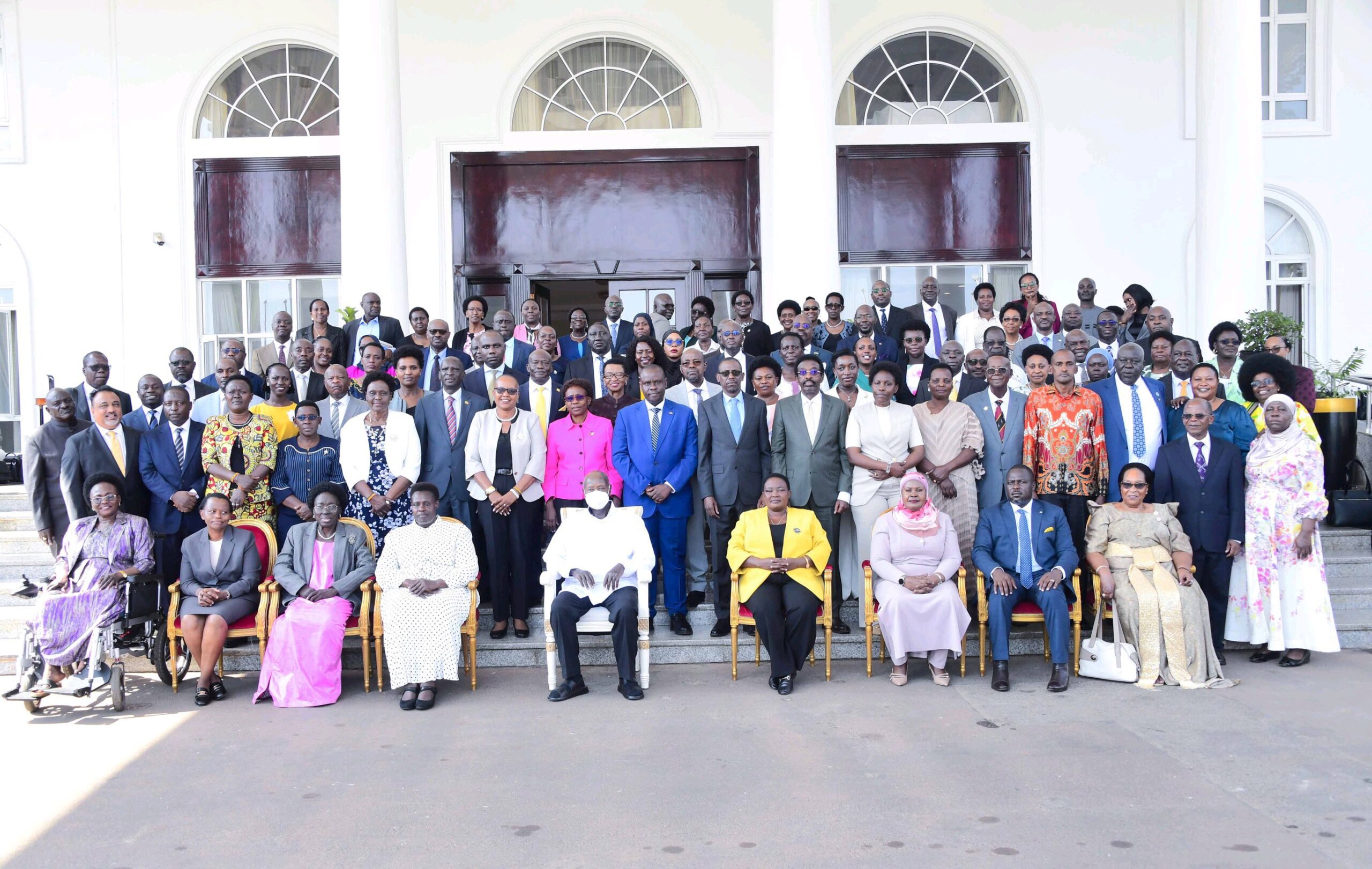
President Yoweri Museveni on Monday officially set Uganda’s new administration in motion by chairing the first Cabinet meeting of the 2026–2031 term, signaling the transition from government formation to the implementation of the National Resistance Movement (NRM) manifesto.
The inaugural Cabinet sitting comes after the swearing-in of the new administration on June 8 and follows a 10-day induction retreat at the National Leadership Institute (NALI) in Kyankwanzi, where ministers were equipped with the government’s policy priorities, leadership values and strategic objectives for the next five years.
The retreat, opened by President Museveni on June 15, served as a platform to orient both newly appointed and returning ministers on public service ethics, collective responsibility and the administration’s development agenda. It also sought to ensure that Cabinet members begin the new term with a shared understanding of the government’s priorities.
Monday’s meeting brought together the country’s top political leadership, including Vice President Jessica Alupo, Prime Minister Robinah Nabbanja, Deputy Prime Ministers, Government Chief Whip Dr. Jane Ruth Aceng, Cabinet Ministers, Ministers of State and senior government officials.
Also present were NRM Secretary General Richard Todwong, Permanent Secretaries from various ministries, Kampala Capital City Authority Executive Director Hajjat Sharifah Buzeki and Senior Presidential Advisor on Defence and Security Issues Lt. Gen. Proscovia Nalweyiso.
The first Cabinet meeting marks the official commencement of collective government business under the new administration, with ministers now expected to translate the NRM’s policy commitments into programmes and deliverables over the next five years.
Uganda’s Cabinet derives its authority from Article 111 of the Constitution of the Republic of Uganda, 1995 (as amended), which mandates it to formulate, determine and implement government policy while coordinating the functions of ministries and other public institutions.
This version shifts the emphasis from the event itself to the beginning of the government’s implementation phase, making it more analytical and policy-focused rather than simply descriptive.