






















By Karim Were
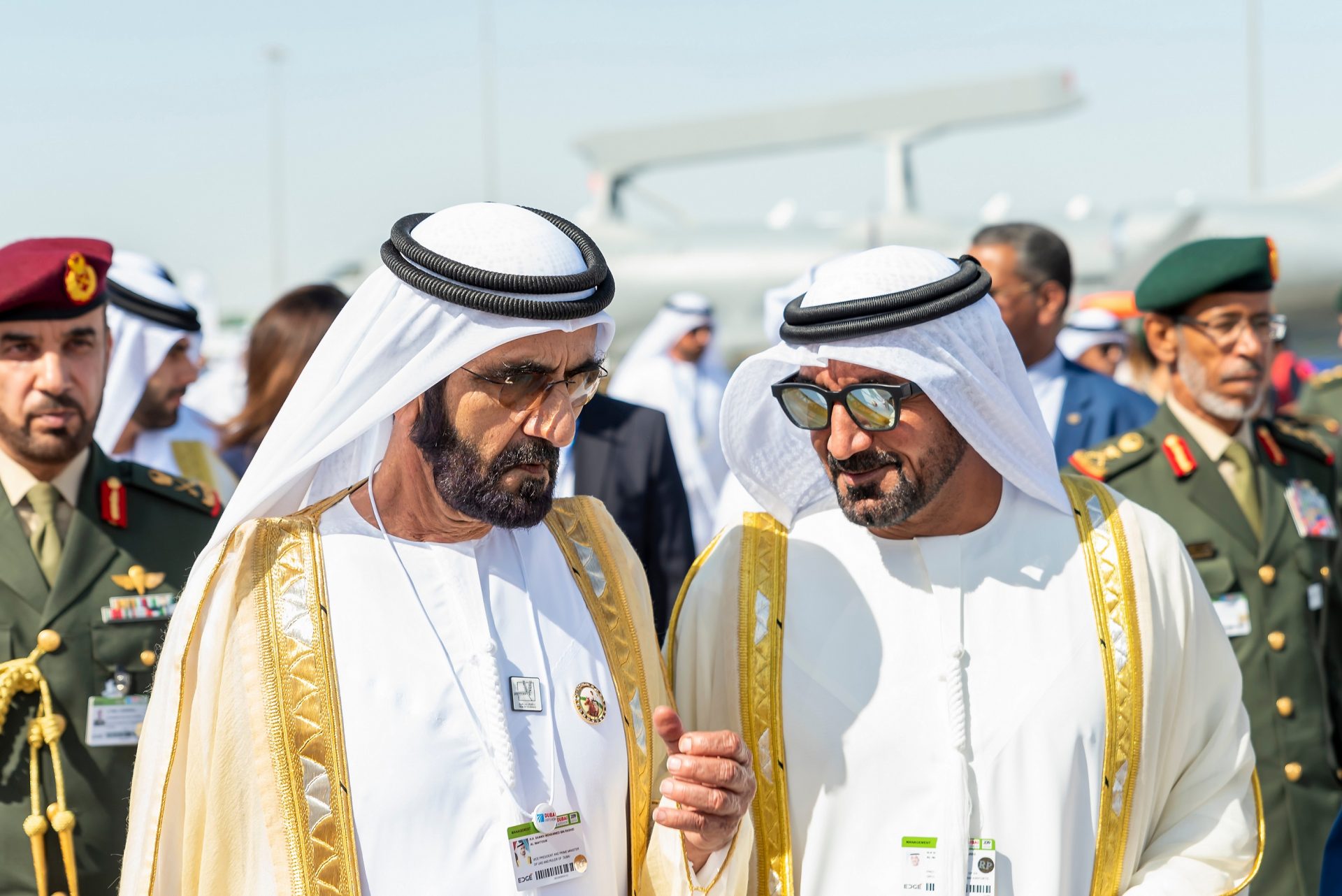
Dubai has declared 10 days of official mourning following the death of Sheikh Ahmed bin Rashid Al Maktoum, a senior member of the ruling family who played prominent roles in security, sport, business and horse racing.
DUBAI, United Arab Emirates — Dubai has entered an official period of mourning following the death of Sheikh Ahmed bin Rashid Al Maktoum, the younger brother of Dubai’s ruler, Sheikh Mohammed bin Rashid Al Maktoum, who died on Monday, September 21, 2026, at the age of 76.
The Dubai Ruler’s Court announced 10 days of official mourning beginning Monday, with flags to be flown at half-mast throughout the emirate. The announcement marked the death of a senior member of the Al Maktoum family whose public career stretched across Dubai’s military and security institutions, sports administration, business and horse racing.
Sheikh Ahmed’s death prompted tributes from senior UAE leaders and ruling families, including his brother Sheikh Mohammed, UAE President Sheikh Mohamed bin Zayed Al Nahyan and Sheikh Hamdan bin Mohammed bin Rashid Al Maktoum, the Crown Prince of Dubai and Deputy Prime Minister and Minister of Defence.
Sheikh Mohammed described the loss in a message shared publicly, saying: “You are absent from our eyes but not from our prayers and hearts.”
The funeral prayer was scheduled for Tuesday, September 22, at 1pm at Zabeel Grand Mosque in Dubai, with condolences to be received at Zabeel Majlis over three days.
Ten days of mourning across Dubai
The official mourning period began immediately after the announcement of Sheikh Ahmed’s death.
According to the Emirates News Agency, WAM, the Court of Sheikh Mohammed bin Rashid declared 10 days of official mourning across Dubai, with flags to be flown at half-mast.
Advertisment at Voyagers come and enjoy the Nature Kikorongo


The period is intended to allow the government, institutions and members of the public to honour the late royal and express condolences to the Al Maktoum family.
The National reported that during official mourning periods in the UAE, flags are lowered to half-mast and public entertainment activities can be affected, although the precise arrangements can vary depending on government directives.
The declaration underscored the significance of Sheikh Ahmed’s position within Dubai’s ruling family and his decades of public service.
His death was announced on Monday morning by the Dubai Media Office, which said the Ruler’s Court mourned his passing and announced the official mourning period.
Sheikh Mohammed mourns his younger brother
The death was particularly significant for Dubai’s ruling family because Sheikh Ahmed was the younger brother of Sheikh Mohammed bin Rashid Al Maktoum, who serves as Vice President and Prime Minister of the UAE as well as Ruler of Dubai.
Sheikh Mohammed paid a personal tribute to his brother after the announcement.
In his message, he prayed for God’s mercy upon Sheikh Ahmed and expressed his grief at the loss.
“May God have mercy on you, my brother,” Sheikh Mohammed wrote, adding that his brother was now with “a generous and great Lord” and would remain in the prayers and hearts of those who knew him.
The message reflected both the personal and public significance of the death.
For the Al Maktoum family, Sheikh Ahmed was a close member of the ruling household. For Dubai, he was also a public figure who had held responsibilities in several institutions central to the emirate’s development.
A life shaped by Dubai’s transformation
Sheikh Ahmed was born in Dubai on July 12, 1950, and was the fourth and youngest son of Sheikh Rashid bin Saeed Al Maktoum, the former ruler of Dubai and one of the key figures in the emirate’s modern development.
His generation witnessed a period of profound transformation in Dubai, from a relatively small Gulf trading centre to a major international business, tourism, aviation and financial hub.
Sheikh Ahmed’s career unfolded alongside that transformation.
He received military training and graduated from the Royal Military Academy Sandhurst in Britain in 1975. He subsequently served in Dubai’s military establishment, including as commander of the Central Military Region.
His military background was followed by senior responsibilities in Dubai’s security sector.
He served as Deputy Chairman of Dubai Police and Public Security, giving him a role within one of the emirate’s most important public institutions.
His career therefore extended beyond ceremonial duties associated with membership of a ruling family.
Contributions to Dubai’s security sector
Sheikh Ahmed’s work in security formed an important part of his public service record.
His association with Dubai Police and Public Security placed him within the institutional development of an organisation that has become central to the emirate’s law enforcement, public safety and security infrastructure.
His career in the security sector also reflected the responsibilities held by senior members of Dubai’s ruling family during the emirate’s rapid development.
Rather than being confined to one area of government, Sheikh Ahmed’s roles expanded into sport, business and community initiatives.
That broad portfolio became one of the defining characteristics of his public life.
Al Wasl and Dubai’s sporting culture
Sheikh Ahmed was also closely associated with Al Wasl Sports Club, one of Dubai’s best-known sporting institutions.
He was among the club’s founding figures and later served as chairman.
Under his leadership, Al Wasl established itself as an important force in UAE football. The club won the UAE league title during his tenure, including the 2006/07 championship.
His association with Al Wasl extended for decades, linking his name to the development of professional sport in Dubai.
The club’s significance goes beyond football results. Like other major sports organisations in the UAE, it has played a role in the development of youth sport, community identity and professional athletics.
Sheikh Ahmed’s involvement therefore became part of a wider story about the growth of organised sport in the UAE.
A major figure in horse racing
Sheikh Ahmed was also a prominent figure in international horse racing.
He founded Jebel Ali Racecourse in 1990, which became one of Dubai’s recognised racing venues.
His racing operation included horses that achieved major success internationally, including Mtoto, Addeybb and Iffraaj. Racing TV reported that Mtoto won the Prince of Wales’s Stakes, Eclipse Stakes and King George VI and Queen Elizabeth Stakes in 1988.
Addeybb also enjoyed notable success, including victory in the Champion Stakes at Ascot in 2020, while Iffraaj later became an important stallion.
His involvement in racing connected Dubai’s growing sporting ambitions with the international horse-racing industry.
The sector has become an important part of the emirate’s global sporting identity, particularly through major racing events that attract international owners, trainers, jockeys and spectators.
Business and real estate roles
Beyond security and sport, Sheikh Ahmed held positions in Dubai’s business and real-estate sectors.
He served as Group Chairman of A.R.M. Holding, a private investment company, and was associated with the Dubai Real Estate Centre. Gulf News also reported that he served as second deputy ruler of Dubai.
These responsibilities placed him within the emirate’s broader economic development at a time when Dubai was diversifying beyond its traditional trading economy.
Real estate, investment and infrastructure became major pillars of Dubai’s transformation during the late 20th and early 21st centuries.
Although Sheikh Ahmed’s public profile was particularly strong in sport and horse racing, his business roles demonstrated the breadth of his involvement in Dubai’s institutional and economic life.
Philanthropic contribution
Sheikh Ahmed’s public life also included philanthropic activity.
In 2021, he supported the establishment of the Hamdan Bin Rashid Cancer Charity Hospital through Dubai Police and Public Security and the Al Jalila Foundation, according to Gulf News.
The initiative formed part of wider efforts to expand access to specialised medical care and strengthen charitable support for cancer patients.
Such activities added another dimension to his public role, alongside his responsibilities in government, security and sport.
Tributes from UAE leaders
Tributes following Sheikh Ahmed’s death extended beyond the immediate Al Maktoum family.
The UAE Presidential Court expressed condolences to Sheikh Mohammed and the Al Maktoum family, praying for mercy for the deceased and patience for his relatives.
The ruling families of other emirates also issued messages of condolence.
The Sharjah Ruler’s Court extended its sympathies to Sheikh Mohammed and the Al Maktoum family following Sheikh Ahmed’s death.
Similar condolences were issued by the ruling courts of Ajman, Fujairah, Ras Al Khaimah and Umm Al Quwain.
The widespread response reflected the close institutional and family relationships among the UAE’s seven emirates.
It also highlighted Sheikh Ahmed’s status as a senior member of the country’s ruling establishment.
Funeral arrangements
The funeral prayer for Sheikh Ahmed was scheduled for Tuesday, September 22, at 1pm at Zabeel Grand Mosque.
Condolences were scheduled to be received at Zabeel Majlis beginning Tuesday afternoon and continuing Wednesday and Thursday.
According to the published arrangements, condolences on Tuesday were to be received from 4pm until Maghrib prayers. On Wednesday and Thursday, mourners were expected to be received from 10am until Dhuhr prayers and again after Asr prayers until Maghrib.
The arrangements provide an opportunity for members of the ruling family, government officials, business leaders, sports figures and members of the public to pay their respects.
What his death means for Dubai’s public life
Sheikh Ahmed’s death comes at a time when Dubai continues to project itself as a global centre for business, tourism, sport and culture.
His generation of the Al Maktoum family played an important role during the decades in which the emirate developed many of the institutions that underpin its modern identity.
His own career crossed several of those sectors.
In security, he was associated with Dubai Police and Public Security.
In sport, he helped shape Al Wasl and contributed to the growth of football and horse racing.
In business, he was associated with investment and real estate.
In philanthropy, he supported healthcare initiatives.
Taken together, these roles illustrate how senior members of Dubai’s ruling family have historically combined governmental responsibilities with involvement in the emirate’s social and economic development.
A legacy spanning generations
Sheikh Ahmed’s life also provides a link between Dubai’s earlier history and its present-day international standing.
As the son of Sheikh Rashid bin Saeed Al Maktoum, he belonged to a generation that witnessed Dubai’s transition from a regional Gulf centre into a global city.
His military education and early service coincided with the formative years of the UAE federation.
His later involvement in sports, business and horse racing accompanied Dubai’s emergence as an international destination.
That historical context is important when assessing his legacy.
His public contributions cannot be separated entirely from the wider institutional development of Dubai itself.
Mourning and continuity
The 10-day mourning period is a period of remembrance rather than a disruption to Dubai’s governing structure.
Sheikh Mohammed remains Dubai’s ruler, while the emirate’s government institutions continue to operate under the established leadership framework.
The mourning period nevertheless gives the city an opportunity to recognise the life and service of a senior member of the ruling family.
For many in Dubai’s sporting and racing communities, the loss also marks the passing of a figure whose influence extended beyond government.
His long association with Al Wasl and Jebel Ali Racecourse means his legacy is likely to remain visible in institutions that continue to operate today.
Conclusion
Dubai is mourning the death of Sheikh Ahmed bin Rashid Al Maktoum, who died at 76 on September 21 after decades of public service across security, sport, business, horse racing and philanthropy.
The Dubai Ruler’s Court has declared 10 days of official mourning, with flags flying at half-mast throughout the emirate. His funeral prayer is scheduled for September 22 at Zabeel Grand Mosque, followed by three days of condolence gatherings.
His brother, Sheikh Mohammed bin Rashid Al Maktoum, has publicly mourned the loss, while the UAE President and ruling families across the federation have extended condolences to the Al Maktoum family.
Sheikh Ahmed’s legacy stretches across several defining areas of Dubai’s modern development. His military and security service, leadership at Al Wasl, contribution to horse racing, business responsibilities and philanthropic activities made him a recognisable figure in the emirate’s public life.
His death marks the end of a long public career but also offers an opportunity to reflect on the generation of leaders who helped shape modern Dubai.
For the Al Maktoum family and those who worked with him, the mourning period will be a time of remembrance. For Dubai, it is a moment to honour a senior member of its ruling family whose life was closely connected to the emirate’s institutional, sporting and economic development.
Source: