

























By Karim Were
CAIRO/WASHINGTON — The conflict between Iran and the United States has widened across the Middle East, with Iran launching attacks against US-allied Gulf states after American strikes on Iranian military targets, raising fears that the confrontation could develop into a broader regional war.
Iranian missile and drone attacks were reported against Kuwait and Bahrain on Wednesday, with Gulf air-defence systems intercepting incoming threats. The attacks followed a new round of US strikes against Iranian targets and came amid growing international concern over civilian casualties and the security of shipping through the strategically important Strait of Hormuz.
The latest escalation has significantly increased pressure on governments across the Gulf, many of which host US military facilities and have sought to avoid becoming directly involved in the conflict.
The confrontation has also unsettled international energy markets because the Strait of Hormuz is a major route for global oil shipments.
Oil prices remained elevated on Thursday despite edging lower, with Brent crude trading at about $95 a barrel amid continued uncertainty over the conflict and the security of regional energy supplies.
Iran targets US allies
The Iranian attacks have expanded the geographical scope of the conflict beyond Iran and the immediate US military targets.
According to reports, Kuwait and Bahrain activated air-defence systems to respond to Iranian attacks. Jordan also reported intercepting Iranian aerial threats, while other countries in the region remained on heightened alert.
Bahrain described the attacks as Iranian aggression, while governments across the region have been monitoring developments closely.
The attacks came after the United States carried out fresh strikes against Iranian military infrastructure.
The US military said its operations had targeted Iranian air-defence systems, radar installations, maritime assets, mine-laying capabilities and communications facilities.
Iran, however, has presented its military actions as retaliation for the US attacks.
The cycle of strikes and counter-strikes has raised fears that countries hosting American forces could increasingly become targets, potentially drawing more governments directly into the conflict.
Civilian casualties raise concern
The latest escalation has also renewed attention on the civilian toll of the fighting.
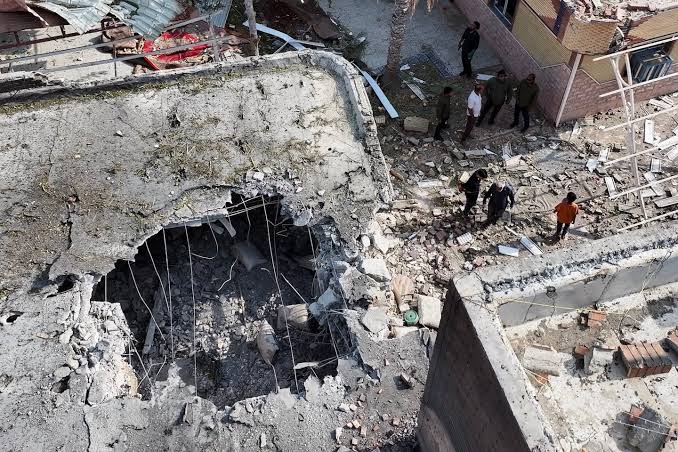
Iran’s Health Minister said 18 people were killed and 108 wounded in US strikes carried out on Tuesday night, according to Reuters.
The Iranian Red Crescent said four people were killed and 67 injured when a wedding ceremony near the coast of the Strait of Hormuz was hit.
The reports have not been independently verified in every detail, and the circumstances surrounding the reported civilian deaths remain under investigation.
The reports have nevertheless intensified calls for restraint and greater protection of civilians.
The conflict has already created significant humanitarian and security concerns, particularly in areas where military infrastructure is located close to civilian populations.
International organisations and governments face growing pressure to prevent further escalation and protect civilians caught in the fighting.
Strait of Hormuz under pressure
One of the most immediate international concerns is the impact of the conflict on the Strait of Hormuz.
The narrow waterway between Iran and Oman is one of the world’s most important energy corridors, carrying large volumes of crude oil and other petroleum products from the Gulf towards international markets.
Any prolonged disruption to shipping through the strait could have consequences far beyond the Middle East.
Higher energy prices could increase transportation and production costs in countries dependent on imported fuel, potentially adding to inflationary pressures.
Asian markets were closely watching developments on Thursday, with investors balancing concerns over the Middle East against positive developments in technology stocks and other parts of the global economy.
The conflict has therefore become not only a military and diplomatic crisis but also a major global economic concern.
Oil markets remain sensitive
International oil markets have responded to developments in the conflict, although prices have not moved in a single direction.
Brent crude was reported at about $94.69 a barrel on Thursday after falling around one per cent, while US crude was trading at approximately $90.18 a barrel.
The decline followed earlier increases triggered by renewed fighting and concerns about energy supplies.
The price movements demonstrate the sensitivity of global markets to developments around the Strait of Hormuz.
A prolonged interruption of shipping could place additional pressure on oil-importing countries and consumers.
For developing economies, particularly those already facing high transportation and energy costs, a sustained increase in international oil prices could increase the cost of goods and services.
Diplomatic efforts face new pressure
The widening conflict has complicated diplomatic efforts aimed at preventing a larger war.
Countries including Egypt, Qatar and Pakistan have called for renewed negotiations, while regional governments have urged an end to attacks that could further destabilise the Middle East.
The United States has defended its military operations as responses to attacks on American forces and maritime interests.
Iran has continued to portray its military actions as retaliation against US attacks.
The competing positions have made it difficult to establish a clear path towards an immediate ceasefire.
The latest attacks on Gulf states could further complicate diplomatic efforts because several of those countries have close security relationships with Washington while simultaneously maintaining diplomatic and economic interests in the wider region.
Wider regional implications
The escalation comes at a particularly sensitive time for the Middle East, where several conflicts and political disputes are already placing pressure on governments and humanitarian organisations.
The possibility of attacks spreading to additional countries has increased security concerns across the Gulf.
Governments are reviewing air-defence arrangements and military preparedness while airlines and shipping companies are also monitoring developments in the region.
A prolonged conflict could affect aviation routes, maritime transportation, insurance costs and international trade.
The economic consequences could extend well beyond countries directly involved in the fighting.
International concern grows
The latest developments have attracted renewed international attention because of the possibility that the conflict could move beyond a direct confrontation between Washington and Tehran.
The involvement of US allies in the Gulf introduces additional military and diplomatic risks.
Any attack resulting in substantial casualties in a US-allied country could increase pressure on Washington to expand its military response.
At the same time, further US strikes against Iran could prompt Tehran to intensify attacks against American forces or allied countries.
This creates a cycle in which each new military action carries the potential to trigger another response.
Global markets watch the conflict
Financial markets have remained sensitive to developments in the Middle East.
Investors are particularly concerned about oil prices, inflation and the potential effect of higher energy costs on central-bank decisions.
Reuters reported that markets were increasing expectations of a possible US interest-rate hike as oil prices remained above $90 a barrel.
Higher oil prices can contribute to inflation by increasing the cost of transportation, manufacturing and electricity generation.
Central banks therefore face a difficult balance if the conflict causes energy prices to remain elevated for an extended period.
What happens next
The immediate focus is on whether the latest attacks lead to further military escalation or whether diplomatic channels can produce a pause in hostilities.
The United States has indicated that its military campaign is linked to attacks against American forces and maritime interests, while Iran has continued retaliatory operations.
Gulf governments are meanwhile attempting to protect their territories while avoiding becoming full participants in the conflict.
The security of the Strait of Hormuz remains another critical concern.
Any prolonged disruption could affect oil supplies and international trade, making the conflict an issue of global economic importance.
For civilians across the region, however, the most immediate concern remains the human cost of the fighting.
As military operations continue, governments and international organisations face growing pressure to prevent further civilian casualties and find a diplomatic route out of the escalating confrontation.
The coming days are likely to determine whether the latest exchange of attacks remains a limited escalation or develops into a wider regional conflict with consequences for security, energy markets and the global economy.
**Source:Be Blessed