
























By Prince Mulungi Peter
Students at Kampala School of Sciences, Budo, have called for greater youth participation in Busoga Kingdom affairs, alongside more scholarships, bursaries and support for young people with talents and skills.
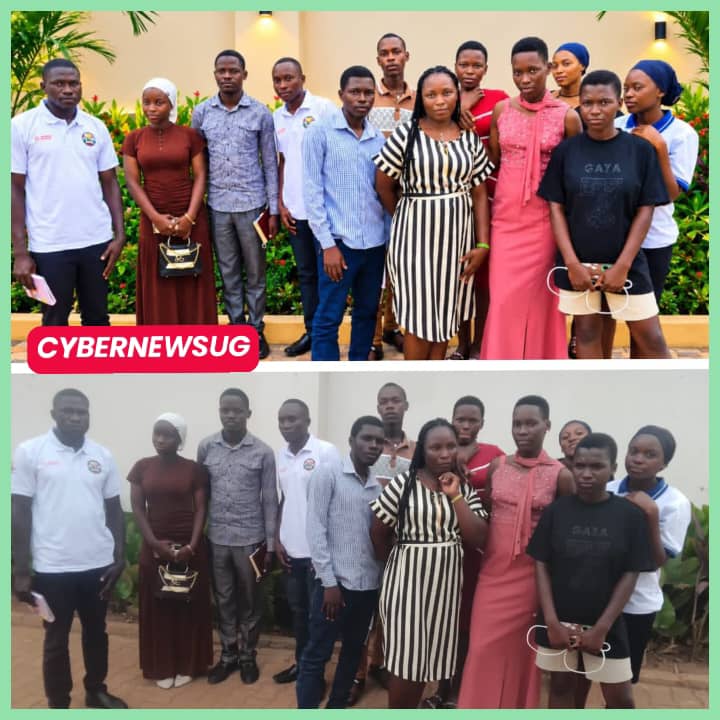
Students at Kampala School of Sciences, Budo, have called for stronger youth participation in Busoga Kingdom affairs and increased access to education and talent-development opportunities during an engagement with the Basoga Tuseetule Organization.
The engagement was held as part of the Busoga NDHIKO Schools/University Tour 2026, an initiative aimed at connecting young people with their cultural heritage while creating space for dialogue on issues affecting youth in the Busoga community.
According to Omulangira Mulungi Peter, Director of the Basoga Tuseetule Organization, the engagement focused on Busoga’s culture and norms, the history of the region, the institution of the Kyabazinga, current leadership, unity and the role of young people in shaping the future of the kingdom.
The students also used the interaction to raise concerns about their participation in Busoga Kingdom affairs and the challenges faced by young people seeking education, scholarships and opportunities to develop their talents.
Students raise concerns over youth participation
One of the key issues raised during the engagement was what students described as limited involvement of young people in the affairs and activities of Busoga Kingdom.
Youth make up an important part of Busoga’s population, but their participation in cultural and community institutions remains an area that organisations such as Basoga Tuseetule are seeking to strengthen.
The students’ concerns point to the importance of creating platforms where young people can learn about their heritage while also participating in discussions about the future of their communities.
For the organisers, the school and university tour is intended to bridge that gap by taking conversations about Busoga’s identity, history and leadership directly to young people in educational institutions.
The approach also provides an opportunity for students who may live or study outside Busoga to remain connected to their cultural background.
Education support remains a major concern
The students also highlighted difficulties related to tuition and access to financial assistance for education.
They called for increased opportunities for scholarships and bursaries to support young people who may struggle to meet the cost of their education.
Education costs can place significant pressure on families, particularly where several children are pursuing secondary or university education. Scholarships and bursaries can therefore play an important role in helping students remain in school and complete their studies.
However, no specific number of students requiring financial assistance, scholarship amounts or existing funding gaps was provided in the information released by the organisation.
The concerns raised during the engagement therefore represent the views expressed by participating students rather than independently verified statistics on education financing in Busoga.
Omulangira Mulungi said the organisation would work with the students to explore practical ways of addressing the challenges they identified.
Calls for greater support for youth talent
Another issue raised was limited support for young people with talents and practical skills.
Students said young people need more opportunities to develop and use their abilities, including through initiatives that can help transform skills and talents into sustainable livelihoods.
The concern extends beyond formal education, as many young people possess abilities in areas such as creative work, sports, technology, entrepreneurship and other vocational fields.
Providing mentorship, training, access to equipment, networking opportunities and financing can help young people turn such abilities into productive activities.
For Busoga, strengthening youth skills could also contribute to wider economic development by enabling young people to participate more actively in entrepreneurship and employment.
The organisation said it intends to explore practical solutions with the students rather than limiting the engagement to discussions.
Culture and identity at the centre of the tour
The Busoga NDHIKO Schools/University Tour 2026 also seeks to promote knowledge of the region’s cultural heritage.
During the engagement at Kampala School of Sciences, Budo, the organisers shared information about Busoga’s cultural norms, history, the Kyabazinga and the kingdom’s current leadership.
Such engagements can provide young people with an opportunity to understand the institutions and traditions associated with their heritage.
For students studying away from their home communities, cultural education can also serve as a way of maintaining links with their origins.
The organisers linked preservation of Busoga’s heritage to youth empowerment, arguing that young people should not only be recipients of cultural knowledge but should also have a role in preserving and developing it.
From cultural awareness to practical opportunities
A major theme emerging from the engagement was the need to connect cultural mobilisation with practical support for young people.
While cultural programmes can strengthen identity and social cohesion, students also face immediate challenges related to education, employment, skills development and access to opportunities.
The commitment by Basoga Tuseetule to work with students on practical solutions could therefore provide a pathway for turning dialogue into programmes, provided appropriate partnerships and resources are secured.
However, the organisation has not yet announced specific scholarship schemes, funding commitments or youth programmes resulting from the Budo engagement.
Any future initiatives would need clear eligibility requirements, transparent selection procedures and sustainable financing to have a lasting impact.
Importance of youth participation in Busoga’s future
The discussion comes at a time when young people are increasingly important to conversations about cultural preservation, leadership and economic development.
For traditional and cultural institutions, engaging younger generations can help ensure that cultural knowledge is passed from one generation to another.
At the same time, young people expect institutions to address practical challenges affecting their education, employment and economic prospects.
This creates an opportunity for cultural organisations to combine heritage programmes with youth-development initiatives.
Greater youth participation could also allow young people to contribute new ideas and technologies to the preservation and promotion of Busoga’s cultural identity.
Appreciation for supporters
Omulangira Mulungi expressed appreciation to Owekitibwa Bukembe James, identified as the Prime Minister, and Owekitibwa Magala Ivan for supporting the engagement.
He specifically acknowledged Magala for financial assistance towards transportation and thanked others who contributed to the organisation of the activity.
The organisers did not disclose the amount of financial support provided or the total cost of the tour.
Such logistical assistance can be important for organisations conducting outreach programmes, particularly where activities involve travelling to schools and universities and engaging large numbers of students.
Building stronger links with young Basoga
The engagement at Kampala School of Sciences, Budo, illustrates the broader objective of creating stronger links between Busoga’s cultural institutions and its younger generation.
The students’ concerns also demonstrate that cultural engagement alone may not be sufficient to address the challenges facing young people.
There is a need for sustained programmes that combine cultural education with opportunities in education, skills development, entrepreneurship and talent promotion.
For students, the success of the initiative will ultimately depend on whether the concerns raised during engagements lead to practical interventions.
For organisations working with the youth, maintaining regular communication with students can help identify priority areas and ensure that future programmes respond to their actual needs.
A broader role for cultural organisations
Cultural organisations across Africa have increasingly faced the challenge of remaining relevant to younger generations while preserving established traditions and institutions.
For Busoga, the balance involves protecting cultural heritage while creating space for young people to participate in shaping the kingdom’s future.
The NDHIKO Schools/University Tour could provide one platform for achieving that objective if the engagements are followed by measurable programmes and partnerships.
The issues raised at Budo — youth participation, education financing and talent development — also extend beyond cultural affairs and touch on broader questions of social and economic opportunity.
Addressing them will require collaboration among cultural institutions, schools, universities, government agencies, private-sector organisations, development partners and communities.
Conclusion
The engagement between the Basoga Tuseetule Organization and students at Kampala School of Sciences, Budo, has placed youth participation, education support and talent development at the centre of discussions about Busoga’s future.
Omulangira Mulungi said the organisation is committed to working with students to explore practical solutions to the challenges they raised.
The next step will be turning that commitment into clearly defined programmes that can provide tangible opportunities for young people while strengthening their connection to Busoga’s history, culture and institutions.
As the Busoga NDHIKO Schools/University Tour 2026 continues, the response to the concerns raised by students will be an important measure of whether cultural outreach can evolve into sustained youth empowerment.
For Busoga’s younger generation, preserving heritage and building a better future need not be competing goals. With meaningful participation, education opportunities and support for talent and skills, the two objectives can reinforce each other.
Source: