

























By Karim Were
About 10 officers from key police and government agencies have completed a five-day training aimed at strengthening investigations into technology-facilitated human trafficking and the handling of digital evidence.
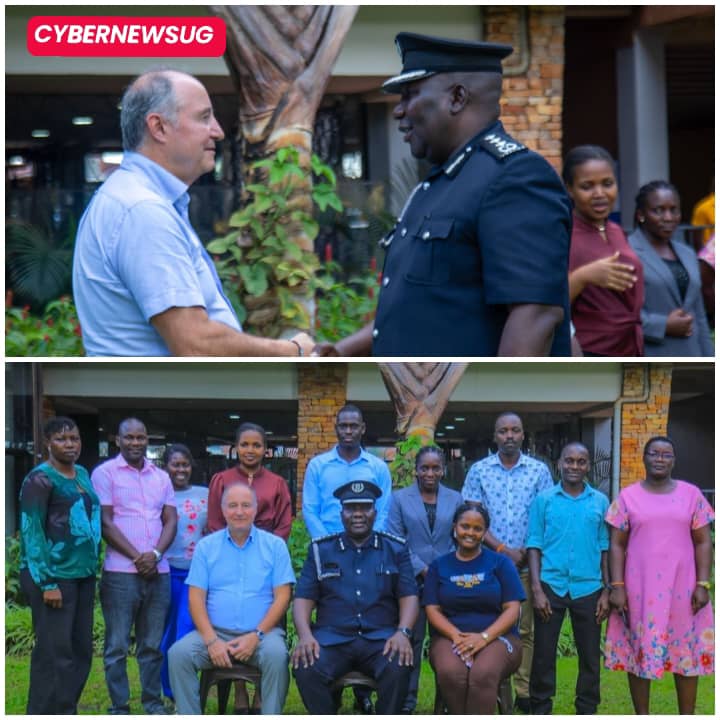
About 10 officers drawn from Uganda Police Force departments responsible for information and communications technology (ICT), Interpol, criminal investigations and forensic services, together with officials from the Ministry of Foreign Affairs, have completed a five-day training programme focused on digital forensics and cybercrime-linked human trafficking.
The training concluded at Kabira Country Club, where the closing ceremony was presided over by Senior Commissioner of Police (SCP) Fred Enanga, Deputy Director of Interpol and International Relations.
Enanga commended the participants for successfully completing the intensive course, describing the training as an important step towards strengthening Uganda’s capacity to investigate human trafficking cases in which digital technology plays a role.
The programme focused on the growing intersection between technology, cybercrime and human trafficking, particularly the importance of identifying, preserving, analysing and presenting digital evidence during investigations.
The participation of officers from several specialised departments and the Ministry of Foreign Affairs also highlights the increasingly cross-border nature of investigations involving technology-enabled crime and trafficking.
Strengthening investigations
Digital technology has transformed the way criminals communicate, recruit victims, move money and coordinate activities.
For law enforcement agencies, this means that investigations increasingly depend on evidence that exists in digital form, including information stored on electronic devices and other digital platforms.
Digital forensics provides investigators with techniques for identifying and analysing such evidence while maintaining its integrity.
The five-day training therefore sought to strengthen the practical capacity of participating officers to deal with investigations where technology is connected to human trafficking and other forms of cyber-enabled crime.
According to the information provided by the Uganda Police Force, the training specifically addressed Digital Forensics and Cybercrime-Linked Human Trafficking.
The course brought together officers from the Directorate of ICT, Interpol, the Criminal Investigations Directorate (CID) and forensic services, as well as officials from the Ministry of Foreign Affairs.
Bringing the different institutions together is significant because complex trafficking investigations can require expertise from multiple areas of government.
While investigators may be responsible for establishing what happened and identifying suspects, digital specialists can assist with electronic evidence, forensic personnel can support evidence examination, and international-relations officials can become important when investigations cross national boundaries.
Enanga highlights importance of digital evidence
During the closing ceremony, SCP Fred Enanga praised the participants for completing the training.
He described the programme as a significant step towards improving the Uganda Police Force’s ability to investigate technology-facilitated human trafficking and effectively manage digital evidence.
The emphasis on evidence management is particularly important in technology-related investigations.
Digital information can be vulnerable to alteration, deletion or loss. Investigators therefore require appropriate skills to identify relevant evidence and preserve it in a manner that supports the integrity of an investigation.
For law enforcement, collecting digital information is only one part of the process.
Investigators must also establish where the evidence came from, how it was obtained and how it was handled before it is presented as part of a criminal investigation or court proceeding.
Training in digital forensics can therefore help investigators develop a more systematic approach to technology-related cases.
Human trafficking increasingly intersects with technology
Human trafficking is traditionally associated with the exploitation and movement of people, but modern communication technologies have created additional avenues that criminals can potentially exploit.
Digital platforms can be used to communicate with potential victims, advertise false employment opportunities, maintain contact with victims or coordinate activities across different locations.
Technology can also create challenges for investigators because suspects may operate from different jurisdictions while communicating through digital platforms.
This means that a trafficking investigation may involve evidence located in several countries or on platforms operated by companies outside Uganda.
The cross-border character of such cases makes cooperation between national law enforcement agencies and international partners particularly important.
Uganda’s inclusion of Interpol officers in the training reflects this dimension of modern crime investigations.
Interpol provides a framework through which law enforcement agencies in different countries can exchange information and cooperate on international criminal investigations.
The involvement of the Ministry of Foreign Affairs also points to the diplomatic and international cooperation requirements that may arise when cases involve multiple jurisdictions.
Why digital forensics matters
Digital forensics is broadly concerned with the identification, collection, preservation, examination and interpretation of information from digital devices and systems.
In a criminal investigation, relevant information may exist in different forms.
Investigators may need to examine electronic communications, digital files, device records or other information that can help establish links between people, locations and events.
However, investigators must approach such material carefully because digital evidence has unique technical and legal considerations.
Poor handling of electronic evidence can compromise its reliability or make it more difficult to establish its authenticity.
Specialised training can therefore help investigators understand the procedures necessary to preserve evidence and document investigative actions.
For cases involving human trafficking, this can be particularly important because digital evidence may help investigators establish communication patterns, identify relationships between suspects and victims, or connect individuals involved in an alleged trafficking network.
The training does not, by itself, mean that any particular trafficking case has been solved or that specific suspects have been identified.
Rather, its stated purpose was to improve the capacity of investigators to handle cases involving the intersection of digital technology and trafficking.
Multi-agency approach
The composition of the training group reflects the importance of cooperation between different government institutions.
The Directorate of ICT brings technical expertise, while CID has a central role in criminal investigations. Forensic specialists provide expertise in the examination and interpretation of evidence, while Interpol officers deal with international police cooperation.
Officials from the Ministry of Foreign Affairs add another layer of expertise where cases involve foreign nationals, international cooperation or legal and diplomatic processes involving other countries.
Such cooperation can reduce gaps that might otherwise arise when a case involves several areas of expertise.
For example, an investigation may begin with information obtained by a criminal investigator but subsequently require digital forensic examination and international cooperation.
A coordinated approach allows investigators to consider these elements as part of the same case rather than treating them as isolated issues.
The training therefore has relevance beyond the individual officers who attended it.
Its potential value lies in improving institutional cooperation and creating a larger pool of personnel with specialised knowledge.
The changing nature of crime
The training comes against the backdrop of a broader transformation in criminal activity.
As societies become increasingly dependent on digital communication, criminals can also use technology to facilitate traditional offences.
This creates new demands on law enforcement agencies, which must continually adapt investigative methods to keep pace with technological change.
Cybercrime investigations can be technically demanding because evidence may be distributed across devices, networks and jurisdictions.
Human trafficking investigations can be similarly complex because they may involve multiple victims, suspects, intermediaries and locations.
When the two areas overlap, investigators require both traditional investigative skills and specialised digital capabilities.
The Uganda Police Force’s investment in training officers in these areas reflects the need for law enforcement to respond to that changing environment.
Protecting victims remains central
While digital forensics focuses heavily on evidence and investigative techniques, the broader objective of trafficking investigations remains the protection of victims and the prosecution of those responsible for exploitation.
Technology can potentially be used by traffickers to identify and target vulnerable people, but the same technology can also assist investigators in identifying patterns and developing evidence.
Law enforcement agencies therefore face the dual challenge of responding effectively to technology-enabled crime while ensuring that investigations respect victims’ rights and applicable legal procedures.
Effective investigations require more than technical skills. Officers must also understand appropriate investigative procedures, evidence handling requirements and cooperation mechanisms.
The multidisciplinary nature of the training is intended to support this broader approach.
International dimension
Human trafficking is not confined by national borders.
People may be recruited in one country, transported through another and exploited in a different jurisdiction. Digital communications can make it possible for individuals involved in such activities to coordinate without being physically present in the same location.
That makes international police cooperation increasingly important.
Interpol’s participation in the training is therefore relevant to the international dimension of investigations involving trafficking and cybercrime.
When evidence or suspects are located outside Uganda, investigators may need established mechanisms for sharing information and working with law enforcement authorities in other jurisdictions.
The presence of Ministry of Foreign Affairs officials also underscores the importance of diplomatic channels in international criminal justice cooperation.
Building specialised capacity
The completion of the five-day course represents one stage in the development of specialised investigative capacity.
Technology changes rapidly, meaning that digital forensics cannot be treated as a one-time area of learning.
Investigators need continuing exposure to new technologies, emerging forms of cybercrime and evolving methods for collecting and analysing digital evidence.
The training can therefore be viewed as part of a broader need for continuous professional development within law enforcement.
For Uganda, strengthening this capacity could have implications for investigations beyond human trafficking, since digital evidence increasingly features in a wide range of criminal cases.
The skills acquired by officers working in ICT, CID, forensic services and international police cooperation can potentially support investigations involving different forms of technology-enabled crime.
Broader implications for Uganda
The growing role of digital technology in crime presents both opportunities and challenges for Uganda’s criminal justice system.
On one hand, digital information can provide investigators with valuable evidence that may help establish relationships, timelines and patterns of activity.
On the other hand, the increasing volume and complexity of digital information means investigators require specialised technical skills and appropriate resources.
The training at Kabira Country Club therefore highlights the importance of ensuring that law enforcement capabilities evolve alongside technology.
It also demonstrates the value of bringing together officers from different specialised areas rather than relying on a single department to manage increasingly complex investigations.
Conclusion
The completion of the five-day digital forensics and cybercrime-linked human trafficking training by about 10 officers marks an effort to strengthen Uganda’s investigative response to crimes involving technology.
With participants drawn from ICT, Interpol, CID, forensic services and the Ministry of Foreign Affairs, the programme brought together technical, investigative and international-cooperation expertise.
SCP Fred Enanga’s remarks at the closing ceremony underscored the importance of developing the capacity to investigate technology-facilitated human trafficking while properly managing digital evidence.
As criminals increasingly use digital tools to communicate and coordinate activities, law enforcement agencies face a continuing need to adapt.
For Uganda, building specialised skills in digital forensics and strengthening cooperation between police departments and other government institutions could become an increasingly important part of efforts to investigate complex crime while protecting victims and ensuring that evidence is handled professionally.
Source: Uganda Police