























By Staff Reporter
Allegations involving financial oversight, retaliation, staff welfare and internal accountability at UNAIDS are set to receive parliamentary scrutiny in the Netherlands, although the claims have not been independently established.
GENEVA/AMSTERDAM — Allegations raised by a former or current whistleblower concerning financial oversight, retaliation, medical support and employment practices at the Joint United Nations Programme on HIV/AIDS (UNAIDS) are attracting renewed attention ahead of a Dutch parliamentary committee debate scheduled for November 5, 2026.
The allegations, as presented in material submitted for scrutiny, include claims that concerns about financial oversight were not adequately addressed, that the whistleblower experienced retaliation after raising those concerns and that her employment was eventually terminated while she was medically incapacitated.
The whistleblower further alleges that the loss of employment-related benefits, including health insurance, compounded the difficulties she faced while receiving medical treatment.
These claims remain allegations and have not been independently established. No finding of financial misconduct, retaliation or failure of duty of care should be inferred solely from the allegations.
What is independently verifiable is that the Dutch House of Representatives has placed a government response concerning alleged misconduct at UNAIDS on the agenda of a committee debate on global health scheduled for November 5. The agenda specifically lists a June 18, 2026 government letter responding to a parliamentary request concerning “misstanden bij UNAIDS,” or alleged misconduct at UNAIDS.
The development places the dispute within a wider discussion about governance and accountability at a time when UNAIDS is undergoing a significant transformation amid changes in global health financing.
Dutch Parliament schedules UNAIDS discussion
The Dutch parliamentary debate is scheduled for November 5, 2026, from 3:30 p.m. to 6:30 p.m. and will be conducted by the House committee responsible for Foreign Trade and Development Cooperation.
According to the official parliamentary agenda, the committee will consider several global-health issues, including a government response concerning alleged misconduct at UNAIDS. The agenda identifies the relevant government letter as dated June 18, 2026. (Tweede Kamer)
The inclusion of the UNAIDS matter means allegations that might otherwise remain within an internal employment or organisational dispute are now subject to political scrutiny by lawmakers.
The Dutch government has therefore been asked to account for its understanding of the concerns and the response to them.
The parliamentary process does not itself constitute an investigation or finding of wrongdoing. Rather, it provides a forum for lawmakers to question the government and examine information relating to the matter.
That distinction is particularly important because the claims made by the whistleblower involve potentially serious issues affecting finances, employment, health and institutional accountability.
Whistleblower alleges retaliation after raising concerns
According to material submitted for scrutiny, the whistleblower says she raised concerns about financial oversight and subsequently experienced what she characterises as sustained retaliation.
The precise allegations and the evidence supporting them would need to be examined by an independent investigative or oversight body before any conclusions could be reached.
The whistleblower alleges that her health deteriorated significantly during the dispute and that she was hospitalised three times following suicide attempts.
She further alleges that she was dismissed while medically incapacitated.
Because these are serious and sensitive claims, they require particular care in reporting.
The allegations do not establish that the organisation caused or contributed to the reported medical events, nor do they establish that the termination was unlawful or retaliatory.
Those questions would require examination of employment records, medical documentation where lawfully available, correspondence, internal procedures and the accounts of all relevant parties.
The whistleblower nevertheless argues that the circumstances raise wider questions about the effectiveness of protections available to people who report concerns within large international organisations.
Claims over loss of medical and employment benefits
Another part of the dispute concerns the alleged consequences of the termination.
The whistleblower claims that losing her position also resulted in the loss of health insurance and other employment-related support at a time when she was receiving medical treatment.
If established, such circumstances could raise questions about the interaction between employment procedures, staff welfare obligations and protections available to employees facing serious health problems.
However, determining whether any employment rules were breached would depend on the terms of the person’s employment, the applicable staff regulations, the circumstances of the termination and any internal or external review already undertaken.
The allegations should therefore not be treated as established findings.
They are claims that have now entered a wider accountability process.
Questions about WHO internal oversight
The allegations also reportedly concern a recorded meeting said to involve the World Health Organization’s Office of Internal Oversight Services.
According to the whistleblower’s account, the meeting included an admission relating to at least some of the issues she had raised.
She alleges, however, that the admission was not followed by a formal investigation.
That claim has not been independently established.
The involvement of WHO’s internal oversight machinery, if confirmed in the relevant records, would nevertheless be significant because UNAIDS is a Joint United Nations Programme and works within the broader UN system.
Questions about who is responsible for investigating allegations, how complaints are escalated and what protections are available to whistleblowers are therefore central to understanding the dispute.
Internal oversight mechanisms exist precisely to examine concerns that may not be appropriately resolved through ordinary management channels.
But the existence of a meeting or discussion does not, by itself, demonstrate that an investigation was legally required or that wrongdoing had occurred.
Those matters depend on the relevant policies and the facts established by competent authorities.
Disability pension and work-related illness dispute
The dispute reportedly extends beyond the employment termination to a disability pension application and an alleged work-related illness.
The whistleblower claims that advice she received during the process contributed to missed deadlines and may have affected her ability to secure benefits or other entitlements.
Again, those claims would need to be tested against documentary evidence.
Questions that an investigation could examine include what advice was given, by whom, when it was given, what deadlines applied and whether the claimant had independent avenues for seeking clarification or review.
The issue highlights a broader challenge faced by employees of international organisations.
Large multilateral institutions operate under specialised employment frameworks that can differ from national labour systems. Staff may have access to internal administrative review, appeals processes, pension arrangements and other mechanisms that are not identical to those available to employees of domestic organisations.
When disputes involve illness, disability or termination, determining responsibility can consequently become complex.
UNAIDS undergoing major transformation
The allegations are emerging at a particularly significant time for UNAIDS.
The organisation is undergoing a transformation of its Joint Programme as the global HIV response faces changing financing conditions and pressure to make international assistance more sustainable.
UNAIDS said in September that governments, communities, UN leaders and global health partners were discussing how a transformed Joint Programme could remain effective, accountable and capable of supporting the global HIV response.
At a September 24 high-level event held during the 81st United Nations General Assembly, participants discussed the future of the Joint Programme and the need to maintain political leadership, accountability and community engagement.
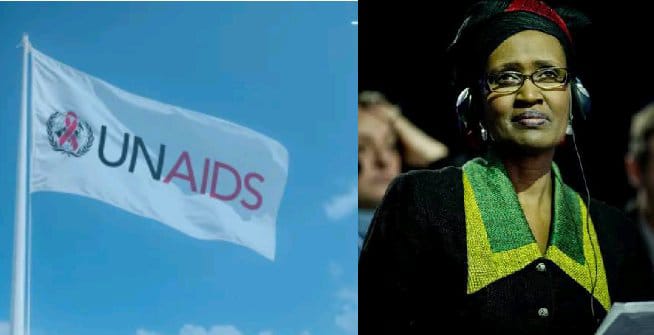
UNAIDS Executive Director Winnie Byanyima said the transformation should not simply involve moving responsibilities between UN institutions but should strengthen national institutions and preserve the functions necessary for the global AIDS response. (UNAIDS)
The organisation has also acknowledged that the global HIV response is operating in a changing financial environment.
At a September 30 consultation, governments, communities, civil society and UN partners discussed plans for a more integrated and financially sustainable Joint Programme. Participants emphasised that accountability and community participation should remain central during the transition. (UNAIDS)
Funding pressures add to accountability debate
The financial environment surrounding UNAIDS is an important part of the wider context.
UNAIDS has reported significant changes in HIV financing and has been working on a future model for the Joint Programme.
A June 2026 working-group document on the future of UNAIDS specifically called for financial oversight structures, reporting requirements, audit mechanisms and transparency standards during the transition.
A report to the 58th Programme Coordinating Board also noted steep reductions in core contributions to some co-sponsoring organisations, with declines of up to 95% for certain lead co-sponsors and 100% for affiliate co-sponsors.
These pressures do not establish any connection to the whistleblower’s allegations.
They do, however, explain why questions about financial management, accountability and institutional efficiency have particular relevance as UNAIDS considers how to operate in the coming years.
UNAIDS maintains global HIV operations
Despite the controversy described in the allegations, UNAIDS has continued its global HIV work.
During the 81st UN General Assembly in September, the organisation sought political support for the future of the Joint Programme and called for continued financing and accountability in the global HIV response.
UNAIDS said its priorities included protecting HIV financing, maintaining continuity of services and supporting a transformed UN programme capable of helping countries work towards ending AIDS as a public-health threat by 2030.
On September 25, UNAIDS reported renewed support from governments, communities and international partners for its role in the HIV response.
The organisation said more than 16 ministers and other senior representatives participated in discussions about its future during UNGA81.
The Netherlands was among the governments involved in discussions about the future of the Joint Programme.
That makes the forthcoming parliamentary scrutiny particularly relevant to a country that is simultaneously participating in discussions about the future of UNAIDS and examining allegations concerning its governance.
Accountability versus institutional continuity
The dispute raises a broader question faced by international organisations: how can institutions protect continuity of essential public programmes while ensuring that allegations of misconduct are independently and credibly addressed?
UNAIDS plays a significant role in global HIV policy, coordination and advocacy.
Its work includes supporting countries, communities and partners in efforts to prevent HIV infections, expand access to treatment and address inequalities that contribute to the epidemic.
The organisation’s own accountability framework recognises the importance of monitoring, evaluation, reporting and mutual accountability.
Its Unified Budget, Results and Accountability Framework describes accountability as a central component of the Joint Programme’s planning and results architecture. (UNAIDS Open Portal)
That institutional commitment makes credible handling of complaints important not only for the individuals involved but also for public confidence in the organisation.
What an independent investigation could establish
The whistleblower is calling for an independent investigation into several areas.
These reportedly include alleged financial losses, the circumstances surrounding her dismissal, the handling of her medical and employment-related claims and broader questions concerning UNAIDS leadership and its transformation.
A properly constituted investigation could potentially establish which claims are supported by evidence and which are not.
It could also determine whether established procedures were followed, whether any failures occurred and what corrective measures might be appropriate.
Importantly, an investigation would need to distinguish between three separate issues: whether financial irregularities occurred; whether employment or whistleblower-protection rules were breached; and whether the organisation’s handling of the individual’s health and benefits complied with applicable policies.
Those questions should not be conflated.
A finding that one process was inadequately handled would not automatically establish every other allegation.
Why the Dutch debate matters
The November 5 committee debate could provide an important public forum for examining the Dutch government’s response to the allegations.
The official parliamentary agenda confirms that the UNAIDS matter is one of the issues scheduled for discussion under the committee’s global-health debate.
Lawmakers may use the debate to seek clarification about what the Dutch government knows about the allegations, what oversight mechanisms apply and how accountability should be maintained within international organisations supported by public funds.
The proceedings may also provide an opportunity to distinguish between claims that have been investigated and those that remain unresolved.
That distinction will be important for avoiding the circulation of unverified allegations as established facts.
The importance of whistleblower protection
The controversy also places renewed attention on the role of whistleblowers in international institutions.
Employees are often among the first people to identify potential weaknesses in financial controls, procurement, management practices or other internal systems.
Effective whistleblower frameworks are intended to allow such concerns to be raised without fear of retaliation.
But whistleblower protection is meaningful only if staff believe complaints will be assessed impartially and that legitimate concerns will not result in adverse treatment.
At the same time, institutions must protect due process for the people and departments whose conduct is questioned.
That means allegations should be investigated on evidence rather than presumed to be true simply because they have been raised by a whistleblower.
The balance between those principles is central to any credible accountability system.
No conclusion of misconduct at this stage
There is currently an important distinction between parliamentary scrutiny and a finding of wrongdoing.
The Dutch Parliament has scheduled discussion of alleged misconduct at UNAIDS, and the government has submitted a response to the parliamentary request. (Tweede Kamer)
That is verifiable.
The underlying allegations concerning financial oversight, retaliation, medical treatment, dismissal, pension arrangements and WHO internal oversight remain claims requiring independent examination.
There is no basis in the material available for concluding that UNAIDS leadership or individual officials committed financial misconduct or unlawfully retaliated against the whistleblower.
Likewise, the allegations concerning the WHO oversight meeting should not be presented as proof that the organisation admitted wrongdoing.
Those conclusions must await competent investigation or other authoritative findings.
A test for transparency
The controversy comes as UNAIDS prepares for a significant institutional transition.
The organisation’s transformation discussions have repeatedly stressed accountability, sustainable financing, national ownership and community participation. (UNAIDS)
The whistleblower allegations introduce another dimension: whether internal accountability systems are capable of dealing effectively with concerns raised by staff.
For the organisation, the challenge is to address legitimate scrutiny without allowing unverified allegations to undermine confidence in the wider HIV response.
For governments and parliamentary bodies, the challenge is to ask difficult questions while maintaining a clear distinction between allegations and established facts.
And for the whistleblower, the parliamentary process could provide another avenue through which her claims receive public attention and potentially further examination.
Conclusion
The allegations surrounding UNAIDS have moved beyond an internal dispute and into a wider public accountability discussion, with the Dutch Parliament scheduled to consider the matter on November 5.
The whistleblower alleges financial-oversight failures, retaliation, loss of employment and medical benefits, problems involving a disability pension and inadequate follow-up by internal oversight mechanisms.
Those allegations are serious, but they remain unproven.
The independently confirmed development is that the Dutch House of Representatives has placed alleged misconduct at UNAIDS on the agenda of its November 5 global-health committee debate, following a government response submitted in June.
The timing is significant because UNAIDS is simultaneously undertaking a major transformation aimed at creating a more sustainable and accountable model for the global HIV response.
The forthcoming parliamentary discussion may therefore serve not only as an examination of the specific allegations but also as a broader test of how international organisations handle whistleblower complaints, protect staff rights and maintain financial and institutional accountability.
Ultimately, whether the claims amount to misconduct, retaliation or failures in duty of care must be determined through evidence and competent oversight—not through allegation alone.
Source: