























By Staff Reporter
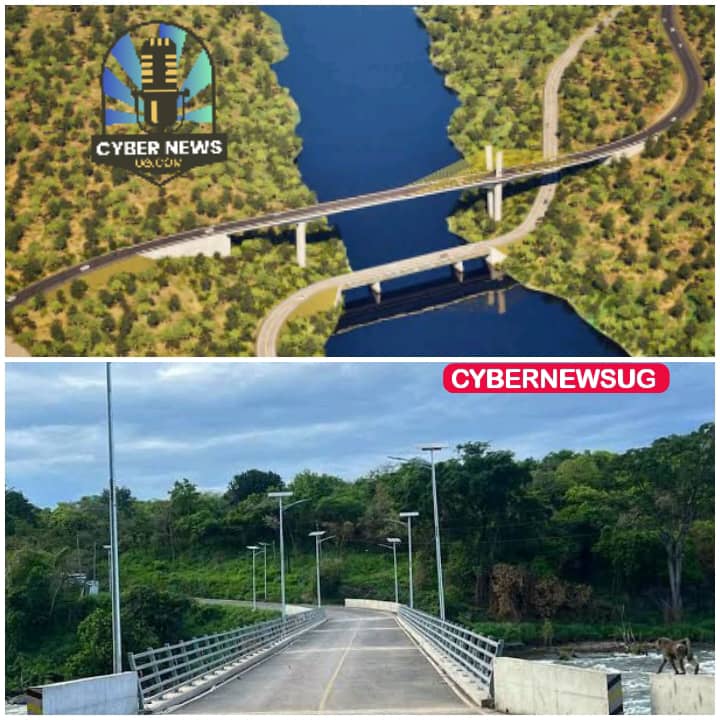
Karuma Bridge is a critical transport link, but its strategic importance does not automatically make every photograph of it a security offence
A photograph of Uganda’s Karuma Bridge may look like an ordinary travel image, but questions about whether photographing the structure could amount to a security concern have a more complicated legal and practical answer.
The issue centres on the distinction between taking a photograph of important public infrastructure and obtaining or communicating information in circumstances that fall within Uganda’s national-security laws.
Karuma Bridge, which crosses the River Nile along the Kampala–Gulu highway, is one of Uganda’s most important transport links. Parliament has described it as a major gateway to Northern Uganda, connecting the northern and southern parts of the country.
The bridge has also been subject to heightened security and traffic-control measures, particularly because of its structural condition and importance to transport. In 2023, Works and Transport Minister Gen Edward Katumba Wamala told Parliament that soldiers and police traffic officers had been deployed at the bridge as part of speed-control measures following concerns about accidents.
But the presence of security personnel does not, by itself, establish that Karuma Bridge is legally classified as a prohibited place under Uganda’s Official Secrets Act.
That distinction is important.
Karuma is more than an ordinary bridge
Karuma Bridge was completed in 1962 and has served for decades as a major connection between central and northern Uganda, including the West Nile region.
Its importance has become particularly apparent whenever the bridge has faced structural problems or been closed.
In 2024, Parliament debated the deteriorating condition of the bridge after assessments identified problems involving bearings, expansion joints and structural cracks underneath the deck. The government subsequently undertook remedial works and imposed restrictions on traffic.
Parliament has repeatedly referred to Karuma as a critical gateway to Northern Uganda.
When the bridge was closed in September 2024 for rehabilitation, MPs raised concerns about the impact on transport, trade and communities that depend on the Kampala–Gulu corridor.
The bridge’s importance therefore comes from several factors.
It is a major transport crossing, it carries commercial traffic between different parts of Uganda and it sits along routes connecting Uganda with markets and neighbouring countries to the north and northwest.
That makes disruption at Karuma potentially significant for trade and mobility.
The wider Karuma complex matters too
The strategic significance of the area is not limited to the bridge.
Nearby is the 600-megawatt Karuma Hydropower Station, one of Uganda’s largest electricity-generation projects.
The hydropower facility was commissioned in 2024 and forms an important part of the country’s electricity infrastructure. Recent government and parliamentary discussions have continued to focus on its operational performance, maintenance and security.
The power station is therefore a separate and highly significant piece of infrastructure in the wider Karuma area.
Security around major energy installations is not unusual. Hydropower facilities contain electrical equipment, control systems, transmission infrastructure and other components whose disruption could have wider consequences.
Past incidents have demonstrated the security challenges surrounding the project.
In 2022, for example, Parliament’s Natural Resources Committee raised concerns about vandalism of equipment associated with the Karuma power project and transmission infrastructure. Reports at the time indicated that critical electricity infrastructure had been targeted. (Monitor)
There have also been previous incidents involving security personnel at the project site.
In 2018, a UPDF soldier guarding the Karuma hydropower project site shot and killed an employee during a confrontation involving workers, according to security officials and the Uganda Electricity Generation Company Limited. The incident prompted investigations and highlighted the security sensitivities surrounding the facility.
These incidents provide context for why security measures may be visible around the broader Karuma infrastructure.
They do not, however, automatically mean that taking a photograph from a public road is a criminal act.
What does Uganda’s Official Secrets Act say?
The legal question becomes more precise when Uganda’s Official Secrets Act is examined.
The Act defines a “prohibited place” in several ways.
According to the legislation, the definition includes defence works belonging to, occupied or used by the government. It also covers certain places where military equipment, plans or related materials are produced, repaired or stored.
Importantly, the law also provides for another category: a place that has been formally declared a prohibited place by statutory instrument on the grounds that information about the place, or damage to it, could be useful to a foreign power.
This is a crucial point.
The law does not say that every strategically important public facility automatically becomes a prohibited place.
Nor does the mere presence of soldiers at a location automatically establish that the location falls within the statutory definition.
Whether a particular site has been formally designated under the law is therefore a matter that should be established from the relevant legal instrument or competent authority rather than assumed from the appearance of security personnel.
Photography can become a legal issue in specific circumstances
The Official Secrets Act goes beyond physical access to prohibited places.
Section 2 addresses acts carried out for a purpose prejudicial to the safety or interests of Uganda.
It includes making a sketch, plan, model or note that could be directly or indirectly useful to a foreign power. The Act also addresses obtaining, recording, publishing or communicating certain information, sketches, plans, models, documents or other information that could have such utility. (ULII)
That means the legal question is not simply:
“Did someone take a photograph?”
A more relevant set of questions would be:
- Where was the photograph taken?
- Was the location legally designated as a prohibited place?
- What exactly was photographed?
- Was the person authorised to access or record the information?
- What was the purpose of obtaining the image?
- Was the image connected to information that could be useful to a foreign power?
- Was restricted information obtained or communicated?
Those distinctions matter when discussing national-security law.
A photograph is not automatically intelligence
In the digital age, almost any public structure can be photographed.
Travellers routinely photograph bridges, roads, railway stations, airports, buildings and power infrastructure.
The existence of a photograph does not automatically transform an ordinary traveller into an intelligence gatherer.
At the same time, modern security concerns recognise that seemingly harmless pieces of information can sometimes become more useful when combined with other information.
A photograph could, for example, reveal the physical layout of a facility, access points or other details that authorities consider sensitive.
But whether that makes a particular photograph unlawful depends on the circumstances and the applicable law.
It would therefore be inaccurate to claim categorically that “taking a picture of Karuma Bridge is illegal because someone can measure the bridge from the photograph.”
That statement oversimplifies both the technology and Uganda’s legal framework.
Why security officers may still restrict photography
There is also a difference between what the law generally prohibits and what security personnel may instruct people not to do at a particular location.
Security officers may impose restrictions around sensitive facilities for operational reasons, particularly where there are concerns about access, surveillance, vandalism or other security risks.
The safest approach for travellers is therefore to comply with clear and lawful instructions from authorised personnel, particularly when they are near restricted government, military or energy installations.
A person who is uncertain about whether photography is permitted should seek clarification rather than deliberately testing the limits of a security restriction.
This is especially relevant at the Karuma area because the bridge and the hydropower installation should not be treated as exactly the same facility.
A photograph taken from an ordinary public road is different from entering a restricted power facility and photographing internal equipment or security arrangements.
Karuma’s history explains heightened attention
The bridge’s security profile is also influenced by its history and physical importance.
In 2023, Parliament discussed the high number of accidents associated with the ageing structure. MPs called for construction of a replacement bridge, while the Works and Transport Ministry acknowledged that the bridge had outlived its useful life and said efforts were being made to redesign and replace it.
By 2024, Parliament was discussing emergency repairs involving the bridge’s bearings, expansion joints and deck.
A parliamentary report noted that Karuma Bridge had been completed in 1962 and served as a major gateway between the Mid-Western and Northern Uganda and the West Nile subregions.
The closure demonstrated just how much the country depends on the crossing.
Transport disruptions affected communities and businesses in the north, while alternative routes and ferry arrangements came under pressure.
The bridge is therefore not merely a physical structure crossing the Nile. It is an important component of Uganda’s national transportation network.
The hydropower station adds another layer
The presence of Karuma Hydropower Station makes the surrounding area even more significant.
The facility has a rated generation capacity of 600 megawatts and includes major civil, electrical and mechanical infrastructure.
Recent reporting has highlighted continuing technical and operational concerns at the plant. In August 2026, Daily Monitor reported that the government was considering a proposal by the contractor for additional funds to address defects affecting the station’s safety and operations.
The station’s importance to Uganda’s electricity supply means that protecting its equipment and surrounding infrastructure is a legitimate national concern.
But again, the existence of important infrastructure does not by itself answer the legal question of whether every photograph of the surrounding area is prohibited.
That question requires reference to the specific restrictions applicable to the location.
What travellers should understand
For ordinary motorists and travellers, the practical lesson is relatively straightforward.
First, do not assume that every photograph of a bridge is a security offence.
Second, do not assume that every location with soldiers is automatically a prohibited place under the Official Secrets Act.
Third, where security personnel issue a clear instruction against photography or access, travellers should respect that instruction and seek clarification if necessary.
Fourth, people should avoid entering restricted areas or attempting to photograph sensitive installations, security arrangements or other material that they have been specifically told not to record.
Finally, anyone facing an actual legal dispute should seek advice from a qualified Ugandan lawyer and establish the precise law or regulation relied upon by the authorities.
The bigger debate: security versus public access
The question surrounding Karuma reflects a broader challenge facing governments around the world.
Modern infrastructure is increasingly interconnected.
Bridges carry transport and communications networks. Power stations connect to national grids. Ports support trade and security operations. Telecommunications infrastructure supports essential services.
At the same time, these facilities are visible to the public and frequently appear in photographs, news reports, documentaries and social media posts.
Governments therefore have to balance legitimate security concerns with the public’s ability to travel, report, photograph and document places that form part of everyday life.
For Uganda, that balance is particularly important as the country expands major infrastructure projects and strengthens energy and transport networks.
Clear communication can help avoid unnecessary confrontation.
If photography is restricted at a particular facility, authorities can reduce uncertainty by clearly identifying the restriction and its legal basis. Travellers and journalists, meanwhile, should distinguish between public areas and controlled facilities and should not deliberately circumvent security measures.
Conclusion
So, is a photograph of Karuma Bridge really a security threat?
It can potentially become a security concern depending on what is photographed, where it is taken, the circumstances and the purpose for which the information is obtained or communicated. But the mere fact that someone photographs the bridge does not, on the information currently available, establish that the person has committed an offence.
Uganda’s Official Secrets Act provides a specific legal framework for prohibited places and information that could be useful to a foreign power. (ULII)
Karuma’s strategic importance is also well established. Parliament has described it as a critical gateway to Northern Uganda, while the surrounding area hosts major national energy infrastructure.
The distinction between important infrastructure, restricted infrastructure and legally designated prohibited places is therefore essential.
Rather than assuming that every camera pointed at Karuma represents a security threat, the more accurate approach is to ask what the law actually says, what restrictions apply at the specific location and what information the photograph is intended to capture or communicate.
That distinction protects both legitimate national-security interests and the principle that ordinary public infrastructure does not automatically become secret simply because it is important.
Meta description
Is photographing Karuma Bridge illegal in Uganda? The law distinguishes public infrastructure from prohibited places and restricted security information.
SEO keywords
- Karuma Bridge photography
- Uganda Official Secrets Act
- Karuma Bridge security
- prohibited places in Uganda
- Karuma Hydropower Station
Tags
Karuma Bridge, Uganda Security, Official Secrets Act, Infrastructure, National Security
Suggested URL slug
karuma-bridge-photography-security-uganda-law
Suggested featured-image caption
Karuma Bridge over the River Nile, a critical transport link connecting northern and southern Uganda.