












By Karim Were
An event organised around President Yoweri Museveni’s 82nd birthday also sought to honour Uganda’s fallen heroes and reconnect supporters with the history of the liberation struggle.
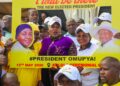
KAMPALA — An event organised to mark President Yoweri Kaguta Museveni’s 82nd birthday and commemorate Uganda’s fallen heroes has been described by organisers and supporters of the National Resistance Movement (NRM) as an important occasion for reflecting on the country’s political history and the legacy of the liberation struggle.
The celebration, associated with the Office of the National Chairman (ONC) and the message of “Tova Ku Main,” brought together a broader theme of remembrance, political mobilisation and appreciation of individuals who participated in Uganda’s past struggles.
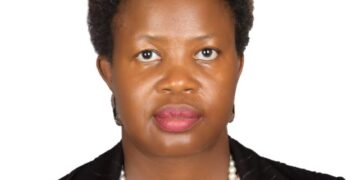
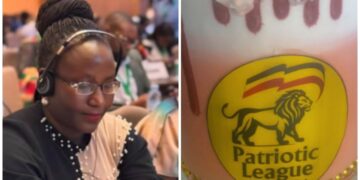
Supporters of the initiative particularly praised Hajjat Hadijah Namyalo Uzeiye, the ONC manager, for what they described as efforts to keep the history of the NRM’s struggle alive and to connect younger generations, commonly referred to by NRM supporters as the “Bazzukulu,” with the movement’s historical narrative.
The organisers’ message portrayed the occasion as more than a birthday celebration, arguing that it provided an opportunity to remember people who contributed to the country’s political transformation and to encourage younger Ugandans to understand the historical circumstances that shaped contemporary Uganda.
However, claims describing the event as a “spiritual revival” or as “history in the making” are characterisations by supporters rather than independently measurable facts.
Remembering Uganda’s fallen heroes
A central theme of the celebration was remembrance of individuals who died during Uganda’s liberation struggles.
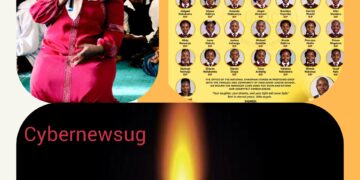
The material promoting the event specifically mentioned Brigadier Kanyankole, identified by supporters as “RO/00036 Brig. Kanyankole,” among the fallen figures whose contribution they believe should continue to be remembered.
The organisers linked the remembrance to the history of the National Resistance Army’s armed struggle in the 1980s, particularly the experiences associated with areas such as Kabamba and Luweero.
Advertisment VOYAGERS


For supporters of the NRM, the liberation struggle remains an important part of Uganda’s modern political history. The movement came to power in 1986 following the overthrow of President Tito Okello’s government after a prolonged armed conflict.
The conflict and subsequent political transition remain subjects of historical and political debate, with different groups interpreting the period and its legacy in different ways.
The anniversary activities therefore provided an opportunity for organisers to present their own interpretation of that history, particularly the sacrifices made by people who supported the struggle.
Namyalo’s role in the ONC
Much of the praise surrounding the event was directed at Hajjat Hadijah Namyalo, who serves as manager of the Office of the National Chairman.
Supporters described her as a committed promoter of NRM programmes and credited her with efforts aimed at strengthening engagement with party supporters and communities.
The message circulated ahead of and around the celebration said Namyalo had remained committed to the “Tova Ku Main” campaign since the slogan emerged.
The phrase, which can broadly be understood as an appeal to remain connected to the grassroots or the movement’s political base, has featured in political mobilisation activities associated with the NRM.
Supporters used the birthday event to argue that Namyalo’s work extends beyond political messaging to include efforts to preserve the movement’s institutional memory.
They also praised her for activities they said benefit the party, communities and the Bazzukulu.
Those assessments, however, represent the views of supporters. A comprehensive assessment of the ONC manager’s performance would require independently verifiable evidence covering the full range of her programmes and activities.
Museveni’s 82nd birthday
The celebration also focused on President Museveni, who turned 82.
Museveni has been Uganda’s dominant political figure since 1986 and remains chairman of the NRM, the political organisation that has governed the country for four decades.
His long tenure has made his birthday an important occasion for NRM supporters, who frequently use such events to celebrate his leadership and the political achievements they associate with his administration.
At the same time, Museveni’s presidency has attracted criticism from opposition politicians, civil society organisations and other observers over issues including governance, political competition, human rights and the length of his time in power.
A balanced understanding of the significance of the celebration therefore requires recognising that the event represented the perspective of NRM supporters and was not necessarily representative of the views of all Ugandans.
The 82nd birthday activities nonetheless offered an opportunity for the ruling movement to reinforce its political narrative and highlight the historical roots of its leadership.
The meaning of “Tova Ku Main”
The “Tova Ku Main” message has become part of the political language used by supporters seeking to emphasise grassroots mobilisation and continued connection with the movement’s historical foundation.
In the context of the birthday celebration, supporters used the slogan to connect President Museveni’s present leadership with the historical period that preceded the NRM’s rise to power.
The message also carried an intergenerational dimension.
NRM supporters have increasingly used the term “Bazzukulu,” or grandchildren, to refer to younger generations of Ugandans whom the movement seeks to involve in its political and historical narrative.
The emphasis on younger generations reflects a broader challenge for long-established political movements: maintaining relevance among citizens who did not personally experience the events that shaped the movement’s origins.
For the NRM, this includes explaining the circumstances surrounding the 1981–1986 armed struggle, the political transition of 1986 and the subsequent development of the party and state institutions.
Preserving political history
The commemoration of fallen heroes also raises broader questions about how Uganda remembers its political history.
Historical remembrance can serve several purposes. It can honour individuals who made sacrifices, educate younger generations and preserve accounts of events that shaped the country.
However, political history can also be contested.
Different communities, political organisations and historians may hold different interpretations of Uganda’s conflicts, leadership transitions and post-1986 political development.
For that reason, efforts to preserve historical memory are most useful when they distinguish between documented historical facts, political interpretations and commemorative narratives.
The ONC event was primarily a commemorative and political occasion. Its significance should therefore be understood within that context.
Connecting generations
One of the principal messages associated with the event was the need to keep the memory of Uganda’s liberation struggle alive among younger citizens.
Supporters argue that younger Ugandans should understand the sacrifices made by earlier generations and appreciate the circumstances under which the current political order emerged.
This generational conversation is particularly significant because Uganda’s population is predominantly young.
Many citizens today were born long after the 1980s conflict and have experienced the country only under the NRM government.
For them, stories about the bush war, Luweero and the early years of the NRM government are largely historical accounts rather than personal experiences.
Events that bring together historical remembrance and political mobilisation can therefore become important platforms for passing narratives from one generation to another.
At the same time, such narratives can benefit from independent historical documentation and multiple perspectives to provide young people with a fuller understanding of the country’s past.
Political significance
The event also had political significance because it was connected to the NRM’s institutional structures and the work of the ONC.
The Office of the National Chairman is an important component of the NRM’s organisational structure and has responsibilities relating to mobilisation and engagement with party supporters.
Activities conducted through the office can therefore have both historical and political dimensions.
By linking the president’s birthday with the remembrance of fallen heroes, organisers created a narrative connecting the movement’s historical struggle with its current leadership.
The message also reinforced the idea of continuity between those who participated in the liberation struggle and younger supporters who are expected to carry its values into the future.
Whether that message resonates beyond the NRM’s support base remains a broader political question.
A celebration beyond a birthday
For the organisers and supporters, the event was not simply about marking President Museveni’s birthday.
It was presented as an opportunity to reflect on the history of the NRM, remember those who died during Uganda’s liberation struggles and reaffirm the importance of political and generational continuity.
The phrase “SevoAt82” was used to capture the birthday theme, while “Tova Ku Main” provided the broader political message.
Supporters said the combination of the two themes gave the occasion particular significance.
The event’s organisers also used the occasion to express appreciation to Namyalo for what they described as her role in preserving the spirit of the movement and promoting its activities.
Such expressions of support are part of the political character of the event and should be distinguished from independently verified assessments of the effectiveness of the ONC’s programmes.
The broader national context
The commemoration comes at a time when questions about Uganda’s political history, leadership transition and the future of the NRM continue to attract public attention.
President Museveni has remained central to Uganda’s political system for decades, while the NRM continues to present the 1986 liberation struggle as a defining moment in the country’s modern history.
The challenge for the movement is increasingly generational.
As the population that directly experienced the liberation struggle becomes smaller, the NRM must find ways of explaining its history to citizens whose political experiences are shaped by different circumstances, including urbanisation, technological change, unemployment, education and the growth of social media.
Events such as the 82nd birthday celebration provide one avenue through which the movement can communicate that history.
For the wider public, however, the continuing discussion about Uganda’s past also underscores the importance of preserving historical records and encouraging informed debate about the country’s political development.
Conclusion
The celebration of President Yoweri Museveni’s 82nd birthday, combined with a commemoration of Uganda’s fallen heroes, provided the NRM and its supporters with an opportunity to reflect on the movement’s history and reaffirm its connection with younger generations.
The event’s emphasis on figures such as Brigadier Kanyankole and the historical experiences associated with the liberation struggle demonstrated the importance supporters place on preserving the memory of those they believe contributed to Uganda’s political transformation.
Hajjat Hadijah Namyalo was also prominently praised for her role in promoting the “Tova Ku Main” message and engaging NRM supporters.
While descriptions of the occasion as a “spiritual revival” or “history in the making” remain expressions of the organisers and supporters, the underlying issue is broader: how Uganda remembers its past and how political movements transmit their histories to future generations.
As the country continues to debate its political future, the preservation of historical memory — alongside accurate documentation and acknowledgement of different perspectives — will remain an important part of understanding Uganda’s journey from the conflicts of the past to the political landscape of todays on struggle.
**Source