
























By Karim Were
KAMPALA, Uganda — Eastern African countries have been urged to strengthen regional security cooperation and invest in collective response mechanisms as emerging threats become increasingly complex and difficult for individual states to address alone.
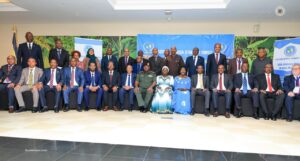
Uganda’s First Deputy Prime Minister and Minister for East African Community Affairs, **Rebecca Kadaga**, made the call on August 14, 2026, during the **36th Ordinary Session of the Council of Ministers of Defence and Security of the Eastern Africa Standby Force (EASF)** in Kampala.
Kadaga said the region was operating in an increasingly complicated security environment characterised by armed conflicts, population displacement, technological advances, disrupted trade routes and growing humanitarian pressures.
She argued that regional stability could not be achieved through isolated national efforts, urging member states to strengthen collective mechanisms for preventing and responding to crises.
Peace cannot be sustained in a country alone. It cannot be secured in isolation. Lasting peace is achieved by co-leadership,” Kadaga said.
#Kadaga urges investment in peace
The First Deputy Prime Minister urged EASF member states to invest in peace and security mechanisms before conflicts escalate into larger crises.
She described the Eastern Africa Standby Force as an important expression of collective responsibility and said its development over the years had strengthened the region’s ability to respond to conflicts, support political solutions and promote stability.
Kadaga said investment in regional security should be viewed as an investment in the continent’s long-term development.
> “Every investment we make in peace and security is an investment in Africa’s future,” she said.
Her remarks come as countries across Eastern Africa continue to deal with a range of security and humanitarian challenges, including armed conflicts and displacement.
#Kiwanuka calls for action
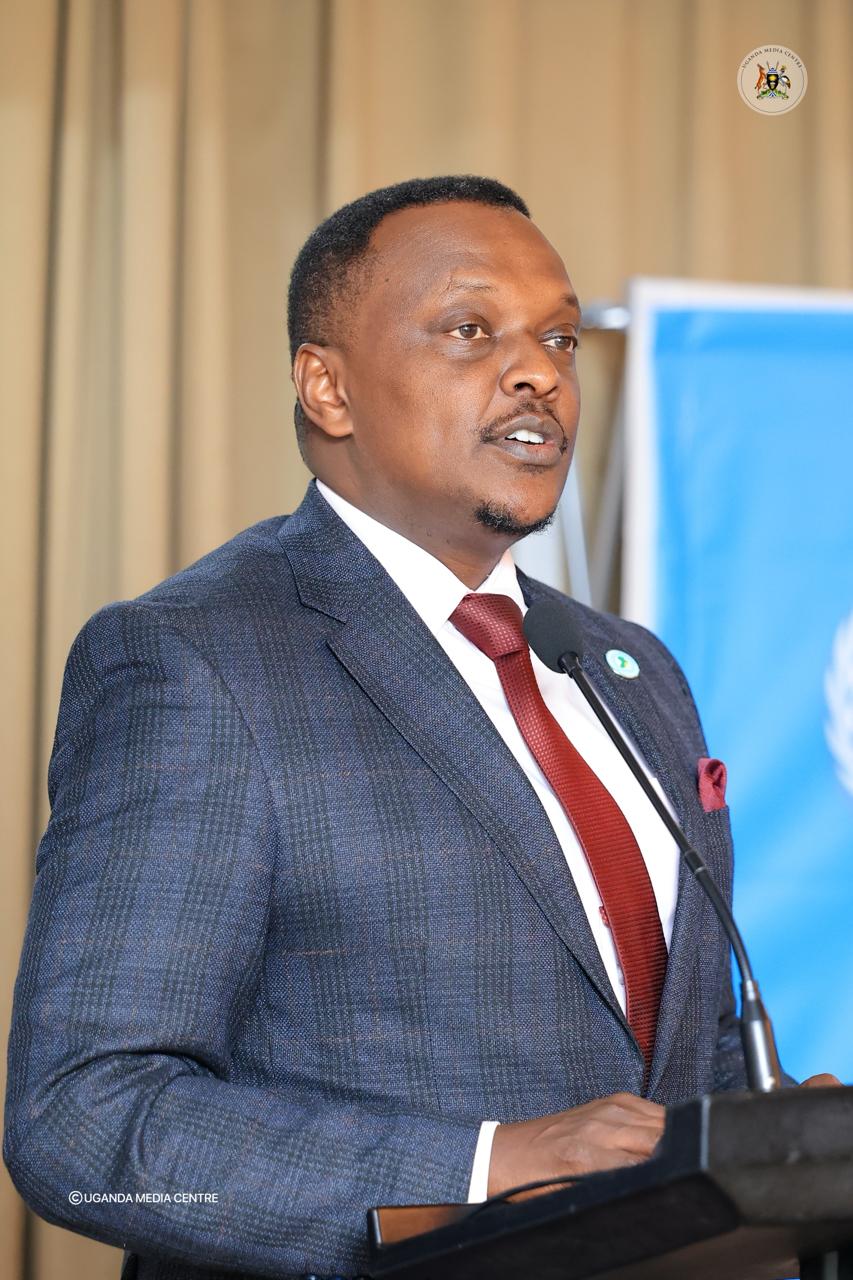
Uganda’s Minister of Defence and Veteran Affairs, **Kiryowa Kiwanuka**, who chairs the EASF Council of Ministers, challenged member states to translate political commitments into practical measures that can improve the force’s operational readiness.
Kiwanuka said the region faces threats that include violent extremism, maritime insecurity, cyber threats, humanitarian emergencies and climate-related instability.
These challenges, he said, require EASF to strengthen its ability to respond rapidly when member states call upon it.
Our challenge today is to move from readiness to rapid response,” Kiwanuka said.
He called for stronger joint planning, improved information sharing and greater interoperability among member states.
He also highlighted predictable financing as essential to maintaining the force’s ability to operate effectively.
#Funding remains critical
Kiwanuka said political commitments must be accompanied by adequate resources if regional security institutions are to fulfil their mandates.
He urged member states to meet their commitments to the force and ensure that EASF has the resources required to maintain operational preparedness.
Readiness without resources is rhetoric. Let us merge our mandates with money, he said.
The issue of sustainable financing has become increasingly important as African regional organisations seek to assume greater responsibility for peace and security operations.
Reduced reliance on external assistance would require countries to strengthen their own financial and institutional capacity.
#Call to avoid duplication
Kiwanuka also called on EASF member states to make better use of existing regional capabilities rather than establishing similar facilities in different countries.
He argued that specialisation could allow member states to pool resources and develop stronger centres of expertise.
Duplication weakens us. Specialisation strengthens us,” he said.
He proposed greater cooperation among centres of excellence involved in peace support operations, humanitarian assistance, disaster management and specialised military training.
Such coordination, he said, could improve efficiency while strengthening the overall capacity of the regional security architecture.
#EASF seeks stronger political backing
EASF Director **Brigadier General Ronald Rwivanga** said the force’s future effectiveness would depend heavily on sustained political support from its member states.
He said institutions require more than organisational structures and personnel to succeed, arguing that political commitment is equally important.
History has shown that institutions succeed not only because of their structures and personnel, but also because of political will,” Rwivanga said.
He added that the decisions and continued support of member states would determine whether EASF remains at its current level or develops into a fully capable regional organisation.
According to Rwivanga, the ultimate objective is to build an institution that can deliver on the expectations of its member states and the wider African Union security architecture.
#Africa urged to take greater responsibility
Rwivanga also highlighted the changing nature of international support for African peace operations.
He said the gradual reduction of external support means African countries need to take greater responsibility for financing and sustaining their own peace and security initiatives.
The issue is particularly important for regional standby forces designed to respond to crises when requested by member states or mandated through continental mechanisms.
> “The question before us is no longer whether EASF can rely on external support. The question is how quickly we can position ourselves to assume greater responsibility when called upon by the African Union and our member states,” he said.
His remarks underscored the need for African countries to develop sustainable mechanisms for funding regional security operations.
#Technology adds new security challenges
The meeting also highlighted the changing nature of security threats.
While armed conflict remains a major concern, governments are increasingly dealing with threats that cross traditional military boundaries.
Cybersecurity, for example, can affect government institutions, financial systems and critical infrastructure without a conventional armed attack.
Maritime insecurity can disrupt trade and transportation, while climate-related instability can contribute to competition over resources and increase humanitarian pressures.
The combination of these challenges means regional security institutions must be capable of responding to both conventional and emerging threats.
#Regional cooperation
The EASF brings together countries in Eastern Africa under a framework intended to strengthen regional preparedness and support peace and security efforts.
The organisation’s work involves cooperation among member states in areas including peace support operations, training, planning and other security-related activities.
The Kampala meeting provided an opportunity for defence and security officials to assess the region’s changing security environment and discuss how the force can improve its preparedness.
The emphasis on joint planning and interoperability reflects the importance of ensuring that forces from different countries can work together effectively when deployed in a common operation.
#Member states represented
The meeting brought together representatives from EASF member states, including **Burundi, Comoros, Djibouti, Ethiopia, Kenya, Rwanda, Somalia and Sudan**.
Among the officials attending were Djibouti’s Minister of Defence **Omar Abdi Said**, Rwanda’s Minister of Defence **Juvenal Marizamunda**, and Somalia’s Deputy Minister of Defence **Idris Osman Haji Ali**.
Senior military representatives from other member states also attended the meeting.
Their participation reflected the regional nature of the discussions and the importance of coordinated approaches to security challenges affecting Eastern Africa.
#From political commitments to implementation
A central message from the meeting was the need to move beyond declarations and establish mechanisms capable of delivering rapid responses.
For EASF, this means ensuring that member states have the required resources, personnel, training and planning arrangements in place before a crisis occurs.
The call for predictable financing is particularly significant because standby forces need to maintain a level of preparedness even when they are not actively deployed.
Without adequate funding, training and logistical support, the ability of a regional force to respond quickly can be compromised.
#The road ahead
The discussions in Kampala come at a time when Eastern Africa continues to face interconnected security and humanitarian challenges.
For regional countries, cooperation provides an opportunity to pool resources, share intelligence and develop specialised capabilities that individual states may find difficult to maintain independently.
However, translating regional commitments into operational capacity will require sustained political support and financial contributions from member states.
The emphasis from Kadaga, Kiwanuka and Rwivanga was therefore on strengthening African ownership of regional security arrangements while making better use of existing institutions and capabilities.
#Conclusion
The 36th Ordinary Session of the EASF Council of Ministers of Defence and Security has highlighted the growing need for Eastern African states to work collectively in responding to emerging threats.
Kadaga’s call for co-leadership, Kiwanuka’s demand for resources and rapid response, and Rwivanga’s emphasis on political will all point to the same challenge: turning regional security commitments into effective operational capabilities.
As the security environment continues to evolve, EASF member states face the task of strengthening cooperation, financing, coordination and specialised capabilities.
For Eastern Africa, the ability to respond collectively could become increasingly important in protecting regional stability, supporting peace efforts and addressing crises that cross national borders.