























By Karim Were
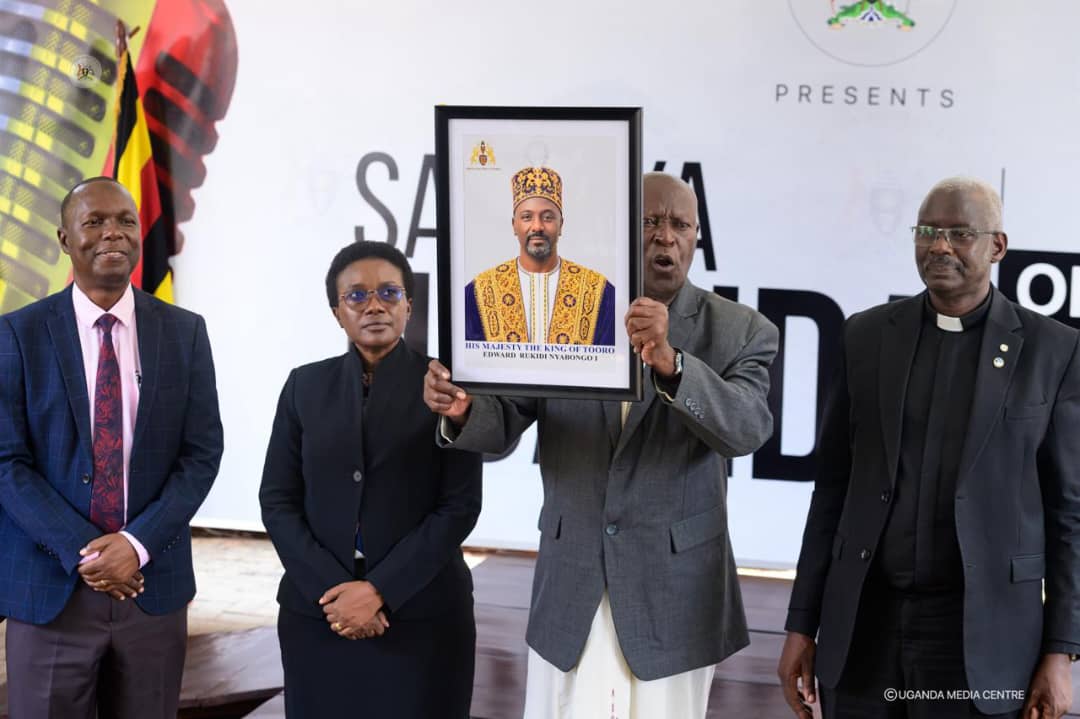
Prince Edward Rukidi Kijanangoma has been endorsed as successor to the late King Oyo, with his coronation scheduled for September 29, 2026, in Fort Portal.
FORT PORTAL, UGANDA — Tooro Kingdom is preparing for the formal enthronement of Prince Edward Rukidi Kijanangoma, who has been selected and endorsed as the successor to the late Omukama Oyo Nyimba Kabamba Iguru Rukidi IV.
The incoming monarch is expected to reign as Edward Rukidi Nyabongo I, with his coronation and enthronement scheduled for September 29, 2026, at Karuziika Royal Palace in Fort Portal.
The succession marks a major transition for the western Ugandan kingdom following the death of King Oyo on August 27 at the age of 34 while receiving cancer treatment in the United States. Oyo had ruled Tooro for more than three decades after ascending the throne in 1995 at the age of three.
The Tooro Kingdom Supreme Council, known as the Orukurato rw’Obukama bwa Tooro, endorsed Kijanangoma after the Babiito royal clan’s succession committee selected him as the preferred successor. The decision was announced by Musuuga Charles Kayondo Kamurasi, head of the Babiito royal clan, during proceedings in Fort Portal.
The Attorney General, Sam Mayanja, subsequently said the kingdom was free to proceed with preparations because no formal court appeal challenging the succession had been registered.
From Prince Edward Kijanangoma to Edward Rukidi Nyabongo I
Prince Edward Rukidi Kijanangoma is a member of the Babiito royal family and a descendant of the Tooro monarchy.
Before his selection as the next Omukama, Kijanangoma was known to the wider public through his career in journalism and broadcasting. He previously worked as a senior news anchor and editor at the Uganda Broadcasting Corporation (UBC).
He is a son of the late Prince Christopher Paul Kijanangoma and a grandson of former Tooro king George David Rukidi III. He is also a cousin of the late King Oyo.
His transition from a media professional to the head of one of Uganda’s historic traditional institutions represents a significant change in public responsibility.
Under the name Edward Rukidi Nyabongo I, he is expected to formally assume the cultural leadership of the Batooro following the completion of traditional enthronement rituals.
Current reports differ over the numerical designation of the incoming king. Daily Monitor, ChimpReports and several other reports describe Edward Rukidi Nyabongo I as the 14th Omukama, while New Vision and Kampala Post have referred to him as the 13th king. The discrepancy appears to arise from differences in how earlier rulers are counted in Tooro’s historical succession records. The agreed point across the reports is that Edward Rukidi Nyabongo I is the successor to Oyo and is scheduled for enthronement on September 29.
Supreme Council endorses the succession
The succession process moved forward after the Babiito royal clan selected Kijanangoma as its preferred candidate.
The decision was subsequently presented to the Tooro Kingdom Supreme Council, which endorsed the selection during a sitting at the Muchwa Kingdom headquarters in Fort Portal City on September 15.


According to reporting by Daily Monitor, the resolution added the support of the kingdom’s representative body to the earlier decision of the 21-member Babiito royal clan succession committee.
Musuuga Kamurasi formally announced Edward Rukidi Nyabongo I before the council.
“I announce to you the next king of Tooro who will succeed Oyo Nyimba Kabamba Iguru IV. His name is Edward Rukidi Nyabongo I,” Kamurasi said, according to ChimpReports.
The declaration was an important stage in the customary succession process and paved the way for preparations for the formal coronation.
September 29 coronation
The Tooro Kingdom has set Tuesday, September 29, 2026, as the date for the coronation and enthronement.
The ceremony is expected to take place at Karuziika Royal Palace in Fort Portal, the traditional seat of the kingdom.
According to reports on the preparations, the installation will involve traditional rituals associated with the assumption of the Omukama’s office. These include a ceremonial mock battle through which the incoming king is expected to demonstrate his ability to overcome opposition before entering the palace.
The ceremonies are also expected to involve the sounding of the Empango drums, an important cultural symbol in Tooro royal traditions.
Musuuga Kamurasi said preparations were expected to begin immediately following the decision of the Supreme Council.
The planned ceremony will therefore combine customary practices with the formal recognition of a new cultural leader.
Attorney General clears way for preparations
The succession process has also attracted legal attention because of questions raised by members of the late King Oyo’s family.
Attorney General Sam Mayanja said the kingdom could continue with preparations because no formal appeal against the succession had been filed in court.
The Attorney General’s position followed concerns surrounding the succession process and claims regarding the late king’s wishes concerning his successor.
Mayanja explained that disputes concerning the validity of a will or the identity of a rightful heir would ultimately have to be addressed through the appropriate legal mechanisms if traditional dispute-resolution processes failed.
As of the latest reports, no formal court challenge had been registered that would prevent the kingdom from proceeding with the planned coronation.
This distinction is important because the absence of a court injunction or formal appeal does not necessarily mean that every member of the royal family agrees with the succession decision.
Succession dispute remains part of the background
The transition has not been entirely free of controversy.
Members of the late King Oyo’s immediate family have questioned the selection of Kijanangoma, with claims that the late monarch had a son who could have a claim to the throne.
The issue has generated debate about the relationship between traditional succession customs, royal lineage and any wishes expressed by a deceased monarch.
However, the existence of a potential biological heir does not by itself establish succession under Tooro’s customary system. The Babiito royal clan and the kingdom’s institutions have proceeded through their established succession structures and endorsed Kijanangoma.
The reported dispute remains important because the legitimacy and acceptance of a new traditional leader depend not only on the formal installation but also on the ability of the royal institution and its various stakeholders to maintain unity.
For now, the kingdom’s official succession process has continued toward the September 29 enthronement.
A new chapter after King Oyo’s 31-year reign
Edward Rukidi Nyabongo I takes over after an extraordinary period under King Oyo.
Oyo became Omukama on September 12, 1995, following the death of his father, King Patrick David Matthew Kaboyo Olimi III. He was only three years old.
His accession attracted international attention because of his exceptionally young age. He subsequently grew from a child monarch into an adult cultural leader and became one of the most recognisable traditional rulers in Uganda.
The Tooro Kingdom’s official historical account records that Oyo was born on April 16, 1992, and ascended the throne on September 12, 1995. He died on August 27, 2026.
During his reign, Oyo’s public role expanded beyond ceremonial duties. He was associated with initiatives involving youth participation, agriculture, environmental conservation, education and cultural preservation.
His death therefore left a significant institutional and emotional gap within Tooro.
The kingdom buried Oyo at the Karambi Royal Tombs on September 12, the same date on which he had ascended the throne 31 years earlier.
The history behind the Tooro monarchy
The transition also draws attention to the long history of the Tooro monarchy.
The Tooro Kingdom emerged in western Uganda in the 19th century and is closely linked historically to the Babiito dynasty and the neighbouring Bunyoro-Kitara kingdom.
The Tooro Kingdom’s official historical account traces the establishment of the kingdom to Rukirabasaija Kaboyo Omuhundwa Kasusunkwanzi Olimi I, who established an independent Tooro kingdom around 1830 after separating from Bunyoro-Kitara.
The kingdom experienced periods of political upheaval during the 19th century before regaining its independence in 1891 under Omukama Daudi Kasagama Kyebambe IV.
Like Uganda’s other traditional kingdoms, Tooro’s monarchy was abolished by the government in 1967. Traditional institutions were later restored in 1993 as cultural institutions.
Today, the Omukama’s authority is primarily cultural rather than political. The king serves as a symbol of identity, heritage and unity for the Batooro while operating within Uganda’s constitutional framework.
The cultural importance of the new king
The installation of a new Omukama carries significance beyond the royal family.
For many Batooro, the monarchy represents a connection to history, language, customs, clan structures and cultural identity.
The Tooro Kingdom itself says its cultural institutions seek to preserve Rutooro, traditional practices and the historical heritage of the Batooro while promoting education, youth empowerment, environmental conservation, tourism and community development.
The new king will therefore inherit responsibilities that extend beyond the symbolism of the crown.
He will be expected to help strengthen cultural unity, encourage the preservation of Tooro’s heritage and represent the kingdom in engagements with communities, government institutions and other cultural institutions.
His professional background in journalism could also shape his approach to public communication and engagement, although the extent of such influence will become clearer during his reign.
What lies ahead for Tooro
The immediate priority for the kingdom is the successful completion of the September 29 coronation.
Beyond the ceremony, however, the new monarch will face the larger task of consolidating the kingdom after a period of mourning and succession uncertainty.
The reported disagreement within parts of the royal family means that reconciliation could become an important issue for the new administration.
A stable transition would help the kingdom focus on its cultural and development priorities, while prolonged disagreement could continue to attract public and legal attention.
Edward Rukidi Nyabongo I has already indicated that he wants to rebuild enthusiasm around the kingdom’s cultural activities.
In his first recorded address to his subjects, he pledged to work with them to restore Tooro to what he described as its former glory.
“But I tell you, we will work for your kingdom. We will restore Tooro Kingdom to its former glory, and you will be proud of it. I have been enthroned as your king, but I cannot work alone. I will work with you,” he said, according to ChimpReports.
His remarks point to a reign that may seek to place public participation and cultural renewal at the centre of the kingdom’s future.
Conclusion
The emergence of Edward Rukidi Nyabongo I marks the beginning of a new era for Tooro Kingdom after the death of King Oyo Nyimba Kabamba Iguru Rukidi IV.
His selection by the Babiito royal succession structures and endorsement by the Tooro Supreme Council have set the kingdom on course for a September 29 enthronement at Karuziika Royal Palace.
Yet the significance of the transition extends beyond the coronation ceremony. The new king inherits a centuries-old cultural institution, a population deeply attached to its heritage and a kingdom that has recently experienced both mourning and succession debate.
Whether the new reign becomes defined primarily by reconciliation, cultural revival, youth engagement or institutional reform will depend on how the new monarch works with the royal family, clan leaders, kingdom officials and the wider Batooro community.
For now, the focus is on Karuziika Palace, where Edward Rukidi Nyabongo I is expected to formally receive the symbols and responsibilities of the Tooro crown and begin a new chapter in the kingdom’s history.
Source: