
























By Cybernewsug | News Desk
Led by Senior Presidential Adviser on Mobilisation Mesach Kawamara, the initiative is documenting government investments in healthcare and higher education, with officials urged to communicate their impact to the public.
FORT PORTAL — Leaders in the Rwenzori sub-region have launched a campaign to document and publicise achievements attributed to the National Resistance Movement (NRM) government, focusing on investments in healthcare, higher education and public service delivery.
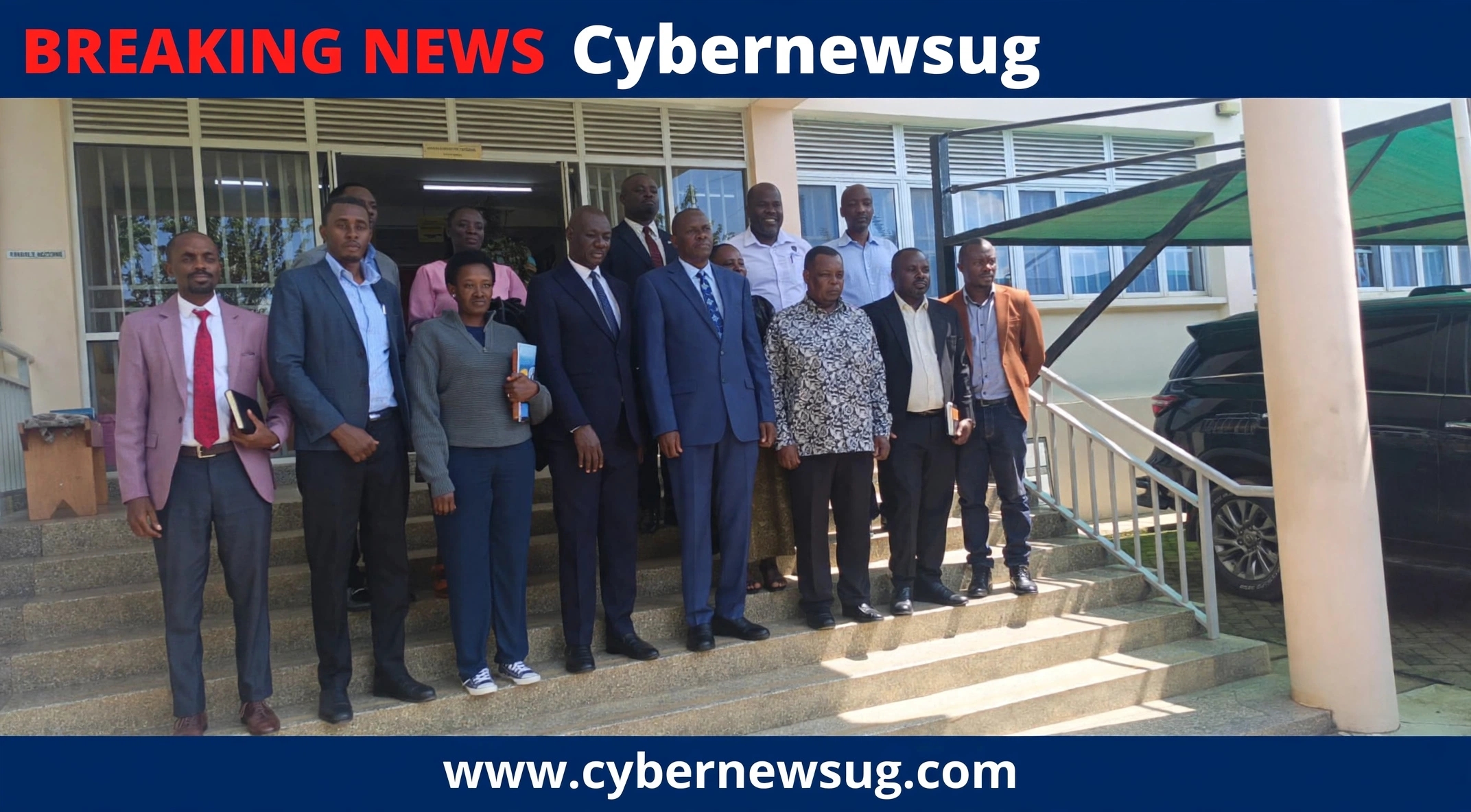
The campaign, led by Senior Presidential Adviser on Mobilisation in the Rwenzori region Mesach Kawamara, began with visits to Fort Portal Regional Referral Hospital, Mountains of the Moon University and other health facilities in Fort Portal City.
During the visits on the 19th, the delegation examined services and infrastructure presented as examples of government investment under President Yoweri Museveni’s administration.
The initiative seeks to increase public awareness of government programmes and their contribution to service delivery, while encouraging Resident District Commissioners (RDCs) and other local leaders to monitor public projects and communicate their progress to communities.
Kawamara said the campaign was also intended to preserve and defend President Museveni’s legacy, arguing that negative public narratives risk overshadowing achievements associated with the NRM government.
The initiative places renewed emphasis on how government performance is communicated to the public, particularly in a region where healthcare access, education and economic opportunities remain important development priorities.
However, the campaign’s claims about investment and service delivery will need to be assessed alongside project costs, implementation progress, service quality and the experiences of the people who use the facilities.
#Fort Portal hospital highlighted in health sector campaign
Fort Portal Regional Referral Hospital was among the first institutions visited by the delegation.
The hospital provides referral services to patients from Fort Portal and surrounding districts in the Rwenzori region. Regional referral hospitals are important components of Uganda’s healthcare system because they handle cases requiring specialised attention beyond the capacity of lower-level health facilities.
According to information provided by the campaign organisers, the hospital offers specialised medical services and operates a laboratory described as having international certification.
The delegation also highlighted an oxygen production plant that serves the wider region, alongside specialised medical attention for heart conditions and ear, nose and throat disorders.
These services are significant because access to specialised treatment can reduce the need for patients to travel long distances to seek care elsewhere. The availability of oxygen is also important in managing patients with respiratory complications and other conditions requiring supplemental oxygen.
For communities outside Fort Portal, the capacity of the regional referral hospital can influence the speed with which patients receive treatment and whether they must be transferred to facilities in other parts of the country.
The campaign’s focus on the hospital reflects an effort to demonstrate the role of public investment in expanding healthcare infrastructure and specialised services.
However, the presence of equipment and specialised departments does not, on its own, establish how accessible or effective the services are for every patient. Staffing levels, equipment maintenance, medicine availability, waiting times and the cost of accessing treatment also influence the quality of healthcare.
The supplied information did not include figures on patient numbers, treatment outcomes, staffing or the hospital’s annual budget. Those details would help provide a fuller picture of the institution’s performance and the benefits of government investment.
#University investment takes centre stage
The delegation also visited Mountains of the Moon University, a higher education institution based in Fort Portal.
The university was presented as another example of government investment aimed at expanding access to education and strengthening human capital development in the region.
According to the information provided by the organisers, the institution receives about sh60 billion in government funding. The figure was cited to demonstrate the scale of public support for higher education, although the funding period, allocation details and whether the amount represents an annual budget were not specified.
The delegation also highlighted ongoing construction projects, including a proposed agricultural faculty reportedly valued at more than sh40 billion.
The planned facility is expected to include more than 10 scientific laboratories and an auditorium, according to the information supplied.
If completed and adequately equipped, the infrastructure could strengthen practical training and research opportunities for students pursuing agriculture-related programmes. Laboratory facilities are particularly important in scientific education because they allow students to complement classroom instruction with experiments, field-related analysis and applied research.
Agricultural education is relevant to the wider Rwenzori region, where farming contributes to household livelihoods and economic activity. Training in agricultural science can help prepare graduates for careers in production, research, agribusiness and other areas connected to the agricultural value chain.
The proposed faculty could therefore contribute to the university’s educational role, provided the buildings are completed, the laboratories are equipped and the institution has the personnel and resources required to operate them.
The campaign also highlighted plans to construct a tourism school intended to respond to demand for skills in hospitality and related industries.
Fort Portal and the wider Rwenzori region have tourism potential associated with their natural environment and cultural attractions. Tourism-related training can help prepare workers for employment in accommodation, hospitality, tour operations and other services supporting visitors.
The planned school was presented as part of the university’s contribution to Fort Portal’s aspirations as a tourism city.
Nevertheless, the supplied information did not establish the construction timelines, current completion levels or the detailed financing arrangements for either project.
#Student numbers and access to higher education
The university’s admissions level was reported at about 4,000 students, a figure organisers cited as evidence of its contribution to expanding access to higher education.
Universities can support regional development by training professionals, creating employment, generating research and providing opportunities for students who might otherwise face additional costs when pursuing education far from home.
Expanding access to higher education is also linked to human capital development, which involves strengthening the knowledge, skills and capabilities people need to participate in economic and social life.
For the Rwenzori region, a growing university population could create opportunities for local businesses through demand for accommodation, food, transport, retail services and other goods.
However, student enrolment alone does not establish whether education is affordable or whether graduates are finding employment in their areas of training. Tuition costs, student support, completion rates, teaching resources and graduate employment outcomes are among the measures that can help assess the institution’s wider impact.
The campaign’s emphasis on university investment therefore raises broader questions about how public spending translates into educational opportunities and practical skills for students.
Details on the university’s current enrolment records, government funding allocations and the status of the construction projects would provide additional evidence of the scale and progress of the investments highlighted during the visit.
#Lower-level health facilities also visited
Beyond the regional referral hospital, the delegation visited other health centres in Fort Portal City.
The facilities were highlighted for their role in bringing healthcare services closer to communities and reducing pressure on the referral hospital.
A functioning network of lower-level facilities is essential to an effective healthcare system. Health centres can provide routine consultations, preventive services and treatment for conditions that do not require specialised hospital care.
When patients can receive appropriate treatment closer to home, they may avoid unnecessary travel expenses and long journeys. Lower-level facilities can also help identify patients who need referral to hospitals with more specialised services.
The campaign’s visits suggest an effort to present healthcare development as a network of services rather than relying on the regional referral hospital alone.
For such a system to work effectively, however, health centres need adequate staffing, essential medicines, equipment and reliable referral arrangements. Their ability to manage common conditions and identify emergencies can affect the workload of larger hospitals.
The organisers did not provide the names of all the health centres visited or figures showing changes in patient numbers, service coverage or waiting times.
Such information would help determine how far the facilities have improved access to healthcare and whether their capacity is sufficient for the communities they serve.
#Kawamara calls for stronger communication of government programmes
Kawamara said the campaign was intended to document achievements associated with President Museveni’s leadership and ensure that members of the public are aware of government investments.
He argued that positive developments risk being overshadowed by widely publicised negative narratives about the government.
The campaign therefore combines visits to public institutions with an effort to encourage leaders to communicate government performance more actively.
RDCs and other district officials were urged to continue monitoring government programmes and publicising achievements so that communities can better understand what has been delivered.
RDCs represent the central government in districts and have responsibilities that include monitoring government programmes and coordinating aspects of central government administration. Their monitoring role can provide information on the progress of public projects and whether services are reaching intended beneficiaries.
Regular reporting on public programmes can also help residents understand how public resources are being used. For the information to be credible, however, communication should include verifiable project details, implementation challenges and any delays, rather than focusing exclusively on positive developments.
A useful assessment of government performance considers both completed projects and those still under construction, as well as the quality, accessibility and sustainability of services.
For example, reporting on a new university building can be strengthened by identifying its financing source, construction status, expected capacity and planned opening date. Similarly, coverage of a hospital can examine the availability of medicines, specialists and diagnostic services alongside new equipment or infrastructure.
These details allow the public to distinguish between announced plans, ongoing construction and services already available to patients or students.
#Campaign follows anti-corruption initiative
The Rwenzori initiative comes after another campaign described by the organisers as an effort to expose corruption, led by Local Government Minister Balam Barugahare.
The two initiatives have different stated emphases: one focuses on identifying and publicising corruption, while the Rwenzori campaign seeks to document and highlight government achievements.
Together, the initiatives reflect competing but important aspects of public administration: the need to identify what government programmes deliver and the need to scrutinise how public resources are managed.
Public accountability depends on both. Recognising useful investments can help citizens understand the services available to them, while independent scrutiny can establish whether the funds allocated to those investments have been properly used.
Claims of achievement are strongest when supported by accessible records, including approved budgets, expenditure reports, completion certificates, service statistics and independent assessments.
Likewise, allegations of corruption require evidence and appropriate investigation rather than being treated as established facts simply because they have been publicly raised.
For the Rwenzori campaign, documenting project details and publishing verifiable information could help make the exercise useful beyond political messaging.
#Public awareness and accountability
The campaign’s success will depend partly on whether the information collected reaches communities in a form they can understand and use.
Residents need to know not only that a hospital or
university has received investment, but also what services are available, who qualifies to access them and how the projects affect everyda.
Source: