
















By Cybernewsug | News Desk
The Mukono Municipality MP says mistrust has spread into Parliament and social gatherings, urging lawmakers to confront political hostility, violence and unresolved grievances.
Nambooze Says Poisoning Fears Reflect Growing Mistrust Among Ugandan Leaders
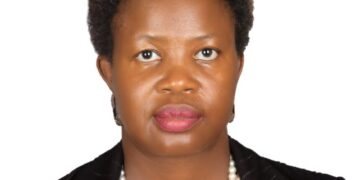
Mukono Municipality MP Betty Nambooze has raised concerns about what she described as a growing climate of suspicion in Uganda, saying mistrust has become so pronounced that some Members of Parliament are reluctant to eat food served during parliamentary meetings.
The National Unity Platform (NUP) legislator made the remarks during a parliamentary debate on political reconciliation, where she also warned that partisan divisions were increasingly affecting social relationships, cultural practices and the ability of leaders to associate peacefully.
Nambooze’s comments followed Deputy Speaker Thomas Tayebwa’s proposal to establish a cross-party reconciliation committee after an incident at the burial of former Busiro South MP Charles Matovu, where Kibuku County MP Herbert Kinobere was reportedly chased away by angry mourners.
The debate brought renewed attention to concerns about political intolerance, public safety and the need for dialogue following Uganda’s January 2026 general elections.
Although Nambooze referred to fears of poisoning among legislators, she did not identify specific poisoning incidents within Parliament or provide evidence that food served during parliamentary meetings had been contaminated.
Her remarks instead focused on the broader atmosphere of suspicion and mistrust that she said was affecting interactions among political leaders.
Nambooze Raises Concerns Over Food Safety Fears
Nambooze told Parliament that fears of poisoning had become a subject of concern among political leaders, with some reportedly avoiding food and drinks served at official functions.
Her remarks drew interjections from fellow legislators, prompting her to insist that the concerns were genuine.
“These people are saying that, but these are the people who do not even drink water at functions,” she said.
The MP’s comments highlighted what she described as a contradiction between public assurances and private behaviour among some political leaders.
However, the available account does not establish how many MPs avoid food or water at parliamentary functions, whether the practice is widespread or whether any official investigation has confirmed a poisoning threat.
No specific incident involving contaminated food or water at Parliament was cited during the remarks provided.
The distinction is important because fear of poisoning, even when unsubstantiated, can influence public perceptions and relationships. At the same time, claims of actual poisoning require evidence and appropriate investigation.
Nambooze’s intervention was therefore framed around the existence of mistrust rather than a verified poisoning incident.
The MP argued that the atmosphere of suspicion should be understood within the broader political environment, where divisions between government and opposition have increasingly affected interactions beyond formal parliamentary proceedings.
Political Divisions Extend Beyond Parliament
Nambooze also warned that political disagreements were increasingly spilling into social and cultural settings, including funerals and visits to political detainees.
She said Uganda’s cultural traditions traditionally encourage people to come together during bereavement, regardless of their political affiliations.
“It is not within our culture that a person would die and others celebrate. It is not within our culture that a person would go for burial and be chased down,” she said.
Her remarks reflected concern that political identity was increasingly influencing how people interact with one another during moments that would ordinarily bring communities together.
The MP cited the hostile reception of Information Minister Chris Baryomunsi during a prison visit and the confrontation at the burial of former Busiro South MP Charles Matovu as examples of what she described as deepening political divisions.
The incidents, she argued, illustrated the need for a broader conversation about political tolerance and peaceful coexistence.
Nambooze’s comments came as Parliament considered a proposal to establish a reconciliation committee bringing together lawmakers from different political parties.
The proposal was intended to create a platform for dialogue and help address growing tensions among legislators and their supporters.
Tayebwa Proposes Cross-Party Reconciliation Committee
Deputy Speaker Thomas Tayebwa proposed the formation of a reconciliation committee after the confrontation at Matovu’s burial raised concerns about the safety of legislators attending public events.
Tayebwa said political divisions had reached a worrying point if MPs could no longer safely attend the funerals of their colleagues.
“If we are so divided to the extent that we cannot bury each other, where are we going as a nation?” he asked.
According to Parliament’s account of the sitting, Tayebwa proposed that the Government Chief Whip and the Opposition Chief Whip each appoint a five-member team to engage in dialogue and explore ways of easing tensions among MPs and their supporters.
The proposed teams would provide a cross-party platform through which legislators could discuss their differences and identify practical measures to improve political relations.
Tayebwa said reconciliation could begin within Parliament, with lawmakers demonstrating that political disagreements should not prevent them from supporting colleagues during moments of bereavement.
“It can start with us. We can show the country that we can talk together, we can reconcile together and love each other, despite what goes on politically,” he said.
The Deputy Speaker also stressed that MPs should be able to associate with colleagues from different political parties without fear of attack or suspicion.
The proposal followed a series of concerns about hostility at public gatherings, including funerals attended by politicians from opposing parties.
However, the proposal itself does not establish that the committee has already been constituted or that it has begun formal work.
Its implementation would depend on the relevant parliamentary leadership and the proposed teams.
Matovu Burial Incident Raises Safety Concerns
The confrontation at the burial of former Busiro South MP Charles Matovu became a central issue in the parliamentary debate.
The burial took place on October 25, 2026, at Kungu-Lutale along Nakawuka Road in Wakiso District.
Uganda Police said they were investigating an attack on Kibuku County MP Herbert Kinobere and other mourners who were reportedly aligned with the National Resistance Movement (NRM).
According to the police account, a group of suspected political activists allegedly opposed to the presence of NRM supporters confronted the mourners.
Police said Kinobere’s vehicle was damaged, including the deflation of its tyres, and that the legislator had to leave the scene to avoid possible harm.
Officers intervened and secured the affected mourners, including those who had sought refuge during the confrontation.
Police reported that 20 suspects had been arrested and detained at Entebbe Police Station as investigations continued.
The arrests do not establish the guilt of those detained, and the allegations remain subject to investigation.
The incident prompted concerns in Parliament about the ability of elected leaders to attend funerals and other public gatherings without being targeted because of their political affiliations.
Tayebwa said the situation called for dialogue rather than further division.
State Minister for Public Service Lydia Wanyoto also told Parliament that MPs had faced hostility while attending funerals, adding that Kinobere’s vehicle had been stoned and vandalised during the Matovu burial.
The reported confrontation has raised questions about how political leaders and their supporters can maintain peaceful relationships during public events.
Nambooze Calls for Wider National Dialogue
While supporting the need for reconciliation, Nambooze argued that discussions should not be confined to Parliament.
She suggested that political leaders should address the wider social consequences of political divisions, including the treatment of people attending funerals and visiting political detainees.
Her remarks indicated that reconciliation should involve more than restoring working relationships among MPs.
The MP’s position was that political hostility had affected ordinary social interactions and that addressing the problem required a broader national conversation.
She also criticised Parliament for failing to hold a promised debate on violence during the January 2026 general elections.
Nambooze said the House had not adequately addressed the violence and related concerns, raising questions about whether political grievances were being resolved or simply carried forward.
The January elections were followed by allegations of violence, arrests and intimidation involving political actors and security agencies.
Reuters reported in January that the military chief had announced the detention of opposition supporters and that opposition figures had raised concerns about the treatment of detainees. The government and opposition offered conflicting accounts of the post-election events, and Reuters said it could not independently verify the competing claims.
The election-related concerns provide important context for the parliamentary debate, although the allegations cited by different political actors should not be treated as established facts without independent verification.
For Nambooze, the absence of a substantive parliamentary debate on election-related violence was a concern because reconciliation requires addressing the causes of mistrust as well as the incidents that bring political leaders into conflict.
Historical References to Poisoning Fears
Nambooze’s remarks also brought attention to earlier accounts of mistrust among senior political and security officials in Uganda.
In 2015, former intelligence coordinator Gen David Sejusa reportedly spoke about suspicion among senior military and government officials, claiming that some carried their own “sumbusa” to meetings because they feared being poisoned.
The reference illustrated that concerns about food and drink safety among political elites were not entirely new.
Similar concerns reportedly emerged in Parliament in April 2022, when some legislators were said to have avoided meals at the parliamentary canteen.
Parliamentary authorities at the time dismissed the allegations and maintained that adequate safety measures were in place.
These historical references demonstrate that fears of poisoning have periodically entered Uganda’s political discourse.
However, the existence of such fears does not establish that poisoning has occurred in any particular instance.
A distinction must be maintained between reported suspicion, allegations of wrongdoing and evidence verified through an investigation.
In the current debate, Nambooze did not cite a specific poisoning incident or provide evidence of contamination involving parliamentary food or water.
The broader concern she raised was the apparent erosion of trust among political leaders.
Political Trust and the Role of Parliament
Parliament is one of Uganda’s principal institutions for political debate, lawmaking and oversight.
It brings together representatives from different political parties and constituencies, making cooperation necessary for the institution to carry out its responsibilities.
Political disagreements are an ordinary part of parliamentary democracy. However, when those disagreements extend into personal relationships and public gatherings, they can make cooperation more difficult.
Nambooze’s remarks suggest that mistrust is not limited to formal political disagreements but may also affect how legislators interact during social occasions.
The reported reluctance of some MPs to eat or drink at functions, if accurately described, would reflect a serious concern about confidence in official settings.
Still, the available information does not establish how widespread the behaviour is or whether it is based on specific threats.
The issue therefore requires careful discussion, including a clear distinction between legitimate security concerns and unsupported allegations.
The reconciliation proposal offers Parliament an opportunity to address political tensions through dialogue.
Its effectiveness, however, would depend on whether the proposed discussions lead to practical measures that protect political participation, encourage peaceful interaction and address grievances raised by lawmakers.
Conclusion
Nambooze’s concerns about poisoning fears and political hostility have brought renewed attention to the relationship between public trust and political reconciliation in Uganda.
While she did not provide evidence of poisoning within Parliament, her remarks highlighted what she described as a climate of suspicion that is affecting the way political leaders interact.
The confrontation at Matovu’s burial, the reported hostility towards legislators at public gatherings and the unresolved debate over January 2026 election-related violence have added urgency to calls for dialogue.
Tayebwa’s proposal for a cross-party reconciliation committee could provide a platform for addressing these concerns, but its impact will depend on the willingness of political leaders to engage openly and follow through on their commitments.
The broader challenge is to ensure that political disagreement does not become a barrier to basic social interaction, cultural obligations or the safety of elected representatives and ordinary citizens.
As Parliament considers the proposed reconciliation process, the debate underscores the importance of addressing mistrust through evidence, accountability and sustained dialogue rather than allowing suspicion to deepen political divisions.