

























By Karim Were
Ministry of Agriculture calls for stronger cooperation between animal, human and environmental health sectors as Uganda confronts a persistent rabies burden.
Uganda will join countries around the world in commemorating World Rabies Day on September 28, 2026, with the Ministry of Agriculture, Animal Industry and Fisheries calling for stronger collaboration among animal-health, human-health and environmental institutions to prevent rabies infections and support the global target of eliminating dog-mediated human rabies deaths by 2030.
Advertisement Yoyagers Kikorongo


The 2026 commemoration will be held under the theme “Stronger Together”, highlighting the need for coordinated action by government institutions, local governments, veterinary professionals, communities, schools, development partners and responsible animal owners.
According to a Ministry of Agriculture press release issued ahead of the commemoration, rabies remains endemic in Uganda and continues to pose a significant threat to both human and animal health.
The Ministry says dogs remain the principal source of human exposure in Uganda, making vaccination of dogs and cats, responsible animal ownership, surveillance and rapid medical intervention critical components of the country’s rabies-control strategy.
Rabies remains a preventable but fatal disease
Rabies is a viral disease that affects mammals, including humans, and is transmitted primarily through the saliva of infected animals, commonly through bites.
The disease is preventable when people exposed to rabies receive appropriate care promptly. However, once clinical symptoms develop, rabies is almost invariably fatal.
The Ministry said the incubation period can commonly range from weeks to months following exposure. This can make it difficult for people who have been bitten to immediately understand the seriousness of the incident.
Children are considered particularly vulnerable because they frequently interact with dogs and may be less likely to recognize the danger associated with an animal bite or report the incident promptly.
Advertisment

The Ministry is therefore urging communities to treat every suspected rabies exposure seriously and seek medical attention without delay.
One of the most important immediate measures after a suspected exposure is to wash the wound thoroughly with soap and running water before seeking professional medical assessment.
Timely access to appropriate post-exposure prophylaxis (PEP) can prevent rabies from progressing in people who have been exposed.
Uganda records thousands of suspected bite cases
The Ministry’s World Rabies Day brief indicates that Uganda continues to face a considerable burden of suspected animal bites and rabies-related deaths.
According to Ministry of Health records cited in the brief, 67,393 suspected human bite cases were recorded between 2022 and 2025, while 190 human deaths were reported during the same period.
The brief also records 356 suspected animal deaths over the period.
The Ministry cautions that surveillance and reporting remain incomplete, meaning official figures may not fully capture the extent of rabies transmission and animal exposures across the country.
The figures underline the importance of strengthening systems for detecting, investigating and reporting suspected cases.
They also demonstrate why preventing rabies in animals remains central to protecting human health.
36 animal samples confirmed positive between 2021 and 2025
Data from the National Animal Disease Diagnostics and Epidemiology Centre (NADDEC), cited by the Ministry, indicate that 36 samples were confirmed positive for rabies between 2021 and 2025.
However, the Ministry notes that community reporting is incomplete, suggesting that the number of confirmed laboratory cases does not necessarily represent the full burden of rabies among animals in Uganda.
The gap between confirmed cases and the possible wider burden presents a challenge for authorities responsible for disease surveillance.
Effective surveillance requires communities to report suspected cases, veterinary personnel to investigate them and laboratories to confirm infections where necessary.
Such information helps authorities identify areas where vaccination, public education and other control measures need to be strengthened.
World Rabies Day promotes a One Health approach
The 2026 theme, “Stronger Together”, places cooperation at the centre of rabies prevention.
Rabies illustrates the close relationship between animal, human and environmental health. Because most human rabies infections in Uganda are associated with dogs, controlling the disease in the animal population is an important way of protecting people.
The Ministry says no single institution can eliminate rabies on its own.
Animal-health authorities have an important role in vaccination, surveillance and disease control. The human-health sector is responsible for ensuring that exposed people receive timely assessment and appropriate treatment.
Local governments help coordinate interventions at community level, while schools and community organisations can play an important role in educating children and families about avoiding risky interactions with animals.
Responsible animal ownership is also essential.
Owners can contribute to rabies prevention by ensuring that dogs and cats are appropriately vaccinated and by seeking veterinary assistance when animals display unusual behaviour or show signs of illness.
Dog vaccination remains central to prevention
The Ministry’s message places strong emphasis on vaccination as a key tool for controlling rabies.
Vaccinating dogs reduces the likelihood that they will become infected and subsequently transmit the virus to people or other animals.
Sustained vaccination programmes can therefore provide protection beyond individual animals by reducing transmission within the wider dog population.
The Ministry says prevention is also economically important.
Government spends resources on human post-exposure prophylaxis and animal vaccination, while affected households can incur additional expenses related to medical treatment, transport and the loss of animals.
Families may also experience lost productivity when people must seek treatment or care for affected household members.
In the most serious cases, rabies can result in a preventable death.
Prompt action after animal bites is critical
The Ministry is urging the public not to dismiss animal bites as minor injuries.
A person who is bitten or otherwise exposed to the saliva of a potentially infected animal should wash the affected area thoroughly with soap and running water and seek medical assessment as quickly as possible.
Medical professionals can then determine whether post-exposure prophylaxis is required.
This response is particularly important because the appearance of clinical rabies symptoms represents a critical point at which treatment is no longer generally effective.
Public awareness is therefore a major component of prevention.
People should also avoid unnecessary contact with unfamiliar or visibly sick animals and should teach children how to behave safely around dogs.
Surveillance remains a major priority
The Ministry’s figures point to the importance of improving rabies surveillance across Uganda.
The disease has been reported in different parts of the country, including districts in the Eastern, Central, Western and Northern regions.
Because reporting is incomplete, however, authorities face challenges in determining the precise geographical distribution and scale of transmission.
Improved surveillance can help identify emerging hotspots and allow resources to be directed to communities facing greater risk.
Laboratory confirmation is also important because it helps distinguish rabies from other conditions that may produce similar signs in animals.
The Ministry’s reference to NADDEC highlights the role of national diagnostic capacity in strengthening Uganda’s response.
Children among those most at risk
Children remain an important focus of rabies-prevention campaigns.
Their frequent interaction with domestic animals can expose them to bites or scratches, while younger children may not immediately understand that an apparently minor injury can have serious consequences.
Parents, teachers and caregivers therefore have an important role in teaching children to avoid approaching unfamiliar animals, disturbing animals while they are feeding and attempting to handle sick or unusually aggressive animals.
Children should also be encouraged to report any bite or scratch immediately rather than hiding the incident.
Early reporting gives families an opportunity to seek medical advice and determine whether post-exposure treatment is necessary.
A broader public-health and economic challenge
The impact of rabies extends beyond the health sector.
The Ministry says Uganda incurs significant public expenditure on prevention, vaccination and post-exposure treatment.
At household level, families may face medical and transportation expenses following exposure. The loss of livestock or domestic animals can also affect household livelihoods.
For communities where access to healthcare and veterinary services is limited, the consequences can be more severe.
This makes prevention through animal vaccination and public education potentially more efficient than relying primarily on treatment after exposure.
The Ministry’s approach reflects the principle that controlling a disease at its source can protect both human health and household resources.
Global significance of World Rabies Day
World Rabies Day is observed annually on September 28 in honour of Louis Pasteur, whose pioneering work contributed to the development of the first rabies vaccine.
The international observance provides an opportunity for countries to raise awareness about rabies and assess progress in preventing the disease.
Rabies continues to cause tens of thousands of human deaths globally each year, with the greatest burden occurring in Africa and Asia, according to the Ministry’s brief.
Yet rabies is also regarded as a preventable disease when effective control measures are implemented.
The global objective of eliminating dog-mediated human rabies deaths by 2030 therefore depends heavily on sustained vaccination of dogs, effective surveillance, public education and timely access to post-exposure treatment.
Why the “Stronger Together” theme matters
Uganda’s 2026 World Rabies Day theme reflects the need for an integrated approach to disease control.
The Ministry’s message is that veterinary services, public-health institutions, local governments, communities and animal owners must work together rather than treating rabies as the responsibility of one sector.
Such cooperation is particularly important because an animal-health problem can quickly become a human-health emergency.
A dog infected with rabies can expose people, while inadequate reporting can make it difficult for authorities to identify areas where transmission is occurring.
Similarly, medical treatment alone cannot eliminate the disease if transmission continues among unvaccinated animals.
The road to 2030
Uganda’s renewed focus on rabies comes as countries work toward the global target of eliminating dog-mediated human rabies deaths by 2030.
Achieving that goal will require sustained investment rather than short-term campaigns.
For Uganda, the Ministry’s figures highlight several areas requiring continued attention: increasing vaccination coverage among dogs, strengthening surveillance, improving public awareness, ensuring rapid access to post-exposure prophylaxis and encouraging communities to report suspected cases.
Local governments will also remain important in translating national strategies into practical interventions within communities.
The success of these efforts will depend on whether different institutions can coordinate resources, information and expertise effectively.
Conclusion
As Uganda marks World Rabies Day 2026, the Ministry of Agriculture, Animal Industry and Fisheries is using the “Stronger Together” theme to reinforce a simple but important message: rabies prevention requires collective action.
The reported 67,393 suspected human bite cases and 190 human deaths between 2022 and 2025, together with confirmed animal cases recorded by NADDEC, demonstrate that rabies remains a significant public-health concern in Uganda.
At the same time, the preventable nature of the disease offers a clear opportunity for progress.
Sustained vaccination of dogs and cats, responsible animal ownership, stronger surveillance, public education and immediate medical attention after suspected exposure can significantly reduce the risk of rabies.
With the 2030 elimination target approaching, Uganda’s challenge will be to turn awareness into consistent action across communities and institutions.
The broader lesson of World Rabies Day 2026 is that protecting people from rabies begins with protecting animals, strengthening health systems and ensuring that communities have the knowledge and resources needed to act quickly.
SEO Information
Meta description:
Uganda marks World Rabies Day 2026 with a renewed campaign for vaccination, surveillance and cooperation to eliminate dog-mediated human rabies deaths.
SEO keywords:
- Uganda rabies
- World Rabies Day 2026
- rabies vaccination Uganda
- dog-mediated rabies
- rabies prevention
Tags:
- World Rabies Day
- Rabies in Uganda
- Ministry of Agriculture
- Animal Health
- Public Health
Suggested URL slug:
uganda-world-rabies-day-2026-rabies-prevention-vaccination
Suggested featured-image caption:
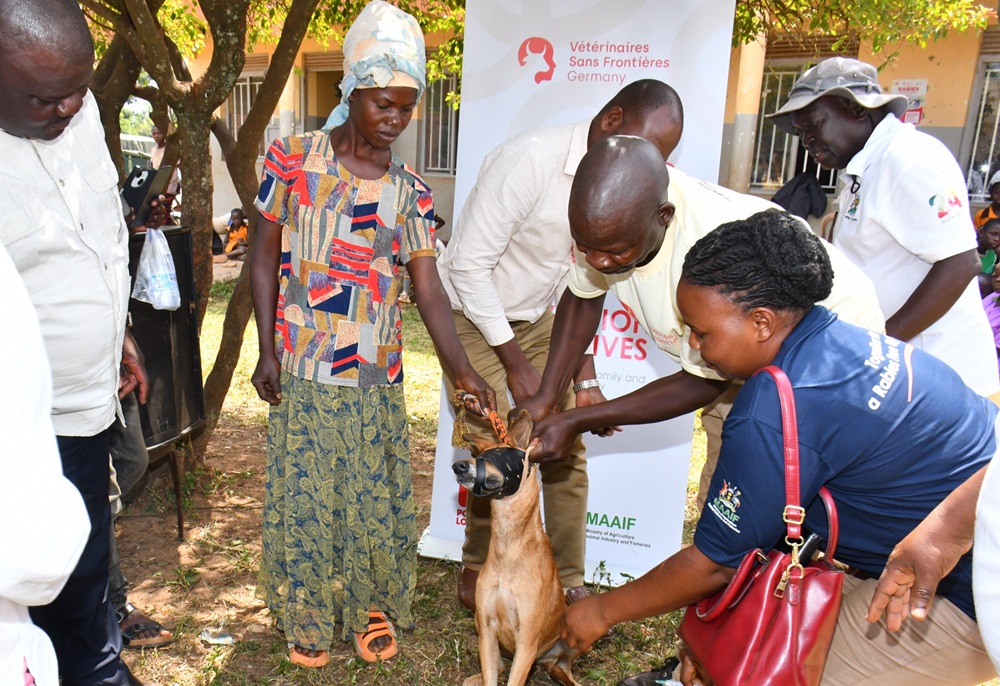
Uganda joins the global World Rabies Day 2026 campaign, urging stronger cooperation, animal vaccination and rapid response to suspected rabies exposure.