
























By Karim Were
The October 19–21 meeting in Kampala will bring together regional and international intellectual property stakeholders to discuss copyright enforcement, digital piracy, royalty management and ways to strengthen Africa’s creative economy.
KAMPALA, Uganda — October 14, 2026 — Uganda will host the 7th Symposium on Copyright and Related Rights Management organised by the African Regional Intellectual Property Organization (ARIPO) from October 19 to 21 at Speke Resort Munyonyo in Kampala, as the Uganda Registration Services Bureau (URSB) calls for stronger copyright protection and better economic returns for creators.
The symposium, organised in collaboration with the World Intellectual Property Organization (WIPO) and URSB, will bring together policymakers, heads of copyright offices, collective management organisations and other stakeholders from ARIPO member states to examine how intellectual property rights can support sustainable development across Africa.
Held under the theme “Empowering Creativity: Harnessing IP for Sustainable Development in Africa,” the meeting will focus on practical approaches to copyright administration, licensing, royalty collection and distribution, enforcement, digital piracy and cross-border cooperation.
The event also forms part of activities leading up to ARIPO’s Golden Jubilee celebrations in December 2026.
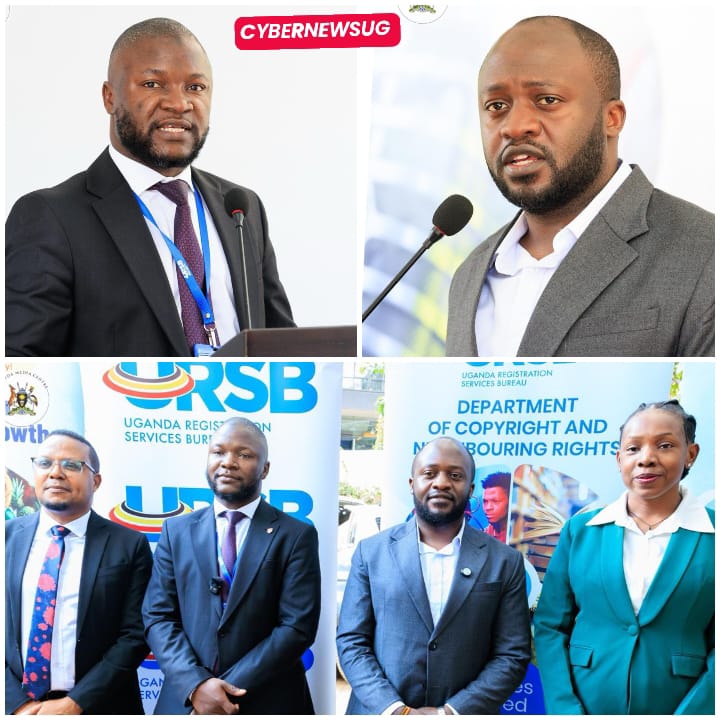
Speaking at a press briefing at the Uganda Media Centre on October 14, URSB Acting Registrar General Mustapher Ntale said Africa’s creative talent needed effective legal and administrative systems to ensure that artists and other rights holders benefit financially from their work.
“Uganda and Africa are rich in creative talent, but talent must be supported by systems that protect creators and enable them to earn from their work. Copyright must function not only as a legal right, but also as an economic asset that generates income, creates jobs and attracts investment,” Ntale said.
His remarks place the economic value of creative work at the centre of the discussions, highlighting the connection between intellectual property protection, sustainable livelihoods and investment in cultural industries.
For Uganda, the symposium presents an opportunity to discuss the practical challenges facing musicians, filmmakers, writers, performers, publishers and other creative professionals as their work reaches audiences through digital platforms and international markets.
It also provides a regional platform for exchanging experiences on copyright regulation and exploring approaches that could improve the management of intellectual property rights across national borders.
URSB strengthens copyright administration
URSB said it has been strengthening Uganda’s copyright administration framework through specialised services, public awareness initiatives, regulation of collective management organisations and legal reforms.
A key development was the establishment of a dedicated Copyright and Neighbouring Rights Department in April 2025. The department was created to provide more focused services to the creative industry and support the administration of rights associated with creative works and related performances.
Copyright generally protects original creative expression, including music, literary works, films and other artistic productions. Related rights, meanwhile, cover certain interests of performers, producers of sound recordings and broadcasting organisations.
These protections are important because creative works can generate revenue through performances, reproduction, broadcasting, licensing and digital distribution. Without effective systems for identifying rights holders and managing permissions, creators may find it difficult to monitor the use of their work or receive the compensation due to them.
URSB also pointed to the Copyright and Neighbouring Rights Amendment Act, No. 8 of 2026, as part of the reforms intended to address emerging challenges in copyright administration.
According to the information presented by the bureau, the amendments cover copyright protection in the digital environment, orphan works, collective management organisations and administrative mechanisms for resolving copyright complaints.
The reforms are relevant to an industry in which creative works can be copied, distributed and accessed across borders with relative ease. They also raise practical questions about how rights should be managed when ownership is unclear, works are circulated online without permission or disputes arise between creators and users.
The full impact of the amendments will depend on their implementation, public awareness, the capacity of relevant institutions and the effectiveness of enforcement mechanisms. The symposium is expected to provide a forum for stakeholders to exchange practical experiences in these areas.
Source: URSB