




















By Karim Were
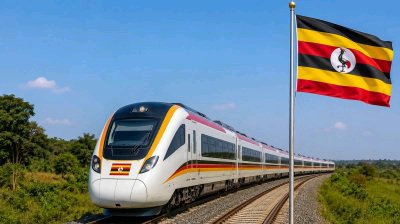
Uganda is moving to unlock a new source of infrastructure financing as it prepares to issue its first-ever sovereign sukuk, signalling a strategic shift toward Islamic capital markets to revive the long-delayed Standard Gauge Railway (SGR) project linking Kampala to the Kenyan border town of Malaba.
The government plans to use proceeds from the sukuk to fund 15% of the €2.7 billion ($3.16 billion) railway project, while export credit agencies and development finance institutions are expected to cover the remaining costs.
The initiative marks a major milestone for Uganda’s financial sector and positions the country among a growing number of African nations exploring Sharia-compliant financing to fund large-scale infrastructure.
Deputy Treasury Secretary Patrick Ocailap has begun a regional investor roadshow across East African Community (EAC) countries, including Kenya and Tanzania, aimed at gauging investor appetite, determining pricing, and building confidence ahead of the issuance.
The roadshow includes representatives from Yusra Sukuk, the lead arranger for the deal, alongside officials from Stanbic Bank Uganda and the Bank of Uganda.
Uganda’s railway ambitions have faced years of setbacks. A 2015 deal with China Harbour Engineering Company stalled after financing from Beijing failed to materialize, prompting the government to cancel the contract in 2023.
In a renewed push, Kampala signed a fresh agreement in October 2024 with Turkish firm Yapi Merkezi to construct the Kampala–Malaba section of the railway.
The SGR is a key component of East Africa’s wider regional integration agenda, designed to connect Uganda to Kenya’s rail network and the port of Mombasa, reducing transport costs and boosting regional trade.
Kenya has already completed the Mombasa–Nairobi–Naivasha section of its SGR and recently launched construction of the Naivasha–Kisumu extension, which will eventually link to Uganda.
In the long term, the rail corridor is expected to stretch further into Rwanda, South Sudan, and the Democratic Republic of the Congo, creating a broader trade and logistics network across East and Central Africa.