

















By Karim Were
The Strait of Hormuz, which links the Gulf to the Gulf of Oman, has held global attention since Israel and the US began their war on Iran in February.
Until fighting began, the narrow channel, through which 20 per cent of the world’s oil and liquefied natural gas (LNG) supplies are shipped from Gulf producers in peacetime, remained toll-free and safe for vessels. The strait is shared by Iran and Oman and does not fall into the category of international waters.
Live US-Israel war on Iran
Tehran’s plans to tax ships passing through the strait and raise money to rebuild is already seeing pushback.
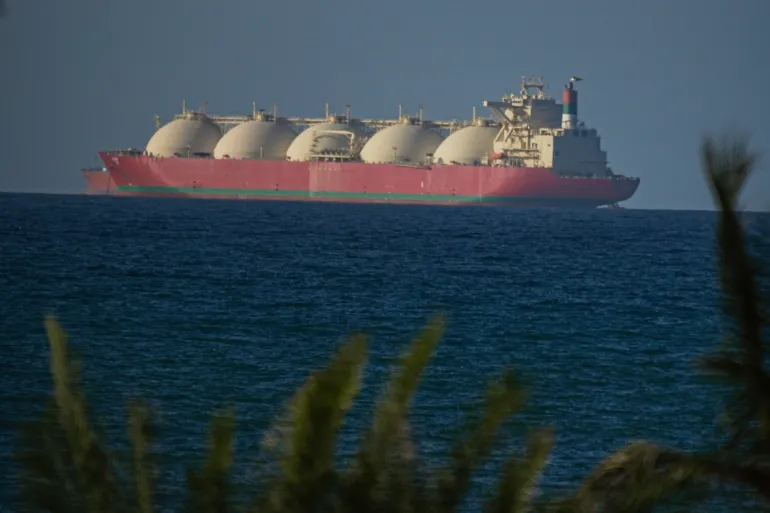
A tanker passing through Strait of Hormuz following news of the two-week temporary ceasefire reached between the United States and Iran, seen in Oman on April 08, 2026 [Shadi J H Alassar/Anadolu Agency
The Strait of Hormuz, which links the Gulf to the Gulf of Oman, has held global attention since Israel and the US began their war on Iran in February.
Until fighting began, the narrow channel, through which 20 per cent of the world’s oil and liquefied natural gas (LNG) supplies are shipped from Gulf producers in peacetime, remained toll-free and safe for vessels. The strait is shared by Iran and Oman and does not fall into the category of international waters.
list of 4 items
list 1 of 4 Iran war day 41: What’s happening in Lebanon, Middle East and beyond?
list 2 of 4 For Gulf states, Hormuz uncertainty casts shadow over US-Iran ceasefire
list 3 of 4 Iranians breathe a ‘ceasefire’ sigh of relief as all sides claim victory
list 4 of 4‘Israel must be restrained for US-Iran ceasefire to hold’end of list
After the US and Israel began strikes, Iran retaliated by attacking “enemy” merchant ships in the strait, effectively halting passage for all, stranding shipping, and creating one of the worst-ever global energy distribution crises.
Tehran continued to refuse to re-open the strait to all traffic at the start of this week, despite US President Donald Trump’s threats to bomb Iran’s power plants and bridges if it did not relent. Trump backed away from his threat on Tuesday night when a two-week ceasefire, brokered by Pakistan, was declared.
That followed a 10-point peace proposal from Iran that Trump described as a “workable” basis on which to negotiate a permanent end to hostilities.
As part of the truce, Tehran has now issued official terms it says will guide its control of the Strait going forward. The US has not directly acknowledged the terms ahead of talks set to begin in Islamabad on Friday. However, analysts say Tehran’s continued control will be unpopular with Washington, as well as other countries.
During the crisis, only a few ships from specific countries deemed friendly to Iran and those which pay a toll have been granted safe passage. At least two tolls for ships are believed to have been paid in Chinese yuan, in what appears to be a strategy to weaken the US dollar, but also to avoid US sanctions. China, which buys 80 percent of Iran’s oil, already pays Tehran in yuan.
Here’s what we know about how shipments will work from now on:
What is Iran’s Strait of Hormuz protocol and will other nations accept it?
Tehran’s plans to tax ships passing through the strait and raise money to rebuild is already seeing pushback.
A tanker passing through Strait of Hormuz following news of the two-week temporary ceasefire reached between the United States and Iran, seen in Oman on April 08, 2026 [Shadi J H Alassar/Anadolu Agency]
The Strait of Hormuz, which links the Gulf to the Gulf of Oman, has held global attention since Israel and the US began their war on Iran in February.
Until fighting began, the narrow channel, through which 20 per cent of the world’s oil and liquefied natural gas (LNG) supplies are shipped from Gulf producers in peacetime, remained toll-free and safe for vessels. The strait is shared by Iran and Oman and does not fall into the category of international waters.
list of 4 items
list 1 of 4Iran war day 41: What’s happening in Lebanon, Middle East and beyond?
list 2 of 4For Gulf states, Hormuz uncertainty casts shadow over US-Iran ceasefire
list 3 of 4Iranians breathe a ‘ceasefire’ sigh of relief as all sides claim victory
list 4 of 4‘Israel must be restrained for US-Iran ceasefire to hold’end of list
After the US and Israel began strikes, Iran retaliated by attacking “enemy” merchant ships in the strait, effectively halting passage for all, stranding shipping, and creating one of the worst-ever global energy distribution crises.
Tehran continued to refuse to re-open the strait to all traffic at the start of this week, despite US President Donald Trump’s threats to bomb Iran’s power plants and bridges if it did not relent. Trump backed away from his threat on Tuesday night when a two-week ceasefire, brokered by Pakistan, was declared.
That followed a 10-point peace proposal from Iran that Trump described as a “workable” basis on which to negotiate a permanent end to hostilities.
As part of the truce, Tehran has now issued official terms it says will guide its control of the Strait going forward. The US has not directly acknowledged the terms ahead of talks set to begin in Islamabad on Friday. However, analysts say Tehran’s continued control will be unpopular with Washington, as well as other countries.
During the crisis, only a few ships from specific countries deemed friendly to Iran and those which pay a toll have been granted safe passage. At least two tolls for ships are believed to have been paid in Chinese yuan, in what appears to be a strategy to weaken the US dollar, but also to avoid US sanctions. China, which buys 80 percent of Iran’s oil, already pays Tehran in yuan.
Here’s what we know about how shipments will work from now on:
INTERACTIVE – Strait of Hormuz – March 2, 2026-177271422
Who is controlling the strait now?
On Tuesday, Iran’s Foreign Minister Abbas Aragchi said Iran would grant safe passage through the strait during the ceasefire in “coordination with Iran’s Armed Forces and with due consideration of technical limitations”.
On Wednesday, the Islamic Revolutionary Guard Corps (IRGC) released a map of the strait showing a safe route for ships to follow. The map appears to direct ships further north towards the Iranian coast and away from the traditional route closer to the coast of Oman.
In a statement, the IRGC said all vessels must use the new map for navigation due to “the likelihood of the presence of various types of anti-ship mines in the main traffic zone”
It is unclear whether Iran is collecting toll fees during the ceasefire period.
However, Trump said on Tuesday the US would be “helping with the traffic buildup” in the strait and that the US army would be “hanging around” as the negotiations go on.
The Strait will be “OPEN & SAFE” he posted on his Truth Social media site on Thursday, adding that US troops would not leave the area, and threatening to resume attacks if the talks don’t go well.
It’s not known to what extent US troops are directing what happens in the strait now.
Delhi-based maritime analyst C Uday Bhaskar told Al Jazeera that there is a lot of “uncertainty” about who can sail through the strait, and that only between three and five ships have transited since the war was paused.
How does Iran’s 10-point plan affect the Strait?
Among Tehran’s main demands listed on its 10-point plan are that the US and Israel permanently cease all attacks on Iran and its allies – particularly Lebanon – lift all sanctions, and allow Iran to retain control over Hormuz. The plan has not been fully published but is understood to be a starting point for talks.
Iranian media say Iran is considering a plan to charge up to $2m per vessel to be shared with Oman on the opposite side of the strait. Other reports suggest Iran could charge $1 per barrel of oil being shipped.
Revenues raised would be used to rebuild military and civilian infrastructure damaged by US-Israeli strikes, Tehran said.
Oman has rejected the idea. Transport minister Said Al-Maawali said on Wednesday that the Omanis previously “signed all international maritime transport agreements” which bar taking fees.
What does international law say about tolls on shipping?
Critics of Iran’s plan to charge tolls say it violates international law guiding safe maritime passage, and should not be part of a final ceasefire agreement.
Live US-Israel war on Iran
What is Iran’s Strait of Hormuz protocol and will other nations accept it?
Tehran’s plans to tax ships passing through the strait and raise money to rebuild is already seeing pushback.
A tanker passing through Strait of Hormuz following news of the two-week temporary ceasefire reached between the United States and Iran, seen in Oman on April 08, 2026 [Shadi J H Alassar/Anadolu Agency]
The Strait of Hormuz, which links the Gulf to the Gulf of Oman, has held global attention since Israel and the US began their war on Iran in February.
Until fighting began, the narrow channel, through which 20 per cent of the world’s oil and liquefied natural gas (LNG) supplies are shipped from Gulf producers in peacetime, remained toll-free and safe for vessels. The strait is shared by Iran and Oman and does not fall into the category of international waters.
list 1 of 4Iran war day 41: What’s happening in Lebanon, Middle East and beyond?
list 2 of 4For Gulf states, Hormuz uncertainty casts shadow over US-Iran ceasefire
list 3 of 4Iranians breathe a ‘ceasefire’ sigh of relief as all sides claim victory
list 4 of 4‘Israel must be restrained for US-Iran ceasefire to hold’end of list
After the US and Israel began strikes, Iran retaliated by attacking “enemy” merchant ships in the strait, effectively halting passage for all, stranding shipping, and creating one of the worst-ever global energy distribution crises.
Tehran continued to refuse to re-open the strait to all traffic at the start of this week, despite US President Donald Trump’s threats to bomb Iran’s power plants and bridges if it did not relent. Trump backed away from his threat on Tuesday night when a two-week ceasefire, brokered by Pakistan, was declared.
That followed a 10-point peace proposal from Iran that Trump described as a “workable” basis on which to negotiate a permanent end to hostilities.
As part of the truce, Tehran has now issued official terms it says will guide its control of the Strait going forward. The US has not directly acknowledged the terms ahead of talks set to begin in Islamabad on Friday. However, analysts say Tehran’s continued control will be unpopular with Washington, as well as other countries.
During the crisis, only a few ships from specific countries deemed friendly to Iran and those which pay a toll have been granted safe passage. At least two tolls for ships are believed to have been paid in Chinese yuan, in what appears to be a strategy to weaken the US dollar, but also to avoid US sanctions. China, which buys 80 percent of Iran’s oil, already pays Tehran in yuan.
Here’s what we know about how shipments will work from now on:
Who is controlling the strait now?
On Tuesday, Iran’s Foreign Minister Abbas Aragchi said Iran would grant safe passage through the strait during the ceasefire in “coordination with Iran’s Armed Forces and with due consideration of technical limitations”.
On Wednesday, the Islamic Revolutionary Guard Corps (IRGC) released a map of the strait showing a safe route for ships to follow. The map appears to direct ships further north towards the Iranian coast and away from the traditional route closer to the coast of Oman.
In a statement, the IRGC said all vessels must use the new map for navigation due to “the likelihood of the presence of various types of anti-ship mines in the main traffic zone”.
Alternative routes through the Strait of Hormuz have been announced by Iran’s Islamic Revolutionary Guard Corps (IRGC), providing new entry and exit pathways for maritime traffic.
Alternative routes through the Strait of Hormuz have been announced by Iran’s Islamic Revolutionary Guard Corps (IRGC), providing new entry and exit pathways for maritime traffic
It is unclear whether Iran is collecting toll fees during the ceasefire period.
However, Trump said on Tuesday the US would be “helping with the traffic buildup” in the strait and that the US army would be “hanging around” as the negotiations go on.
The Strait will be “OPEN & SAFE” he posted on his Truth Social media site on Thursday, adding that US troops would not leave the area, and threatening to resume attacks if the talks don’t go well.
It’s not known to what extent US troops are directing what happens in the strait now.
Delhi-based maritime analyst C Uday Bhaskar told Al Jazeera that there is a lot of “uncertainty” about who can sail through the strait, and that only between three and five ships have transited since the war was paused.
How does Iran’s 10-point plan affect the Strait?
Among Tehran’s main demands listed on its 10-point plan are that the US and Israel permanently cease all attacks on Iran and its allies – particularly Lebanon – lift all sanctions, and allow Iran to retain control over Hormuz. The plan has not been fully published but is understood to be a starting point for talks.
Iranian media say Iran is considering a plan to charge up to $2m per vessel to be shared with Oman on the opposite side of the strait. Other reports suggest Iran could charge $1 per barrel of oil being shipped.
Revenues raised would be used to rebuild military and civilian infrastructure damaged by US-Israeli strikes, Tehran said.
Oman has rejected the idea. Transport minister Said Al-Maawali said on Wednesday that the Omanis previously “signed all international maritime transport agreements” which bar taking fees.
Interactive_Iran_US_Ceasefire_April8_2026
What does international law say about tolls on shipping?
Critics of Iran’s plan to charge tolls say it violates international law guiding safe maritime passage, and should not be part of a final ceasefire agreement.
The United Nations Convention on the Law of the Sea (UNCLOS) says levies cannot be charged on ships sailing through international straits or territorial seas.
The law allows coastal states to collect fees for services rendered, such as navigation assistance or port use, but not for passage itself.
Neither the US nor Iran has ratified that particular convention, however.
Even if they had, there could be ways to get around this law anyway. Analyst Bhaskar told Al Jazeera that if Iran instead charged fees to de-mine the strait and make it safe for passage again, that could be allowable under maritime laws.
There is no precedent in recent history of countries officially taxing passage through international straits or waterways.
In October 2024, a United Nations Security Council report alleged that the Iran-backed Houthis in Yemen were collecting “illegal fees” from shipping companies to allow vessels to pass through the Red Sea and the Bab-el-Mandeb strait, where it was targeting ships linked to Israel during the Gaza war.
Last week, a top adviser to Supreme Leader Mojtaba Khamenei suggested the Houthis could shut the Bab al-Mandeb shipping route again in light of the war on Iran.