

















By Staff Reporter
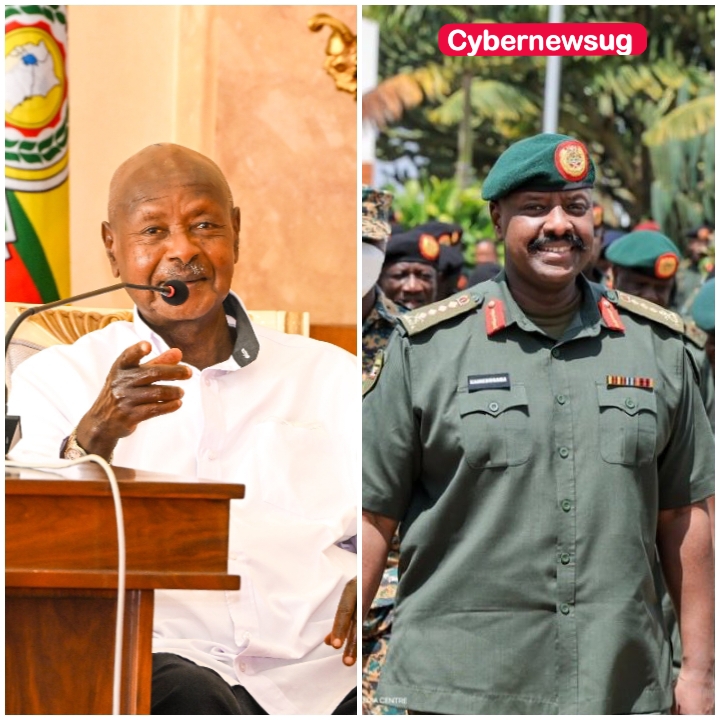
BUNDIBUGYO. Residents and supporters in Bundibugyo have endorsed Gen Muhoozi Kainerugaba as their preferred successor to President Yoweri Kaguta Museveni, saying his leadership would help preserve what they describe as the achievements and legacy of the current administration.
The endorsement places Muhoozi, the Chief of Defence Forces of the Uganda Peoples’ Defence Forces (UPDF), at the centre of a growing political conversation about Uganda’s leadership beyond President Museveni.
Those backing the proposal argue that supporting Muhoozi would provide continuity in government policies and protect programmes and achievements associated with Museveni’s long tenure in power.
However, the endorsement should be understood as a political position of the supporters involved and not as a formal transfer of power or an indication that the constitutional process for choosing Uganda’s president has been bypassed.
#Support for Muhoozi
The Bundibugyo endorsement is based largely on the argument that Uganda needs leadership capable of maintaining political and economic stability while building on programmes initiated under Museveni.
Supporters say Muhoozi represents a younger generation of leadership and could provide continuity while introducing new approaches to governance.
The argument for continuity has become increasingly prominent among supporters of Muhoozi, particularly within political groups associated with the Patriotic League of Uganda (PLU).
They contend that preserving the gains made during Museveni’s presidency requires a leadership transition that does not abandon the policies and political structures developed over several decades.
The supporters also link their endorsement to what they describe as the need to protect Uganda’s national interests and ensure that development programmes continue beyond the current administration.
#Museveni’s political legacy
President Museveni has been Uganda’s president since 1986, following the National Resistance Movement’s takeover of government.
During his tenure, successive governments have pursued programmes focused on infrastructure development, economic transformation, security, education, healthcare and agricultural modernisation.
His supporters frequently cite the expansion of roads, electricity access, telecommunications, industrialisation and improvements in macroeconomic management among the country’s achievements during the period.
Critics, however, have raised concerns over the length of Museveni’s presidency, political competition, governance, accountability and the country’s democratic institutions.
The debate over his legacy is therefore likely to remain contested, with supporters and critics offering different assessments of his time in office.
Against this background, the Bundibugyo endorsement of Muhoozi is being presented by its supporters as an attempt to ensure continuity rather than a departure from the political direction associated with Museveni.
#Why Bundibugyo matters
Bundibugyo is one of the districts in western Uganda and has previously featured in national discussions on development, security, agriculture and political mobilisation.
The district’s economy is heavily linked to agriculture, with communities engaged in activities including cocoa, coffee, food crops and livestock production.
For political actors, support from western Uganda remains significant because the region has historically played an important role in national politics.
An endorsement from local supporters does not, however, automatically translate into an electoral mandate. Uganda’s presidency is determined through the constitutional electoral process, in which eligible voters choose their preferred candidate.
#Muhoozi’s growing political profile
Gen Muhoozi Kainerugaba has increasingly attracted public attention beyond his military career.
He currently serves as Chief of Defence Forces of the UPDF and has also become associated with political mobilisation through the Patriotic League of Uganda.
His supporters have increasingly portrayed him as part of a new generation of Ugandan leadership.
The political discussion surrounding Muhoozi has generated both support and criticism.
Supporters say his military experience, exposure to national and international affairs and younger age could position him to provide a different form of leadership.
Critics, meanwhile, have questioned the relationship between his military position and his political activities, particularly in the context of Uganda’s constitutional and institutional framework.
These competing views mean that any political endorsement of Muhoozi is likely to attract considerable national attention.
#The succession debate
The question of who could eventually succeed President Museveni has been discussed in Uganda for years, although the timing and circumstances of any future transition remain subject to constitutional and electoral processes.
Museveni has continued to participate actively in national politics and has not been replaced as president.
Any future succession will therefore depend on the political process, including elections and the legal requirements governing presidential candidates.
The endorsement in Bundibugyo should consequently be viewed as part of the wider political debate rather than a completed succession arrangement.
#Focus on continuity
For Muhoozi’s supporters, the central argument is that Uganda should avoid disruptions that could affect long-term development programmes.
They say a successor who understands the foundations of Museveni’s administration would be better placed to maintain programmes while introducing new priorities.
This argument is particularly relevant to supporters who believe that political stability is necessary for attracting investment, expanding infrastructure and strengthening Uganda’s economy.
They also argue that continuity could help protect Uganda’s security interests and preserve the country’s regional role.
At the same time, a political transition would inevitably involve questions about accountability, institutional independence and the ability of a new administration to respond to changing national circumstances.
#The role of voters
While endorsements by local groups can influence political mobilisation, the ultimate decision over Uganda’s presidency rests with voters through elections conducted under the country’s electoral laws.
Political endorsements can help candidates build grassroots networks, communicate policy positions and mobilise supporters.
They do not, however, replace the formal electoral process.
For Muhoozi and his supporters, therefore, endorsements such as the one reported in Bundibugyo could form part of a broader effort to establish support across different regions.
The extent to which such support translates into votes will only become clear through the electoral process.
#What the endorsement means
The Bundibugyo development illustrates the growing public discussion about Uganda’s political future and the question of leadership beyond Museveni.
It also demonstrates how supporters of Muhoozi are framing his potential leadership around continuity, national stability and preservation of Museveni’s political legacy.
For the wider public, the debate raises broader questions about the kind of leadership Uganda will require in the future, including economic transformation, employment creation, public service delivery, accountability and national unity.
As political mobilisation develops, voters are likely to scrutinise not only candidates’ backgrounds but also their policies and plans for addressing Uganda’s long-term challenges.
#Conclusion
The endorsement of Gen Muhoozi Kainerugaba by supporters in Bundibugyo adds to the growing political discussion about Uganda’s future leadership and the legacy of President Museveni.
While supporters view Muhoozi as a potential figure capable of preserving continuity and building on existing programmes, the country’s next leadership transition will ultimately be determined through the constitutional and electoral process.
For now, the Bundibugyo endorsement remains a political expression of support, while the broader debate over Uganda’s future leadership continues.
**Source: