















By Karim Were
Uganda is increasingly positioning itself as a strategic destination for high-value tourism and foreign investment, following a 10-day familiarisation tour by an Egyptian delegation that highlighted the country’s untapped economic potential.

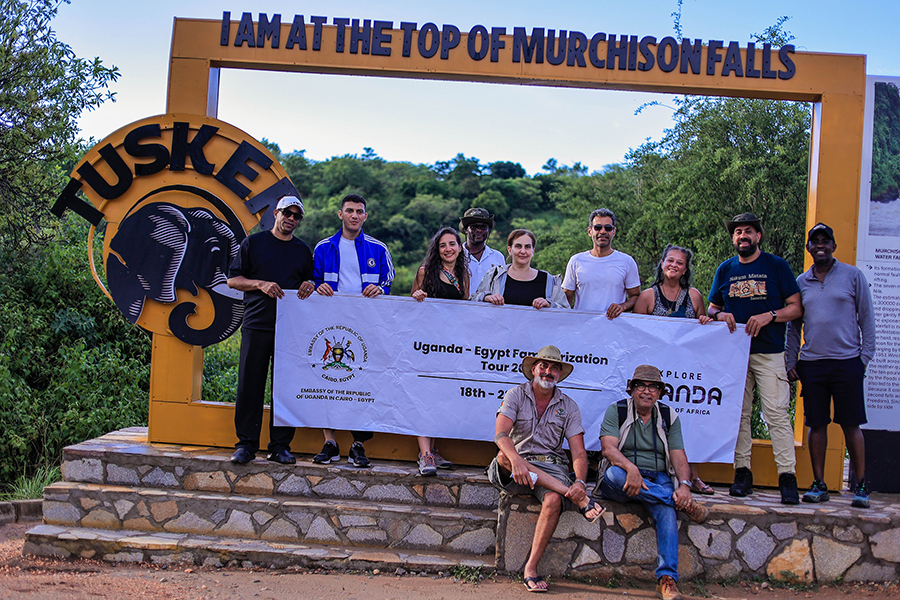
The visit, held from April 19 to 29, brought a mix of creatives, investors, and cultural influencers to Uganda as part of a broader push to translate diplomacy into measurable economic gains. Rather than serving as a traditional tourism showcase, the tour was structured to demonstrate how tourism, conservation, and agribusiness intersect within Uganda’s development agenda.
Delegates explored flagship destinations such as Murchison Falls National Park, Bwindi Impenetrable National Park, Queen Elizabeth National Park, and Kibale Forest National Park, alongside a visit to the Source of the Nile. However, the emphasis extended beyond sightseeing to include investment exposure—particularly in conservation-linked enterprises and rural tourism models.
A standout example was Emburara Farm Lodge, where the delegation engaged with Uganda’s pastoral economy through the iconic Ankole long-horned cattle. Experiences like this underscored the country’s strategy to package cultural heritage as a commercially viable tourism product.
Participants noted that Uganda’s appeal lies in its ability to combine authentic experiences with scalable business opportunities. Egyptian actor Mahmoud Hemida and photographer Ashraf Talaat both pointed to the country’s potential as not just a travel destination, but a long-term investment partner.
Government officials framed the tour as part of Uganda’s Economic and Commercial Diplomacy agenda—an approach designed to move beyond symbolic international relations toward tangible outcomes such as market access, partnerships, and capital inflows. The initiative aligns with the country’s broader ambition to accelerate growth by attracting targeted foreign direct investment into sectors like hospitality, conservation, and agribusiness.
Officials at Uganda’s mission in Cairo emphasized that such engagements are deliberate efforts to tap into emerging markets in the Middle East, positioning them as key sources of both tourists and investors.
With growing global interest in sustainable and experience-driven travel, Uganda is betting on its natural assets and community-based enterprises to differentiate itself. The next step, according to policymakers, is ensuring that the relationships built during such tours translate into long-term investment commitments and sustained tourism flows.
The Egyptian delegation’s visit may therefore mark less of a promotional exercise and more of a shift in how Uganda leverages tourism—as a gateway to broader economic transformation.