

























By Karim Were
KAMPALA —The Government has launched two digital platforms aimed at improving public service delivery, strengthening access to human rights protection and expanding opportunities for professional development among teachers across Uganda.
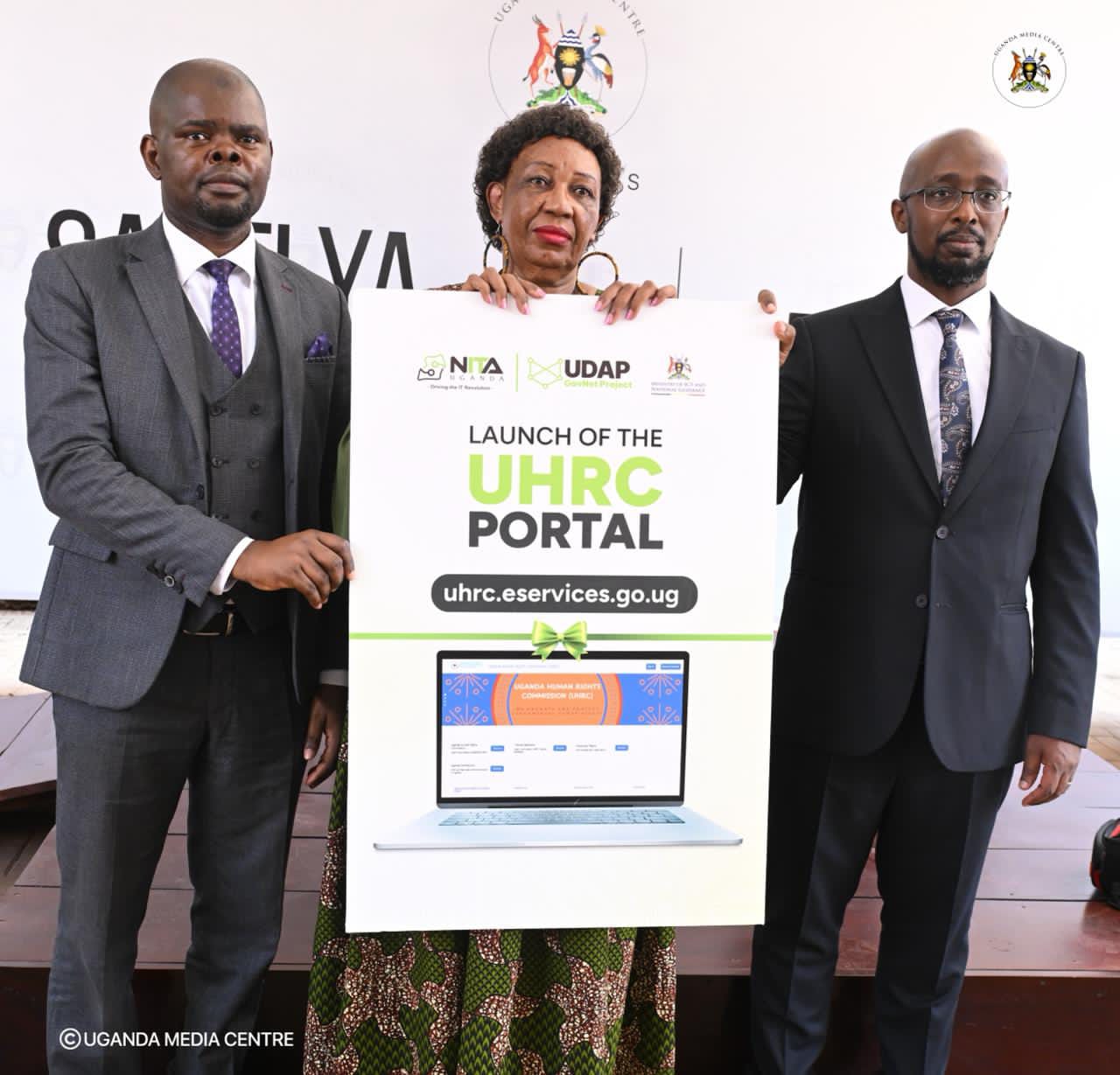
The U-Learn Platform and the Uganda Human Rights Commission (UHRC) Case Management System were officially launched as part of the country’s wider digital transformation agenda.

The launch brought together officials from the Ministry of Education and Sports, Ministry of ICT and National Guidance, National Information Technology Authority-Uganda (NITA-U), Uganda Human Rights Commission (UHRC), development partners and members of the media.
The initiative is intended to demonstrate how technology can be used to modernise government services and improve the way citizens interact with public institutions.
#Platforms to support government digital transformation

Officials said the two platforms are aligned with the objectives of Uganda’s National Development Plan III and the broader government programme to digitise services across ministries, departments and agencies.
The launch was described as another step in Uganda’s efforts to integrate technology into public administration and service delivery.
The government has increasingly promoted digital systems as a means of improving efficiency, accessibility, transparency and accountability in public institutions.
The two platforms target different areas but share a common objective of improving the experience of citizens and public servants through technology.
U-Learn focuses on professional development for teachers, while the UHRC Case Management System is designed to improve the handling and monitoring of human rights complaints.
## **U-Learn targets teachers across the country**
The U-Learn platform is expected to help address disparities in access to professional development opportunities among teachers.
Education officials noted that teachers working in urban areas can often have greater access to training opportunities and professional resources than those posted in remote parts of the country.
The digital platform seeks to reduce this gap by providing teachers with access to professional development regardless of where they are stationed.
Officials said professional development should not depend on a teacher’s geographical location.
Through digital learning, teachers in different parts of Uganda can potentially access training resources without having to travel long distances to attend physical programmes.
The platform is therefore expected to contribute to continuous professional development within the education sector.
#Digital records for teachers
Another important feature highlighted at the launch is the ability to maintain training records digitally.
A digital training record can allow information about a teacher’s professional development to remain accessible as the teacher moves between different duty stations.
Officials said a training record that follows a teacher throughout their professional career could improve the management of teacher development programmes.
It could also help education authorities keep track of training undertaken by teachers and identify areas where additional professional development may be required.
The initiative is part of a broader effort to use digital systems to improve the management of public-sector services.
#UHRC system to improve case management
The second platform launched is the UHRC Case Management System, which is intended to strengthen the management of human rights complaints.
The system will provide a digital mechanism for tracking cases from the time a complaint is registered through the investigation and resolution stages.
Officials said this will create a transparent digital trail for complaints handled by the human rights commission.
Traditionally, reliance on physical documents can create challenges when records are misplaced, delayed or damaged.
A digital case management system can help institutions maintain organised records and monitor the progress of cases more effectively.
The system is therefore expected to strengthen accountability within the human rights complaints process.
#Strengthening access to justice
The digital case management platform is also expected to contribute to human rights protection by improving the tracking of complaints.
When a complaint is registered, officials can use the system to monitor its progress and establish the stage it has reached.
This can help institutions identify pending cases and improve follow-up.
For citizens seeking redress for alleged human rights violations, effective case management is an important part of ensuring that complaints are handled in a timely and transparent manner.
The system is consequently expected to support the UHRC’s mandate while improving the institution’s ability to manage information.
#Technology and public trust
Officials at the launch linked the two platforms to the broader issue of public confidence in government institutions.
They argued that reliable digital systems can strengthen trust by making government processes more transparent and accountable.
A digital record of a teacher’s professional development can provide continuity, while a digital case file can create an auditable trail showing how a human rights complaint has been handled.
Such systems can reduce dependence on paperwork and improve the availability of institutional records.
However, the effectiveness of the platforms will ultimately depend on how well they are implemented and adopted by the intended users.
#Government pledges continued support
The Government reaffirmed its commitment to supporting digital transformation across public institutions.
Officials said the Ministry will continue providing policy direction, digital infrastructure and strategic partnerships required for platforms of this nature to succeed and expand.
The Government also emphasised that digital transformation should not be measured simply by the number of systems developed or launched.
Instead, the success of digital initiatives should be assessed by their impact on service delivery, inclusion and institutional effectiveness.
The emphasis is therefore on ensuring that digital platforms translate into tangible improvements for citizens and public servants.
#Role of NITA-U
NITA-U was among the institutions involved in the development of the platforms.
The authority plays a central role in supporting Uganda’s information technology infrastructure and digital government initiatives.
Officials at the launch commended NITA-U, partners and other stakeholders whose technical expertise and collaboration contributed to the development of the systems.
The launch highlighted the importance of cooperation among government institutions when implementing large-scale digital transformation projects.
#Stakeholders urged to embrace platforms
Government called on institutions, implementers and users to fully embrace the new systems and ensure that they are used effectively.
Officials said continuous improvement would also be necessary if the platforms are to deliver lasting benefits.
Teachers are expected to take advantage of U-Learn for professional development, while human rights institutions will be required to effectively use the case management system to improve the handling of complaints.
The wider public is also expected to benefit indirectly from improved government services and stronger institutional accountability.
#Digital transformation agenda
The launch comes as Uganda continues to expand the use of information and communication technology in government services.
Digital transformation has become an important component of efforts to improve efficiency and reduce some of the administrative challenges associated with traditional paper-based systems.
The Government’s approach includes digitising records, introducing online services and strengthening information management across public institutions.
The U-Learn and UHRC systems add to these efforts by focusing specifically on education and human rights administration.
#Challenges remain
While digital platforms can improve access and efficiency, their success depends on several factors, including reliable internet connectivity, adequate digital infrastructure and the ability of users to access and operate the systems.
For teachers working in remote areas, connectivity and access to appropriate devices may influence how effectively they can use online professional development services.
Similarly, institutions using digital case management systems require adequate training, technical support and strong information security measures.
Ensuring that digital transformation does not exclude people with limited access to technology will remain an important consideration as government expands its digital services.
#A step towards a digital Uganda
The launch of the two platforms represents an effort to translate Uganda’s digital transformation policies into practical services.
U-Learn seeks to make professional development more accessible to teachers, while the UHRC Case Management System is designed to provide a more organised and transparent approach to handling human rights complaints.
Both initiatives demonstrate the potential for technology to support public institutions beyond basic administrative functions.
If effectively implemented and continuously improved, the systems could contribute to more accessible education-sector training, better records management and stronger accountability in human rights protection.
#Conclusion
The launch of U-Learn and the UHRC Case Management System marks another step in Uganda’s digital transformation programme.
The platforms address two distinct areas of public service — teacher professional development and human rights case management — while sharing the broader goal of improving efficiency, transparency and accountability.
Government officials have urged institutions and users to take ownership of the systems and ensure that they are used effectively.
The success of the initiatives will ultimately depend on whether they deliver measurable improvements in the daily experiences of teachers, human rights institutions and citizens.
As Uganda continues to digitise government services, the new platforms provide an example of how technology can be applied to strengthen institutions and bring public services closer to the people.