

























By Karim Were
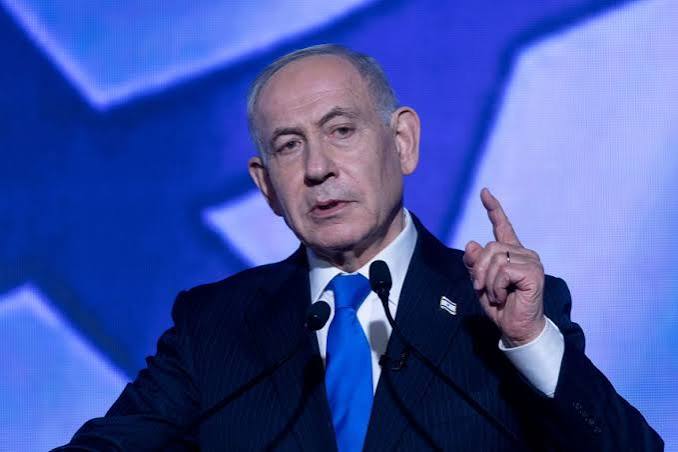
Israeli Prime Minister Benjamin Netanyahu praised Captain Smit Machchhar for resisting an attack inside the cockpit and helping passengers and crew regain control of a Flydubai flight carrying 174 people.
TEL AVIV/JERUSALEM — October 1, 2026: Israeli Prime Minister Benjamin Netanyahu has praised Indian pilot Captain Smit Machchhar as a “true hero” after he was seriously injured during a violent confrontation with his co-pilot aboard a Flydubai flight travelling from Dubai to Tel Aviv.
Machchhar, the captain of Flydubai Flight FZ1073, was reportedly attacked inside the cockpit on Wednesday, September 30, as the Boeing 737 MAX 8 was approaching Israel. Despite suffering serious injuries, he managed to resist the attacker and open the cockpit door, allowing passengers and crew members to enter and help subdue the co-pilot.
The aircraft, carrying 174 passengers, subsequently made an emergency landing in Tabuk, northwestern Saudi Arabia. Israeli officials have described the incident as an apparent attempt to bring down the aircraft, although investigations into the attack and the suspected motive remain ongoing.
Netanyahu publicly praised Machchhar’s actions, saying they prevented what could have become a major aviation disaster.
“My salute to the Indian pilot Captain Smit Machchhar for his extraordinary bravery,” Netanyahu said.
He added that despite being stabbed and seriously injured, the pilot fought back, resisted and opened the cockpit door, enabling passengers and crew to overpower the attacker.
“He saved the lives of 174 people, including Israeli citizens and other nationals,” Netanyahu said, wishing Machchhar a “speedy and full recovery.” (The Times of Israel)
Flight plunges during cockpit struggle
The incident unfolded aboard Flydubai Flight FZ1073, which was operating a scheduled service from Dubai to Tel Aviv.
According to flight-tracking data cited by international media, the aircraft experienced a dramatic loss of altitude during the confrontation.
Reuters reported that the aircraft lost nearly 14,000 feet in less than 30 seconds after the confrontation began. Other reports citing Flightradar24 data put the aircraft’s descent at more than 14,000 feet, from around 30,875 feet to approximately 16,750 feet.
The sudden descent triggered an emergency situation aboard the aircraft.
The captain had reportedly been seriously injured, while the co-pilot was accused of attempting to take control of the aircraft.
The exact sequence of events inside the cockpit remains subject to investigation.
Israeli authorities have said the incident appeared to involve an attempt to crash the aircraft, while the circumstances and motive of the attack are still being examined.
That distinction is important because the available information comes largely from officials and people involved in the immediate response, rather than from a completed investigation.
Machchhar opens cockpit door
Despite his injuries, Machchhar’s actions became central to the effort to regain control of the aircraft.
Reports indicate that he managed to open the cockpit door, allowing passengers and crew members to reach the flight deck.
The Guardian reported that Machchhar was severely wounded when he activated the mechanism that opened the cockpit door, giving others access to the cockpit and allowing them to overpower the attacker. (The Guardian)
Passengers then intervened.
Among those who helped was Israeli passenger Yaniv Hayoun, while dentist Dr Shota Musayev provided emergency medical assistance to the injured captain.
Other pilots were also aboard the aircraft as passengers. They subsequently helped take control of the aircraft after the immediate confrontation had been brought under control.
The aircraft was diverted to Tabuk, where it landed safely.
Passengers played crucial role
The response by passengers and other crew members has also attracted widespread attention.
According to the Associated Press, Hayoun, a plumber travelling aboard the flight, helped restrain the attacker and became one of several passengers credited with helping avert a disaster. Dr Musayev, a dentist, treated the injured captain.
Musayev later described finding Machchhar badly injured inside the cockpit.
He said he provided emergency treatment to the captain, including efforts to control his bleeding and stabilise his condition. (The Times of Israel)
The intervention demonstrates how multiple people aboard the aircraft contributed to the emergency response.
While Netanyahu’s statement focused particularly on Machchhar, the successful outcome involved the combined efforts of the captain, cabin crew, passengers and other pilots who were travelling on the aircraft.
Israeli President Isaac Herzog also praised those involved and said he would recommend the President’s Medal for Civilian Bravery for four passengers who demonstrated exceptional courage during the incident.
Machchhar receiving medical treatment
Machchhar was taken to hospital after the aircraft landed in Saudi Arabia.
Reports indicate that he underwent medical treatment for his injuries and was in stable condition as of Thursday.
The extent of his injuries has been described as serious, with reports saying he suffered wounds to his neck and hands during the confrontation.
The available reporting does not establish a complete medical prognosis, but international media reports indicate that he was recovering following treatment.
Netanyahu’s public message focused on wishing the Indian captain a full recovery.
The Indian pilot’s actions have also received attention in India, where he has been praised for his conduct during the emergency.
Indian media reports say Machchhar previously worked for SpiceJet before joining Flydubai. He has more than a decade of experience in commercial aviation and has flown Boeing 737 aircraft.
Who is Captain Smit Machchhar?
Machchhar is an Indian commercial pilot who has worked in aviation for more than a decade.
Reports indicate that he joined Flydubai in 2022 after spending approximately 11 years with Indian carrier SpiceJet. (The Times of India)
He trained in New Zealand before completing additional Boeing 737 training in India, according to Indian media reports.
His experience became particularly relevant during the emergency because the incident required rapid decision-making under extremely difficult circumstances.
A profile published by The Washington Post said Machchhar had more than 13 years of flight experience. Former colleagues and instructors have described him as calm and professional. (The Washington Post)
His background has attracted considerable public attention since the incident because of the contrast between the routine nature of commercial aviation and the extraordinary circumstances he faced during the flight.
Investigation into suspected attack
Although Israeli officials have characterised the incident as an apparent attempt to crash the aircraft, the motive remains under investigation.
The co-pilot was reportedly taken into custody after the aircraft landed in Saudi Arabia.
Israeli officials have identified the co-pilot as an Omani national, although authorities have not publicly established a final motive.
Reuters reported that Israeli officials were investigating whether the attack was connected to an attempt to target Israeli passengers or disrupt relations between Israel and the United Arab Emirates. Those possibilities remain part of the investigation rather than established facts.
The UAE and Oman had not immediately issued detailed public explanations concerning the incident in the reports available on Thursday.
Flydubai has also urged caution over speculation while the investigation continues.
The airline suspended flights to and from Israel following the incident as authorities examined what happened.
Aviation security concerns
The incident has raised questions about cockpit security and procedures for dealing with threats involving flight crew members.
Commercial aviation relies heavily on strict cockpit-access procedures and multiple layers of security designed to prevent unauthorised access and protect flight crews.
An attack originating inside the cockpit is particularly serious because pilots are responsible for maintaining control of an aircraft while simultaneously managing navigation, communication and emergency procedures.
The Flydubai incident therefore presents an unusual security challenge.
It involved an alleged attack by one member of the flight crew against another, rather than an external attempt by a passenger to enter the cockpit.
Authorities are likely to examine how the confrontation began, how the aircraft lost altitude, how the cockpit door was opened and how control of the aircraft was ultimately restored.
Investigators will also need to establish the attacker’s motive and whether the incident was premeditated.
Israel increases scrutiny of pilots
The incident has also prompted Israel to review aviation-security measures.
Israeli officials said they would examine the identities of pilots operating flights into the country following the attack.
That decision reflects heightened security concerns surrounding flights arriving in Israel, particularly at a time of heightened regional tensions.
Israel has historically maintained stringent aviation-security procedures, partly because of its experience with terrorism and aircraft-related security threats.
The latest incident is nevertheless unusual because the reported threat came from within the flight crew.
The investigation could therefore have implications for how airlines and authorities assess crew members, cockpit security and emergency procedures.
The broader regional context
The flight was travelling between the United Arab Emirates and Israel, two countries whose diplomatic relationship was formally established through the 2020 Abraham Accords.
Commercial aviation has become an important element of the relationship, linking the two countries through regular passenger and business travel.
The incident comes against a complicated regional security environment.
Any confirmed attempt to attack an aircraft travelling between the UAE and Israel could therefore have implications extending beyond aviation security.
However, authorities have yet to establish a definitive motive.
It would therefore be premature to draw conclusions about broader political or geopolitical intentions before the investigation is completed.
The incident nonetheless demonstrates how aviation can become vulnerable to wider regional tensions and why airlines operating in sensitive areas maintain strict security protocols.
Netanyahu’s response
Netanyahu’s remarks were primarily a tribute to the captain’s actions.
In his message, the Israeli prime minister did not focus only on the circumstances of the attack but highlighted the human dimension of the incident.
He credited Machchhar with helping protect the passengers and crew at a moment when the aircraft was in serious danger.
The prime minister’s statement also reflected the international character of the flight.
The passengers included Israeli citizens as well as people of other nationalities.
By specifically thanking an Indian pilot working for a Dubai-based airline, Netanyahu’s message underscored the multinational nature of the aviation industry and the cooperation that can become crucial during emergencies.
Averted tragedy
The episode could have had far more serious consequences had the passengers, crew and additional pilots been unable to regain control of the aircraft.
The plane ultimately landed safely in Saudi Arabia, and the passengers were later able to continue their journey to Israel on a replacement aircraft.
Reuters reported that passengers were subsequently flown to Tel Aviv.
The safe landing brought an end to an emergency that had begun thousands of metres above the ground.
For aviation investigators, however, the landing marks the beginning of a separate process: determining exactly what happened and why.
Authorities will need to reconstruct the sequence using flight data, cockpit recordings, witness accounts, communications and other available evidence.
Recognition for courage
The response to Machchhar’s actions illustrates the way exceptional conduct during aviation emergencies can have consequences far beyond the cockpit.
His actions have been praised by Israeli and Indian officials, while passengers who helped restrain the attacker and assist the injured pilot have also received recognition.
For the passengers, the experience was one of extraordinary uncertainty.
For investigators, it is now a case involving aviation safety, cockpit security and a suspected violent attack.
For the airline industry, it provides another reminder that emergency preparedness depends not only on technology and procedures but also on the ability of individuals to make rapid decisions under pressure.
Conclusion
Captain Smit Machchhar’s response to the cockpit attack aboard Flydubai Flight FZ1073 has drawn international praise after the aircraft carrying 174 people was diverted to Saudi Arabia and landed safely.
Israeli Prime Minister Benjamin Netanyahu called the Indian pilot a “true hero,” crediting him with resisting the attack and opening the cockpit door, which allowed passengers and crew members to intervene.
Machchhar’s actions were part of a broader response that included passengers, cabin crew, medical assistance from a passenger and other pilots who helped regain control of the aircraft.
The incident remains under investigation, particularly the circumstances surrounding the attack and the suspected motive.
For now, the clearest established outcome is that a potentially catastrophic aviation emergency ended without the loss of life among the passengers.
The episode has also highlighted the importance of cockpit security, crew preparedness and the ability of people aboard an aircraft to respond collectively during an unprecedented emergency.
As Machchhar recovers, the investigation will determine the full circumstances behind the attack. But his actions, together with those of the passengers and crew who responded, have already become the defining story of a flight that came dangerously close to disaster.
Source: