




















By Karim Were
President Yoweri Museveni has thanked Ugandans and other well-wishers for messages marking his 82nd birthday, while urging greater protection of wetlands, forests and other natural resources.
KAMPALA, Uganda — President Yoweri Kaguta Museveni has thanked Ugandans, members of his family, supporters and other well-wishers inside and outside Uganda for messages celebrating his 82nd birthday, saying the goodwill was a source of gratitude as he reflected on Uganda’s peace, economic progress and environmental challenges.
Advertisement Starting Tomorrow 26th-29th at Voyagers Kikorongo


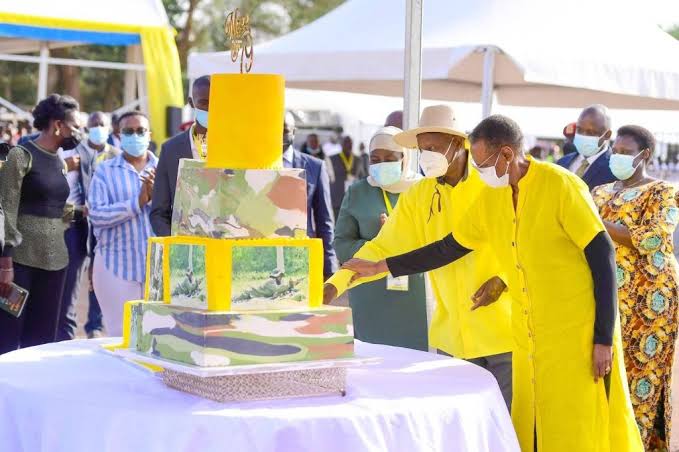
Museveni turned 82 on September 15, 2026. In a birthday reflection published by State House on September 20, the President said he had received congratulations from millions of people, including members of his immediate family, the wider National Resistance Movement (NRM) fraternity, Ugandans, East Africans and well-wishers from beyond the region.
The President said his social-media handler, Precious Kamwiine, had informed him that about eight million messages had been sent in connection with his birthday.
The figure was presented by Museveni and State House as the number of well-wishes received. It has not been independently audited or verified by an external organisation and should therefore be understood as a figure cited by the President rather than an independently established statistic.
“I want to thank the 8 million well-wishers that sent me congratulations on my 82nd birthday on the 15th of September 2026,” Museveni said in the official birthday message.
Family and supporters lead birthday messages
Museveni specifically acknowledged members of his nuclear family, including First Lady Janet Museveni, whom he referred to as “Maama,” as well as Gen Muhoozi Kainerugaba, Natasha Museveni Karugire, Patience and Kyaremeera.
He also extended his appreciation to members of his wider political family in the NRM and to Ugandans and other well-wishers across East Africa and beyond.
The birthday celebrations came as Museveni continues his long tenure at the centre of Uganda’s political life. He first became president in 1986 and, following the 2026 presidential election, began another term in office. His 82nd birthday therefore attracted attention not only as a personal milestone but also as a political and national occasion.
Reports from the birthday period indicate that celebrations extended beyond official government activities, with youth groups and other supporters organising events around themes including wealth creation, patriotism, skilling and economic transformation. Uganda Media Centre reported that Generation Z youth held celebrations at Kololo Ceremonial Grounds and used the occasion to highlight entrepreneurship, value addition and community service.
Museveni reflects on Uganda’s progress
In his birthday message, Museveni used the occasion to reflect on developments he associates with Uganda’s progress over the years.
He cited peace and stability as important achievements and pointed to sectors including agriculture, oil, minerals and manufacturing as areas in which Uganda has made progress.
His comments come at a period when Uganda is seeking to increase production, industrialise the economy and benefit more from its natural resources.
Advertisment

Agriculture remains central to the country’s economy and livelihoods, while the development of the petroleum sector has increased expectations for additional government revenue and industrial opportunities.
The President has also repeatedly emphasised industrialisation and value addition, arguing that Uganda should process more of its raw materials locally instead of relying heavily on exports of unprocessed commodities.
At recent birthday-related celebrations, government officials similarly highlighted commercial agriculture, industry, services and information and communication technology as sectors capable of generating jobs and household incomes.
Museveni’s birthday reflection, however, was not limited to economic achievements. He also used the occasion to raise concerns about the relationship between economic development and environmental protection.
President warns against environmental degradation
One of the most notable elements of Museveni’s message was his warning about Uganda’s natural environment.
The President said unreliable rainfall should remind Ugandans not to take nature for granted.
Uganda’s economy and food security remain closely linked to rainfall patterns, particularly because millions of households depend directly or indirectly on agriculture.
Changes in rainfall can affect crop production, livestock, water availability and household incomes. For farmers, prolonged dry spells or unpredictable rains can make planning planting and harvesting seasons more difficult.

Against this background, Museveni urged people occupying wetlands, forests and other protected areas to leave them in order to preserve what he described as resources given to the country by God.
“The present unreliable rains are a reminder that we should not take nature for granted,” Museveni said.
He added that people living or carrying out activities in wetlands, forests and other protected areas should vacate those areas so that Uganda can preserve its natural resources.
The remarks place environmental conservation alongside economic development as part of the country’s long-term national interests.
Wetlands and forests under pressure
Uganda’s wetlands and forests perform important environmental and economic functions.
Wetlands can help regulate water flows, support biodiversity and provide natural systems that contribute to water purification and flood control. Forests similarly support biodiversity, protect soils and play a role in regulating local ecological systems.
At the same time, population growth, agricultural expansion, settlement, infrastructure development and other forms of land use have increased pressure on some protected ecosystems.
The President’s warning therefore touches on a broader policy challenge: how Uganda can expand economic activity while protecting the environmental systems that support agriculture, water resources and livelihoods.
The call to vacate protected areas also raises practical questions about enforcement and the treatment of people who have settled or established livelihoods in environmentally sensitive locations.
Any implementation of such directives requires clear identification of protected boundaries, enforcement of existing laws and consideration of lawful land rights and livelihoods.
The issue is particularly significant because environmental enforcement can affect farmers, businesses, local communities and government agencies in different ways.
Birthday message takes wider African dimension
Museveni’s post-birthday reflections also went beyond Uganda.
In the official State House statement, he said the goodwill surrounding his birthday would encourage him and Janet Museveni to continue for another 18 years, with the hope of reaching 100 and 96 years respectively.
He then used the occasion to make a broader appeal for African integration.
Museveni identified economic integration, political integration and stronger continental solidarity among the major issues he believes Africa must address.
He argued for a larger African common market that would give producers access to wider markets for their goods. He also linked political integration to strategic security and referred to the East African Federation as an example of regional integration.
His comments are consistent with his long-standing advocacy for greater African economic and political integration.
The President has repeatedly argued that African countries need larger markets to support production, industrialisation and trade.
That position was also reflected in messages delivered during his birthday celebrations, where officials emphasised the importance of expanding markets through the East African Community and the wider African market.
Economic transformation remains a central theme
The birthday celebrations also provided an opportunity for government officials and youth leaders to revisit Museveni’s message on wealth creation.
Uganda Media Centre reported that officials encouraged young people to participate actively in economic production rather than remain dependent on employment opportunities alone.
The government has promoted programmes including the Parish Development Model, Emyooga and skilling initiatives as mechanisms for increasing household participation in the money economy.
At the Gen Z birthday event, the President’s message, delivered by Vice President Jessica Alupo, emphasised wealth creation, value addition, industrialisation and participation in productive economic activities.
These policies are part of the government’s wider strategy to move households into commercial production and increase incomes.
However, the success of such programmes depends on factors including access to finance, markets, infrastructure, skills, technology, climate resilience and effective public-sector implementation.
Environment adds another dimension to development debate
Museveni’s warning about wetlands and forests adds an environmental dimension to the country’s economic transformation agenda.
Uganda faces the challenge of increasing agricultural and industrial production while maintaining ecosystems that support water availability, soil fertility and biodiversity.
This means development policies increasingly have to balance short-term economic needs with long-term environmental sustainability.
For example, expanding agricultural production can improve food security and household incomes, but cultivation in wetlands or forest reserves can damage ecosystems if it is not properly regulated.
Similarly, industrial development can create jobs and government revenue while generating environmental pressures that require appropriate regulation and monitoring.
Museveni’s birthday message therefore connects two issues that are often treated separately: economic development and environmental conservation.
Political significance of the 82nd birthday
The birthday also carried political significance because of Museveni’s long tenure and continued role in Uganda’s political system.
His 82nd birthday came months after the 2026 presidential election and amid renewed public discussion about Uganda’s political and economic future.
Supporters used the occasion to highlight what they regard as achievements under his leadership, including peace, stability, infrastructure development and economic programmes.
Government officials participating in birthday-related events similarly emphasised wealth creation, education, skilling and national development. (Uganda Media Centre)
At the same time, a professional assessment of Uganda’s development trajectory requires distinguishing between statements by political supporters and independently measurable outcomes.
Claims about economic progress, public-service delivery and development should ultimately be assessed using official statistics, independent research and evidence from affected communities.
A message combining gratitude and warning
Museveni’s latest birthday reflection combined personal gratitude with broader messages about Uganda’s future.
He thanked those who sent birthday wishes and acknowledged the role of his family, political supporters and other well-wishers.
But he also used the occasion to remind Ugandans that the country’s natural resources require protection.
The reference to unreliable rainfall gives the environmental part of the message a practical dimension. For a country whose population depends heavily on agriculture, weather conditions can have consequences far beyond the environment itself.
Climate variability, land degradation and destruction of natural ecosystems can affect food production, household incomes and water availability.
Protecting wetlands, forests and other ecosystems is therefore not only an environmental concern but also an economic and social issue.
Broader implications for Uganda
The President’s message comes at a time when Uganda is pursuing simultaneous goals of economic transformation, industrialisation, agricultural development and natural-resource exploitation.
The country’s oil sector is expected to become increasingly important, while mineral resources, manufacturing and agriculture remain key components of the development strategy.
The challenge will be ensuring that these activities generate broad-based benefits while preserving the natural systems on which future generations will depend.
For communities, the environmental message also highlights the importance of understanding the legal status of land and complying with regulations governing protected areas.
For government agencies, it reinforces the need for consistent enforcement, public awareness and effective land-use planning.
For citizens, the message is a reminder that economic activity and environmental conservation cannot be considered entirely separate objectives.
Conclusion
President Yoweri Museveni’s 82nd birthday message was both a statement of appreciation and a reflection on Uganda’s future.
He thanked millions of people who congratulated him, with State House recording his claim that eight million well-wishers sent birthday messages. That figure remains a presidentially cited count rather than an independently audited statistic.
Beyond the celebrations, however, Museveni used the occasion to highlight what he sees as Uganda’s progress in agriculture, oil, minerals, manufacturing and other areas while warning against environmental degradation.
His appeal for people to leave wetlands, forests and other protected areas places conservation alongside economic development as a national priority.
As Uganda continues to pursue industrialisation and greater exploitation of its natural resources, the balance between development and environmental protection will remain an important test of the country’s long-term sustainability.
The President’s birthday reflections therefore extend beyond the celebration of an individual milestone. They raise broader questions about how Uganda can protect its natural assets, strengthen its economy and ensure that today’s development does not undermine the resources needed by future generations.
Source: