

























By Karim Were
A claim circulating online that North Korean leader Kim Jong Un has pledged military support to Iran and said that “a single missile” would be enough to strike Israel has not been independently verified by credible sources.
The alleged statement has circulated amid heightened tensions involving Iran, Israel and the United States. However, available fact-checking and international reporting do not provide evidence that Kim personally made such a pledge or authorised North Korean missile attacks against Israel.
The distinction is important because North Korea has previously issued strong statements opposing U.S. and Israeli military actions and has maintained relations with Iran. But those positions are different from a verified commitment to launch missiles or enter a conflict on Iran’s behalf.
#No verified record of the alleged statement
The claim appears to have gained traction through social-media posts and online reports that attribute the words directly to Kim.
Fact-checking of the claim found no authenticated North Korean state-media statement or other credible source documenting Kim saying that North Korea would provide missiles to Iran for use against Israel if Tehran requested assistance.
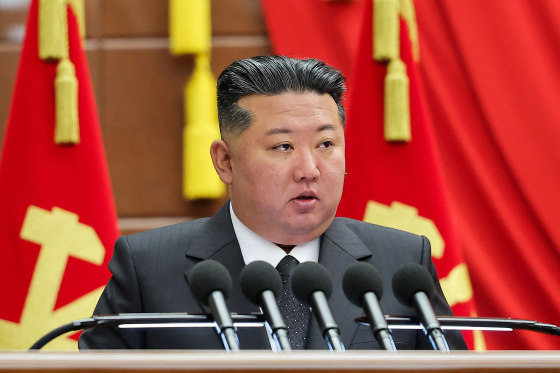
One report examining the viral claim said images accompanying some of the posts were actually from an earlier appearance by Kim at the Sangwon Cement Complex rather than a meeting concerning the Middle East conflict.
The absence of a verifiable primary source makes it inappropriate to present the alleged statement as an established fact.
#North Korea’s position on the Middle East
North Korea has historically maintained close political relations with countries opposed to U.S. influence, including Iran.
Pyongyang has also criticised U.S. military policy and Israel’s actions in the Middle East. Such statements have contributed to speculation about whether North Korea could become more directly involved in the conflict.
However, fact-checkers examining similar claims in 2026 found no official evidence that North Korea had declared war on the United States or Israel or formally announced the transfer of ballistic missiles to Iran in connection with the conflict.
That does not mean that North Korea’s military capabilities are irrelevant to the wider security environment. The country possesses a substantial missile programme and has continued to conduct missile tests.
But military capability should not be confused with an actual decision to deploy those weapons in another country’s conflict.
#North Korea remains focused on its own security concerns
Recent developments have continued to centre heavily on North Korea’s confrontation with the United States and South Korea.
On August 20, North Korea launched about 10 short-range ballistic missiles toward waters off its eastern coast, according to South Korean authorities. The launches came during the annual United States-South Korea military exercises.
The missile launches followed criticism by Kim Yo Jong, Kim Jong Un’s sister and a senior North Korean political figure, of the joint military exercises.
The United States had moved to reduce the scale of the exercises in an apparent effort to create conditions for renewed engagement with Pyongyang. President Donald Trump has expressed interest in meeting Kim again, while North Korea has remained cautious about the possibility of renewed talks.
These developments suggest that Pyongyang’s immediate military and diplomatic priorities remain closely connected to the Korean Peninsula and its relationship with Washington and Seoul.
#Why the claim matters
Even though the alleged missile pledge remains unverified, the claim has gained attention because North Korea is one of the world’s most heavily armed nuclear states.
A direct North Korean intervention in a Middle Eastern conflict would represent a major escalation with potentially far-reaching consequences.
It could also complicate efforts by major powers to contain the conflict and create new concerns about missile technology, weapons transfers and the expansion of military alliances.
For that reason, claims involving North Korea’s nuclear and missile capabilities require particularly careful verification.
#Earlier misinformation involving Kim
The latest claim is not the first time fabricated or misleading statements have been attributed to Kim Jong Un.
In 2024, Radio Free Asia examined a social-media post that claimed Kim had threatened Israel while expressing support for Iran. The claim was rated false after researchers found no official statement or credible reporting supporting it.
A separate 2026 claim alleging that Kim had threatened a nuclear missile attack against Israel was also found to be false.
The recurrence of such claims demonstrates how statements attributed to political and military leaders can spread rapidly during periods of international tension.
#What is confirmed
What can be established from credible reporting is that North Korea continues to possess and develop ballistic missile capabilities and has recently carried out missile launches in the context of tensions with South Korea and the United States.
North Korean officials have also maintained a confrontational position toward Washington and its allies.
There is, however, no reliable evidence establishing that Kim Jong Un has personally ordered or promised a missile strike against Israel at Iran’s request.
Nor is there verified evidence in the available reporting that North Korea has entered the Middle East conflict as a direct military participant.
#Regional security implications
The spread of the claim nevertheless highlights the interconnected nature of modern geopolitical conflicts.
Developments in one region can quickly influence perceptions of security elsewhere. North Korea’s military relationship with Russia, its longstanding relationship with Iran and its confrontation with the United States mean that any confirmed military cooperation involving Pyongyang would attract significant international attention.
Recent reporting has also highlighted the growing military relationship between North Korea and Russia, adding another dimension to discussions about Pyongyang’s foreign-policy strategy.
But analysts and governments must distinguish confirmed military activity from claims circulating on social media.
#Verification remains critical
For readers following the conflict, the central issue is the reliability of the source.
A statement attributed to a head of state should ideally be traceable to an official transcript, state-media report, government announcement or multiple independent reputable news organisations.
In this case, the alleged “one missile” statement does not meet that standard based on the available evidence.
Publishing the claim as fact could therefore mislead readers about North Korea’s actual military intentions and potentially amplify misinformation during an already volatile period.
#Conclusion
The claim that Kim Jong Un has confirmed North Korea’s readiness to provide military support to Iran and suggested that one missile could strike Israel remains unverified.
North Korea is undoubtedly a major military power with an extensive ballistic-missile programme, and Pyongyang continues to issue strong statements against the United States and its allies. Its recent missile tests also demonstrate that regional tensions remain high.
But there is currently no credible evidence establishing that Kim has made the specific pledge attributed to him.
As tensions involving Iran, Israel and the United States continue to develop, distinguishing verified government statements from viral social-media claims will remain essential to understanding the rapidly changing international security landscape.
**Source:🇺🇬 Be Blessed