




















By Karim Were
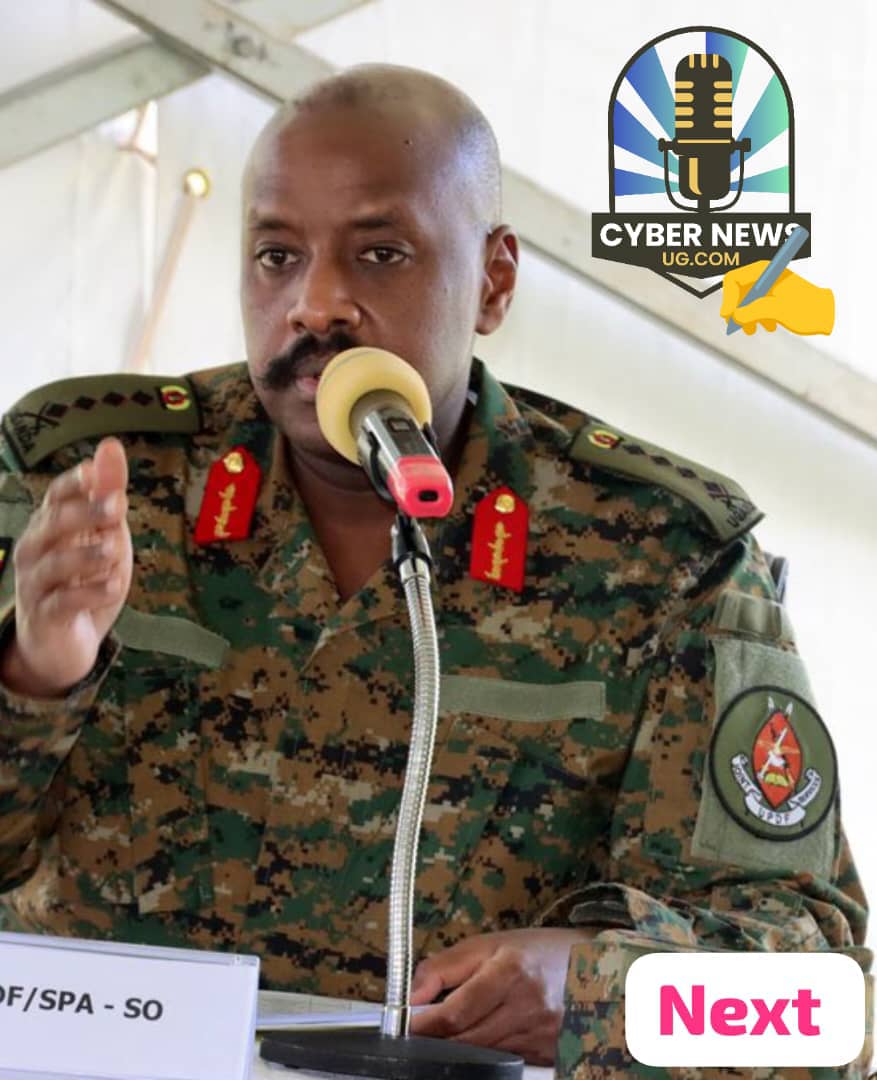
The CybernewsUg CEO and news editor have expressed support for Gen. Muhoozi Kainerugaba as a potential successor to President Yoweri Museveni, describing him as a generational leader capable of carrying forward Uganda’s development legacy.
CybernewsUg leadership backs Muhoozi for 2031
The leadership of CybernewsUg has endorsed Gen. Muhoozi Kainerugaba as its preferred candidate for Uganda’s presidency in 2031, describing the senior military officer as a potential “generational leader” capable of providing continuity after President Yoweri Museveni.
The endorsement, attributed to the media organisation’s CEO and news editor, places CybernewsUg among the voices publicly expressing support for Muhoozi’s political ambitions as Uganda looks beyond the current electoral cycle.


The position is an expression of the media organisation’s leadership and should be understood as an endorsement rather than an official determination of who will lead Uganda in 2031.
The endorsement comes amid increasing public discussion about political succession, the future of the National Resistance Movement (NRM) and the role Gen. Muhoozi Kainerugaba could play in Uganda’s political future.
Muhoozi, the son of President Museveni, has in recent years become increasingly visible in Uganda’s political debate. His supporters have promoted him as a generational leader and have linked his name to the 2031 presidential contest.
The Patriotic League of Uganda (PLU) recently announced that its leaders and supporters had endorsed Muhoozi for the presidency in 2031 and beyond, with the organisation saying it intended to mobilise supporters around the endorsement.
An endorsement framed around continuity
According to the CybernewsUg leadership, the decision to support Muhoozi is rooted primarily in the belief that Uganda needs continuity in national leadership and a successor capable of protecting what they regard as achievements of the Museveni era.
The organisation’s leadership has described Muhoozi as a possible “standby generator” for the country’s political leadership — language intended to convey preparedness to assume responsibility when a transition occurs.
The metaphor reflects an argument made by Muhoozi’s supporters that Uganda should pursue a gradual political transition rather than an abrupt break with the policies and institutions developed during Museveni’s long presidency.
President Museveni has governed Uganda since 1986, making his administration one of the longest-running political governments in Africa.
His supporters credit his government with restoring political stability after years of conflict, expanding infrastructure and increasing access to education and health services, while critics have raised concerns about political competition, democratic institutions, human rights and the concentration of power.
Any assessment of Museveni’s legacy therefore remains contested and depends significantly on political perspective.
Why Muhoozi has become central to the succession debate
Muhoozi Kainerugaba’s growing prominence has made him an important figure in conversations about Uganda’s political succession.
A senior military officer, Muhoozi currently serves as Chief of Defence Forces of the Uganda People’s Defence Forces.
His supporters argue that his military experience, exposure to national security issues and familiarity with government structures could prepare him for a future leadership role.
His political supporters have increasingly used phrases such as “generational leader” when describing him.
Recent public endorsements demonstrate that the campaign around his possible 2031 presidential bid is becoming more visible.
A social-media post from the PLU reported that the organisation had formally endorsed Muhoozi for president in 2031 and opened its endorsement exercise to members of the public.
Other public figures have also expressed support for his potential candidacy.
For example, Monicah Amoding recently publicly stated that she had endorsed Muhoozi for 2031, describing him as a generational leader and citing what she called his firmness, vision and focus.
These developments suggest that Muhoozi’s supporters are seeking to build a broader political constituency around his name ahead of the next presidential election cycle.
CybernewsUg’s position
For CybernewsUg, the endorsement represents a deliberate editorial and institutional position.
The organisation’s leadership argues that a future transition should preserve the elements of Uganda’s national development agenda that it considers successful while allowing the next generation of leaders to introduce new ideas.
The argument is based on the principle that political succession does not necessarily have to mean abandoning previous policies.
Instead, supporters of continuity contend that a new generation of leadership can build upon existing institutions, infrastructure and economic programmes while adapting them to changing circumstances.
The endorsement of Muhoozi is therefore being presented by CybernewsUg’s leadership as a vote for continuity, generational change and what it regards as political stability.
At the same time, an endorsement by a media organisation does not determine the outcome of an election.
Uganda’s presidency is decided through the country’s constitutional and electoral processes, and voters ultimately determine which candidates receive political support at the ballot box.
Museveni’s legacy remains central to the discussion
Any discussion of Muhoozi’s potential presidency is inevitably connected to the legacy of President Museveni.
Museveni and the NRM have dominated Uganda’s political landscape since the National Resistance Army took power in 1986.
Over the decades, the government has pursued policies focused on economic growth, infrastructure development, regional security, industrialisation and social services.
Uganda has also experienced significant demographic and economic changes during the period.
The country has developed major road and energy infrastructure, expanded telecommunications and attracted investment in sectors including agriculture, manufacturing, tourism and services.
However, the Museveni era has also generated sustained political debate.
Opposition parties and civil-society organisations have repeatedly raised questions about the competitiveness of elections, political freedoms, governance and accountability.
The country’s next generation of leaders will therefore inherit both achievements and unresolved challenges.
For supporters of Muhoozi, preserving the positive elements of the existing system while addressing its shortcomings is part of the argument for generational succession.
The question of political transition
Political succession is among the most consequential issues facing long-serving governments.
For Uganda, the question extends beyond the identity of a future president. It involves the future of the ruling NRM, the country’s security institutions, economic policy and relations with neighbouring states.
A successful transition would require strong institutions capable of ensuring continuity while allowing new leadership to develop its own priorities.
The discussion around Muhoozi has therefore generated interest beyond individual political personalities.
It raises broader questions about whether Uganda’s next political generation will emerge from the existing ruling establishment, opposition movements, civil society or a combination of different political forces.
Muhoozi’s supporters believe he can provide continuity while representing a younger generation.
Critics of the idea, however, may question whether succession should be associated with family lineage or established political structures.
Those competing perspectives are likely to remain central to Uganda’s political debate as the 2031 election approaches.
Supporters see a generational shift
The strongest argument advanced by Muhoozi’s supporters is that Uganda is approaching a generational transition.
President Museveni was born in 1944, while Muhoozi belongs to a much younger generation.
Supporters argue that a younger leader could bring different experiences and perspectives to the presidency while retaining institutional knowledge accumulated during decades of government.
The “generational leader” description has consequently become an important part of Muhoozi’s political messaging.
It presents his potential candidacy not simply as a change of individual leadership but as part of a wider generational transition.
Whether Ugandans will embrace that argument will ultimately depend on the political choices made by voters and the wider electoral environment.
Military background and political questions
Muhoozi’s military career is also central to discussions about his political future.
He has served in senior positions within the UPDF and has held significant responsibilities within Uganda’s defence establishment.
Supporters regard his military experience as an asset, particularly given Uganda’s role in regional security operations.
However, his military background also raises questions about the relationship between the armed forces and civilian political leadership.
In democratic systems, civilian authority over the military and respect for constitutional institutions are fundamental principles.
Any future presidential bid involving a serving or former senior military officer would therefore attract significant public and institutional scrutiny.
These questions are part of the broader debate about what kind of leadership Uganda requires after Museveni.
What the endorsement does — and does not — mean
The CybernewsUg endorsement should not be interpreted as evidence that Muhoozi has already secured the presidency or that he is guaranteed to become Uganda’s next president.
It is a declaration of preference by the organisation’s leadership.
Similarly, the growing number of public endorsements for Muhoozi does not by itself establish the level of nationwide electoral support he would receive.
Uganda’s political landscape includes several parties, movements, independent political actors and millions of voters whose views cannot be assumed from endorsements by individual organisations or political groups.
The eventual contest will depend on candidate nominations, party structures, campaigns, public opinion, electoral participation and the conduct of the election itself.
A debate likely to intensify
As Uganda moves toward another period of political competition, discussion about succession is likely to become more prominent.
Muhoozi’s supporters are already building a public narrative around his leadership credentials and generational identity.
The recent PLU endorsement is one indication of the growing organisational activity around his potential 2031 ambitions.
Other political actors are likely to present alternative visions for Uganda’s future.
That competition of ideas is important because the country’s next political chapter will involve challenges ranging from youth unemployment and economic transformation to public-sector accountability, regional security, healthcare, education and climate resilience.
The next president will face expectations from a young and rapidly growing population while also navigating a changing regional and international environment.
The broader significance for Uganda
The CybernewsUg endorsement adds another voice to an increasingly visible debate about Uganda’s future leadership.
Its emphasis on continuity and protecting what it considers the positive elements of Museveni’s legacy reflects one side of a national conversation that is likely to become more consequential over time.
For supporters, Muhoozi represents an opportunity to transfer leadership to a younger generation without abandoning the country’s existing development direction.
For others, the question will be whether Uganda’s next chapter should involve continuity, significant reform or a combination of both.
Ultimately, those questions cannot be settled by endorsements alone.
Uganda’s constitutional and electoral institutions, political parties, candidates and voters will determine the country’s political direction.
Conclusion
The endorsement of Gen. Muhoozi Kainerugaba by the CybernewsUg leadership signals the growing prominence of the succession debate in Uganda.
By presenting Muhoozi as a potential “generational leader” and a figure capable of protecting what it views as the achievements of the Museveni era, the organisation has placed itself behind a particular vision of Uganda’s political future.
The endorsement is part of a wider movement of supporters promoting Muhoozi’s possible 2031 presidential ambitions, including the recent public endorsement by the Patriotic League of Uganda.
But the ultimate test will not be the number of endorsements. It will be the strength of Uganda’s institutions, the quality of competing political programmes and, above all, the choices made by Ugandan voters through the country’s constitutional electoral process.
For now, the endorsement adds another chapter to a succession conversation that is likely to shape Uganda’s political debate for years to come.
Source: